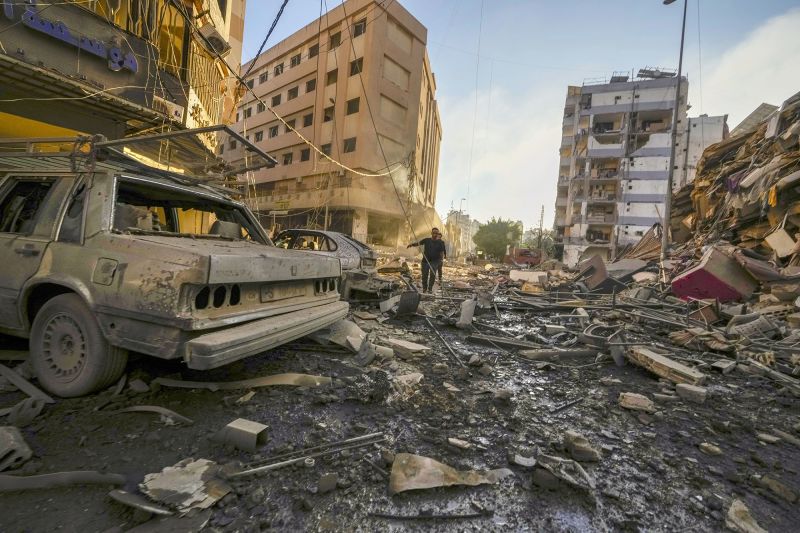
Israeli air forces executed a series of airstrikes on areas in southern Lebanon on Wednesday morning, indicating that the ceasefire announced between the United States and Iran does not extend to Lebanon, where Israel is engaged in a conflict against the Iran-supported Hezbollah group.
The strikes targeted regions such as Tyre and Nabatieh, just hours after the announcement of the agreement. Israeli Prime Minister Benjamin Netanyahu denied that this agreement includes the ongoing conflict in Lebanon, which has resulted in the deaths of over 1,500 individuals, including 130 children, and the displacement of more than 1.2 million people, equivalent to one-fifth of the country's population.
Details of the Airstrikes
These airstrikes come at a time when Lebanon is suffering from a severe humanitarian crisis, with villages near the border devastated as Israeli forces attempt to establish what they call a security buffer zone to destroy Hezbollah's infrastructure and push its fighters away. This situation has raised concerns that some areas may remain occupied even after the war ends, potentially preventing many residents from returning to their homes.
No immediate reactions have been issued by the Lebanese government or Hezbollah following the announcement of the ceasefire in the war between the United States and Israel against Iran, which began in late February. Tensions in Lebanon escalated when Hezbollah launched rockets at Israel in response to the killing of Iran's Supreme Leader Ali Khamenei in the early stages of the war, amid repeated Israeli attacks on Lebanon.
Background & Context
Historically, Hezbollah was founded in the 1980s in response to Israel's occupation of Lebanon during the 15-year-long Lebanese Civil War. In recent years, the conflict between the party and Israel has intensified, with attempts by the Lebanese government to disarm the party following the ceasefire announced in 2024.
However, Hezbollah continues to refuse to discuss the future of its weapons, complicating the situation further. Lebanese President Joseph Aoun has ruled out the use of force against the party, warning that it could exacerbate divisions and increase violence.
Impact & Consequences
The recent Israeli airstrikes raise questions about the future of the conflict in the region, as reports indicate that Israeli forces do not intend to advance further in their invasion of Lebanon. Nevertheless, the continuation of attacks could worsen the humanitarian situation, with schools overwhelmed by displaced individuals seeking refuge.
The escalation of the conflict may also heighten sectarian tensions in Lebanon, as many fear becoming targets of Israeli attacks. The arrival of displaced families into new communities has exacerbated these conditions.
Regional Significance
These events highlight the ongoing tensions in the region and their impact on regional security. The situation remains fluid, and the implications of these airstrikes could resonate far beyond Lebanon, affecting neighboring countries and international relations.
In conclusion, the Israeli airstrikes following the ceasefire announcement underscore the complexities of the conflict and the dire humanitarian conditions faced by many in Lebanon, raising urgent questions about the future stability of the region.