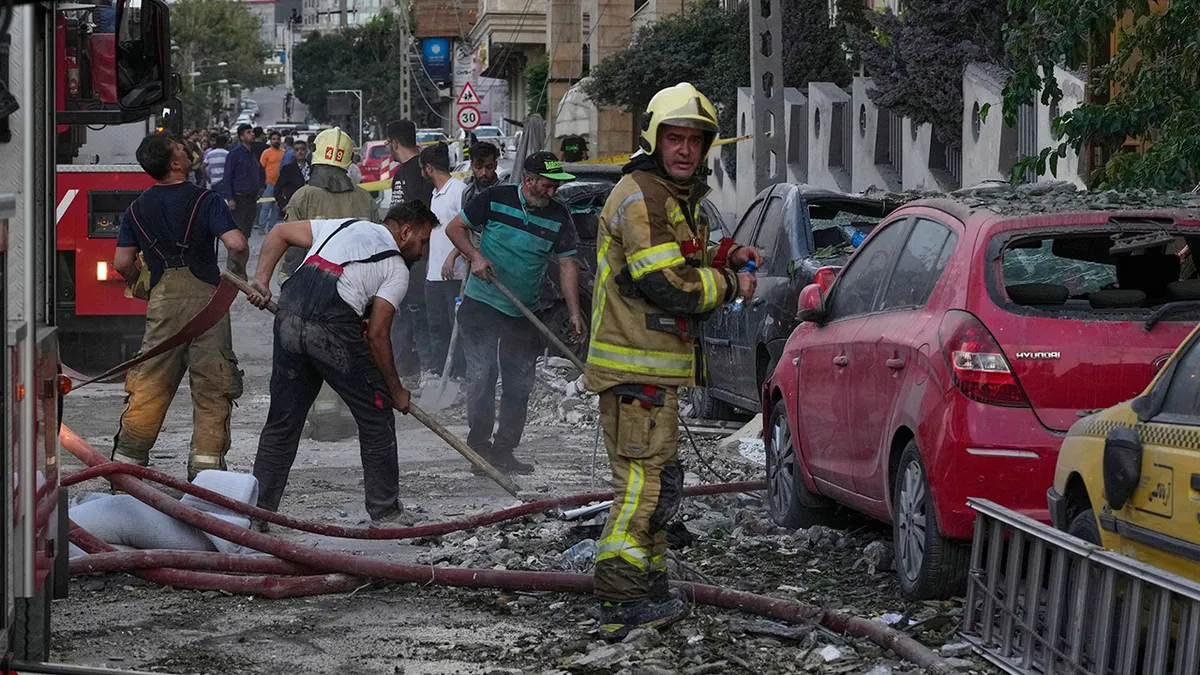
On Thursday, the Israeli military launched a series of airstrikes on Tehran, targeting a base of the Revolutionary Guard's ground forces and a mobile command center of the Iranian regime. These strikes come amid escalating military tensions between Israel and Iran, as regional tensions continue to rise.
These airstrikes are part of a broader Israeli strategy aimed at undermining Iranian influence in the region, especially given the ongoing tensions between the two sides. Israeli military sources have confirmed that these operations are intended to prevent Iran from enhancing its military capabilities and developing its nuclear programs.
Details of the Event
Reports indicate that the strikes targeted sensitive sites in Tehran, including military facilities and command centers belonging to the Revolutionary Guard. These attacks follow a series of Israeli warnings regarding Iranian activities in the region, which Israel perceives as a threat to its national security.
The Israeli military also noted that these airstrikes were a response to the escalation of Iranian military activities, which include support for armed groups in Lebanon and Syria. The strikes were carried out using advanced fighter jets, reflecting Israel's high military capabilities.
Background & Context
Historically, relations between Israel and Iran have been increasingly strained since the Iranian Revolution in 1979. These relations have further deteriorated with the development of Iran's nuclear program, which Israel considers an existential threat. In recent years, Israel has intensified its military operations against Iranian targets in Syria, exacerbating the conflict in the region.
At the same time, Iran seeks to bolster its influence in the region by supporting armed groups, which Israel views as a direct threat. These dynamics complicate the pursuit of stability in the region, where regional and international interests intersect in complex ways.
Impact & Consequences
These airstrikes represent a serious escalation in the conflict between Israel and Iran and may provoke military responses from the Iranian side. Iran may seek to retaliate against these attacks by targeting Israeli interests or its allies in the region, increasing the risk of a wider conflict.
Moreover, these developments could affect relations between Iran and Western countries, especially amid ongoing discussions regarding Iran's nuclear program. An escalation of tensions may complicate international diplomatic efforts and increase pressure on the parties involved to reach peaceful solutions.
Regional Significance
These events directly impact security and stability in the Arab region. The tensions between Israel and Iran could lead to escalated conflicts in countries like Lebanon and Syria, where armed groups linked to Iran are present. Any military escalation could also affect humanitarian conditions in these countries, exacerbating civilian suffering.
Additionally, these developments may influence relations between Arab countries and Iran, as concerns over Iranian influence in the region grow. Some Arab nations may seek to strengthen their alliances with Israel as a means to counter Iranian threats, reflecting a shift in regional dynamics.
In conclusion, the Israeli airstrikes on Tehran represent a serious escalation in the regional conflict and could have wide-ranging implications for security and stability in the area. The current situation requires all parties involved to exercise wisdom and restraint to avoid slipping into a broader conflict.