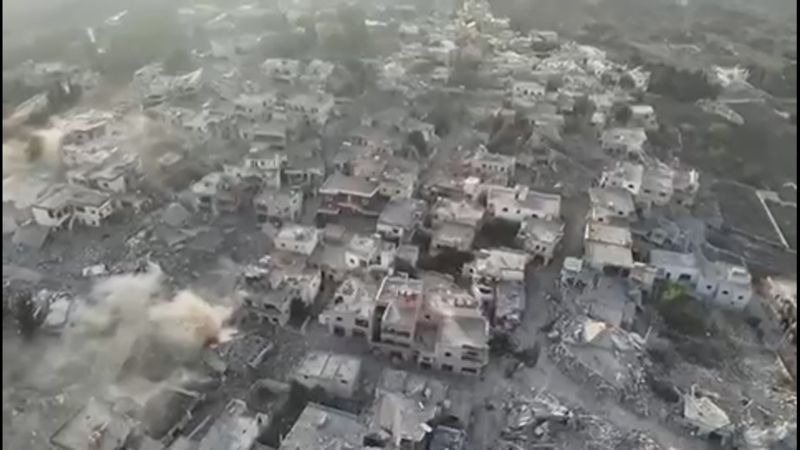
Israeli warplanes have conducted intensive airstrikes on several towns in southern Lebanon, targeting the town of Qantara and the Qasmiya area, resulting in the deaths of two individuals and injuries to three others. In the context of escalating tensions, Israeli Defense Minister Israel Katz warned that 600,000 residents of southern Lebanon would not be able to return to their homes until the safety of northern Israel's residents is guaranteed.
Katz confirmed at the end of a security session on Tuesday that Israel would destroy all homes in villages near the border, indicating that the Israeli army would establish a buffer zone extending to the Litani River. He claimed that Israel aims to change the security reality in Lebanon through a permanent military presence in the region.
Details of the Event
The Lebanese news agency reported that Israeli warplanes targeted the town of Qantara, and another strike hit a vehicle in the Qasmiya area. The airstrikes also affected the towns of Al-Mansouri, Al-Qalila, and Al-Haniyya, in addition to artillery shelling on Tulin, Qabrihaya, and Majdal Selim. Israeli drones flew over Beirut and its suburbs at low altitudes.
In a related context, the Civil Defense and the Red Cross faced cases of suffocation due to chlorine leakage following a strike on a water station in Marj Ayoun. The Israeli army also warned residents south of the Zahrani River to evacuate immediately in preparation for bombings in the area, urging them to head north.
Background & Context
This escalation comes amid rising tensions between Israel and Hezbollah, with Israeli army spokesperson Avichai Adraee claiming that Hezbollah's activities are forcing the Israeli army to take strong military actions in the region. Adraee indicated that the airstrikes would continue, urging residents to leave their homes.
In recent days, the Israeli army issued evacuation warnings to residents of six villages in the Lebanese Bekaa, marking the first such alert for these areas. This warning came amid what the army described as armed activities in the region, further heightening tensions.
Impact & Consequences
Concerns are growing over the escalation of violence in the region, with Adraee reporting that the Israeli army has fired over 700 shells at targets allegedly belonging to Hezbollah, resulting in dozens of civilian casualties. In response, Hezbollah announced the execution of 40 operations involving missile and drone attacks targeting Israeli positions.
The Israeli Rambam Hospital reported the transfer of four injured Israeli soldiers to the hospital, with one in critical condition. Since the fighting began, 54 Israeli soldiers have been hospitalized, with 17 still receiving treatment.
Regional Significance
This military escalation between Israel and Hezbollah raises significant concerns in the region, reflecting the ongoing tensions between the involved parties. The evacuation warnings and military operations could lead to mass displacement of residents, exacerbating the humanitarian burdens in the area.
At the same time, Arab countries continue to monitor the situation closely, as any escalation could impact regional stability and evoke memories of past conflicts in the area. The current situation necessitates urgent diplomatic efforts to prevent further deterioration.