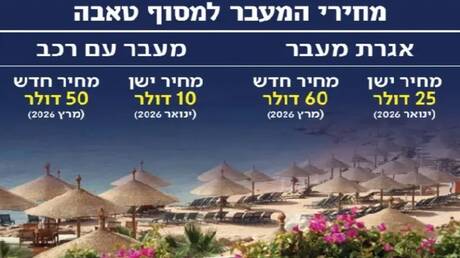
The recent hike in the Taba crossing fee to $120 has triggered significant outrage among Israeli circles, as this move is seen as part of a discriminatory policy against Israeli tourists. Media reports have indicated that hotels in Sinai have raised their prices considerably, further aggravating the discontent among Israeli tourists who view this destination as one of their top travel spots.
These developments come at a sensitive time, as many Israeli tourists are looking to visit Sinai, known for its beautiful beaches and stunning natural landscapes. However, the price increase may negatively impact the flow of Israeli tourists to the region, raising questions about the future of tourism in Sinai.
Details of the Incident
A report published by the newspaper Israel Hayom noted that the increase in the Taba crossing fee is part of the Egyptian government's efforts to boost tourism revenue. Nevertheless, this step could have negative repercussions on the tourism relations between Egypt and Israel, as Israeli tourists are considered one of the largest tourist groups visiting Sinai.
Moreover, Sinai hotels have begun to impose particularly high prices on Israeli tourists, reflecting a discriminatory policy that could lead to a decline in the number of visitors from Israel. Many Israeli tourists have expressed their dissatisfaction with these prices, which may drive them to seek alternative travel destinations.
Context and Background
Historically, Sinai has been a favored destination for Israeli tourists due to its unique geographical location and proximity to the Israeli border. However, political and economic tensions between Egypt and Israel may impact tourism flows in the region. In recent years, there has been an increase in the number of Israeli tourists visiting Sinai, contributing to the local economy.
Yet, with rising fees and prices, this trend may reverse, causing concern among Egyptian officials who rely on tourism as a primary source of revenue. These developments come at a time when both countries are striving to enhance their economic and tourism relations.
Consequences and Impact
The price increase may lead to a decline in the number of Israeli tourists, adversely affecting the local economy in Sinai. Tourism is considered one of the main sources of income in the region, and any drop in visitor numbers could result in job losses and increased unemployment rates.
Furthermore, this move could strain relations between Egypt and Israel, as Israeli tourists are an important part of the Egyptian tourism economy. Consequently, any discrimination against them could negatively impact cooperation between the two countries in other areas.
Impact on the Arab Region
These events are part of the larger picture of tourism and economic relations in the region. With increasing political and economic tensions, tourism flows in many Arab countries may be affected, raising questions about the future of this industry.
Tourism plays a vital role in enhancing relations between Arab countries, and any discrimination or price hikes could lead to a decline in trust among nations. Therefore, it is crucial for governments to promote tourism cooperation and avoid policies that may lead to discrimination against any group of tourists.
In conclusion, the situation in Sinai remains under scrutiny, as these developments are expected to impact tourism flows in the region. It is important for Egyptian authorities to monitor the situation and address any issues that may affect the influx of tourists, especially from Israel.