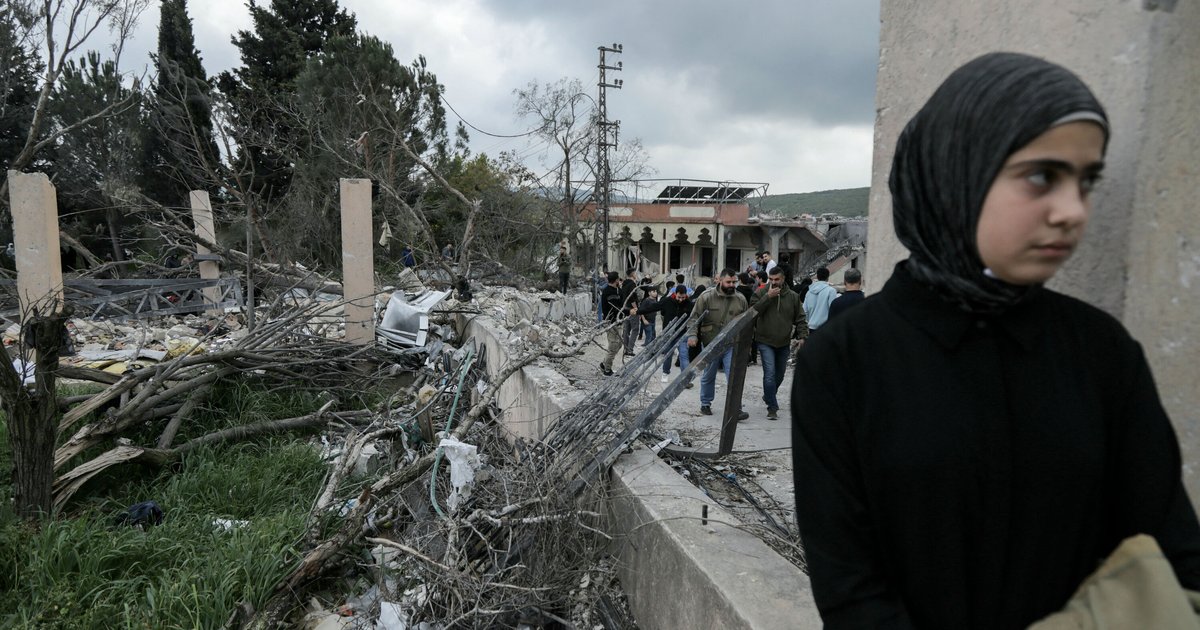
The Israeli army has admitted, according to Haaretz, that it will not succeed in disarming Lebanese Hezbollah, stating that this would require a complete occupation of Lebanese territory. These remarks come at a time when Israeli threats against Lebanon are increasing, with a senior officer confirming that the war may end without disarming Hezbollah, indicating that this is not part of the current war objectives.
The newspaper added that the officer mentioned in his statements that the army intends to present a plan to the political level to establish a "security belt" in southern Lebanon, at a distance of between 2 and 3 kilometers from the border with Israel. This plan aims to evacuate most civilians from the villages within this area to avoid any friction between soldiers and civilian populations.
Details of the Situation
These statements come in the wake of previous threats issued by the Israeli army of a "complete occupation" of Lebanon, where Israeli Defense Minister Yoav Gallant renewed his threats to expand the war on Lebanon. Gallant announced, according to Yedioth Ahronoth, the army's intention to demolish homes in border villages, similar to what happened in the cities of Rafah and Khanyounis in southern Gaza, claiming they were used by Hezbollah.
Gallant and Israeli Prime Minister Benjamin Netanyahu have previously issued threats regarding the expansion of what Israel calls the "buffer zone" in southern Lebanon. In response to these statements, the Hezbollah parliamentary bloc confirmed that Israel's pursuit of establishing a buffer zone in southern Litani represents a serious threat to Lebanon, stating that "any buffer zone will be a graveyard for invaders, and the resistance's missiles and drones will surpass it."
Background & Context
Historically, Israel has occupied areas in southern Lebanon for decades, with the region experiencing ongoing tensions due to the conflict between the two sides. Since the beginning of Israeli military operations in Lebanon on March 2, these operations have resulted in the deaths of 1,368 people and injuries to 4,138 others, according to the latest data from the Lebanese Ministry of Health.
Currently, four military units from the Israeli army are operating in southern Lebanon, facing Hezbollah fighters in intense clashes, leading to Tel Aviv's acknowledgment of the deaths of 10 Israeli soldiers so far. These figures reflect the escalating intensity of the conflict and its repercussions on both sides.
Impact & Consequences
The Israeli army's admission of its inability to disarm Hezbollah without a complete occupation of Lebanon may reflect a shift in Israeli military strategy, indicating that the conflict may continue longer than expected. This acknowledgment could raise questions about Israel's ability to achieve its military objectives in the region.
Concerns are growing that this situation could lead to a greater escalation in the conflict, potentially negatively impacting regional security. Furthermore, the continuation of military operations may exacerbate the humanitarian situation in Lebanon, where civilians are suffering from the consequences of the war.
Regional Significance
This development poses a significant challenge to the Arab region, reflecting the persistence of armed conflicts and their impact on regional stability. Additionally, the rising tensions between Israel and Hezbollah could affect relations between Arab states and Israel, increasing divisions in the region.
Ultimately, the situation in Lebanon remains under close observation, with analysts expecting tensions to continue to escalate, necessitating urgent diplomatic efforts to avoid further escalation.