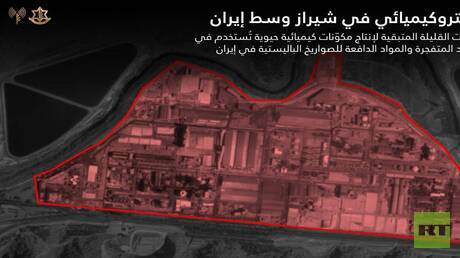
The Israeli army announced today that it has carried out an attack on an Iranian petrochemical complex in Shiraz. This attack occurs at a sensitive time marked by a notable escalation in tensions between Israel and Iran, with both countries exchanging accusations regarding military activities and espionage.
The attack on the petrochemical complex is considered part of a broader Israeli strategy aimed at undermining Iranian military capabilities. Israeli officials stated that this move is intended to prevent Iran from developing nuclear weapons or enhancing its military capabilities in the region.
Details of the Attack
According to reports, the attack was executed using drones, targeting a facility that is one of the largest petrochemical complexes in Iran. The assault resulted in significant damage to the facility, reflecting Israel's capability to conduct complex military operations within Iranian territory.
This operation follows a series of attacks targeting Iranian facilities in recent years, as Israel seeks to reduce Iranian influence in the region. Military sources confirmed that the attack was carefully planned to minimize collateral damage.
Background & Context
Historically, relations between Israel and Iran have been tense since the Islamic Revolution in 1979. Recent years have seen an escalation in these tensions, particularly concerning the Iranian nuclear program, which Israel perceives as an existential threat. In this context, Israel has conducted several military operations against Iranian targets, both in Syria and within Iran itself.
Iran views these attacks as violations of its sovereignty and consistently responds with threats against Israel. Some analysts have pointed out that these operations could lead to greater escalation in the conflict between the two sides, potentially impacting stability in the region.
Impact & Consequences
The attack on the petrochemical complex could have wide-ranging implications for regional relations. Iran is likely to respond to this attack in various ways, whether through targeting Israeli interests abroad or escalating military activities in the region.
This attack may also heighten tensions between Iran and Western countries, especially as negotiations regarding the Iranian nuclear program continue. Increased pressure on Tehran from the international community could affect its strategies in the region.
Regional Significance
Neighboring Arab countries are on alert, as these events could impact regional security. Many Arab nations fear the escalation of conflict between Iran and Israel, particularly given the tense situations in Iraq and Syria.
Additionally, these events may affect relations between Arab countries and Iran, with some nations seeking to improve ties with Tehran while others remain cautious. Any escalation in the conflict could lead to negative repercussions for security and stability in the region.
In conclusion, the situation in the region remains volatile, as Israel and Iran continue to exchange pressures and threats. The recent attack on the petrochemical complex in Shiraz serves as another reminder that the conflict between these two countries may persist, with potential implications for regional security.