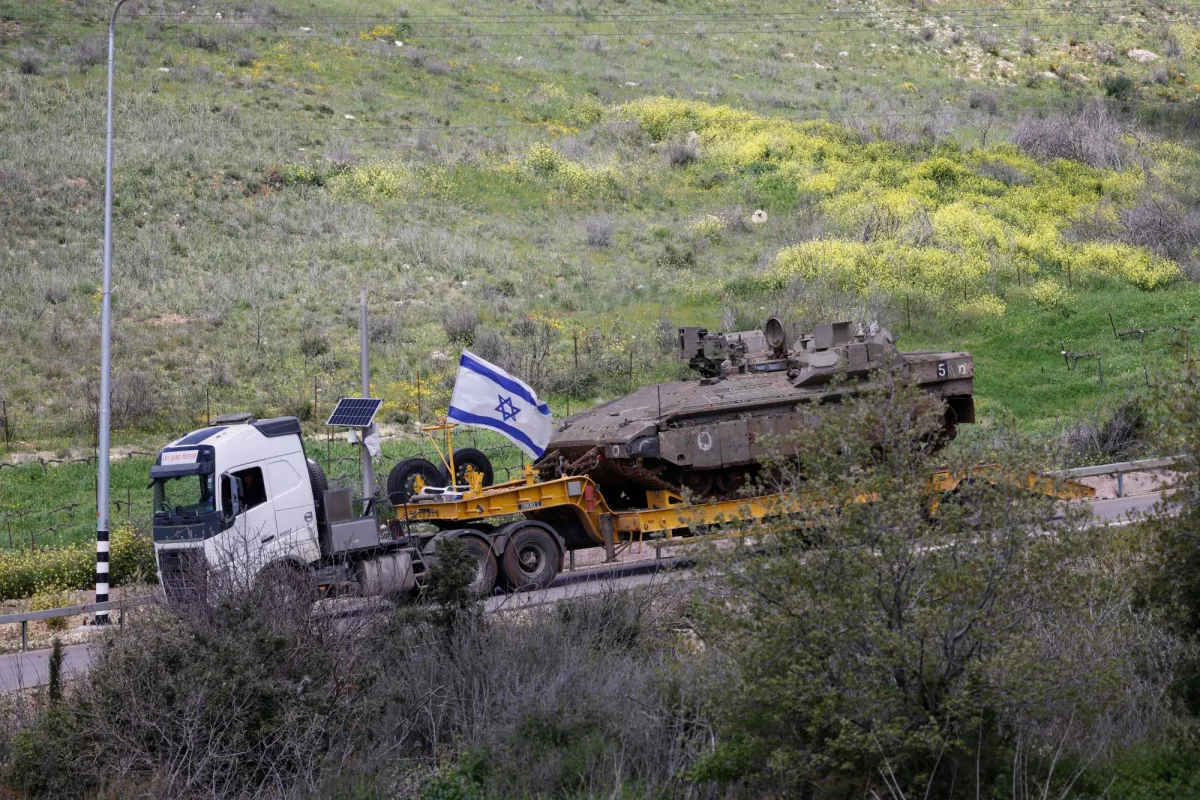
The Israeli army has announced that disarming Hezbollah is not part of the current war objectives, as its plan focuses on the complete demolition of Lebanese villages in the southern region of the country and forcibly displacing their residents to establish a security buffer zone. This declaration came after statements from an Israeli military leader, which sparked angry reactions from Defense Minister Israel Katz, who affirmed that the government is determined to achieve this goal.
In a related context, the army's spokesperson was compelled to clarify the military leader's statements, indicating that the long-term goal remains the disarmament of Hezbollah, which necessitates ongoing efforts. He confirmed that the current operation aims to weaken the party, contributing to this goal over time. Another military source noted that Israel might take action if the Lebanese government fails to disarm the party.
Details of the Event
General Yom Tov Samia reported that the army's command and the government still regard Hezbollah as a primary target of the war, stating that the party represents a terrorist army that deserves elimination. However, he added that getting rid of it requires the destruction of the Lebanese state's infrastructure, which will make the Lebanese people realize that the current leadership has brought calamity upon them.
The military leader's statements elicited reactions from military experts, who confirmed that the current war would not be sufficient to destroy Hezbollah, and that the complete occupation of Lebanon is the only solution. They explained that this necessitates comprehensive inspections in all Lebanese villages, indicating that disarming the party is not among the current operation's objectives.
Background & Context
These statements coincide with an Israeli military escalation in southern Lebanon, where the army is targeting Hezbollah centers. Israeli forces have issued warnings to residents in border areas, reflecting attempts to redistribute the population within specific ranges. The military operations also involve the destruction of Lebanese villages near the border, aiming to create a security zone free of residents.
The Israeli army justifies these operations by claiming that Hezbollah has attempted to restore its infrastructure, necessitating the transformation of the area from the border into a security zone. A plan has been prepared to destroy the Lebanese villages near the border, including the destruction of all civilian infrastructure.
Impact & Consequences
Concerns are growing that these operations may escalate the situation in the region, as they are expected to affect Lebanese-Israeli relations. Furthermore, these steps could exacerbate the humanitarian situation in Lebanon, especially with the increasing number of displaced persons from the targeted areas.
The Israeli military escalation may negatively impact stability in the region and heighten tensions among the involved parties. Additionally, military operations could lead to further loss of life and destruction of property, increasing the suffering of civilians.
Regional Significance
These developments underscore the importance of monitoring the situation in Lebanon and its impact on neighboring countries. The escalation of conditions in Lebanon could have repercussions for regional security, especially given the presence of multiple regional powers involved in the conflict.
The deteriorating humanitarian situation in Lebanon requires an urgent response from the international community to ensure the protection of civilians and provide necessary aid. The continuation of military escalation could threaten stability across the entire region, necessitating prompt diplomatic action.