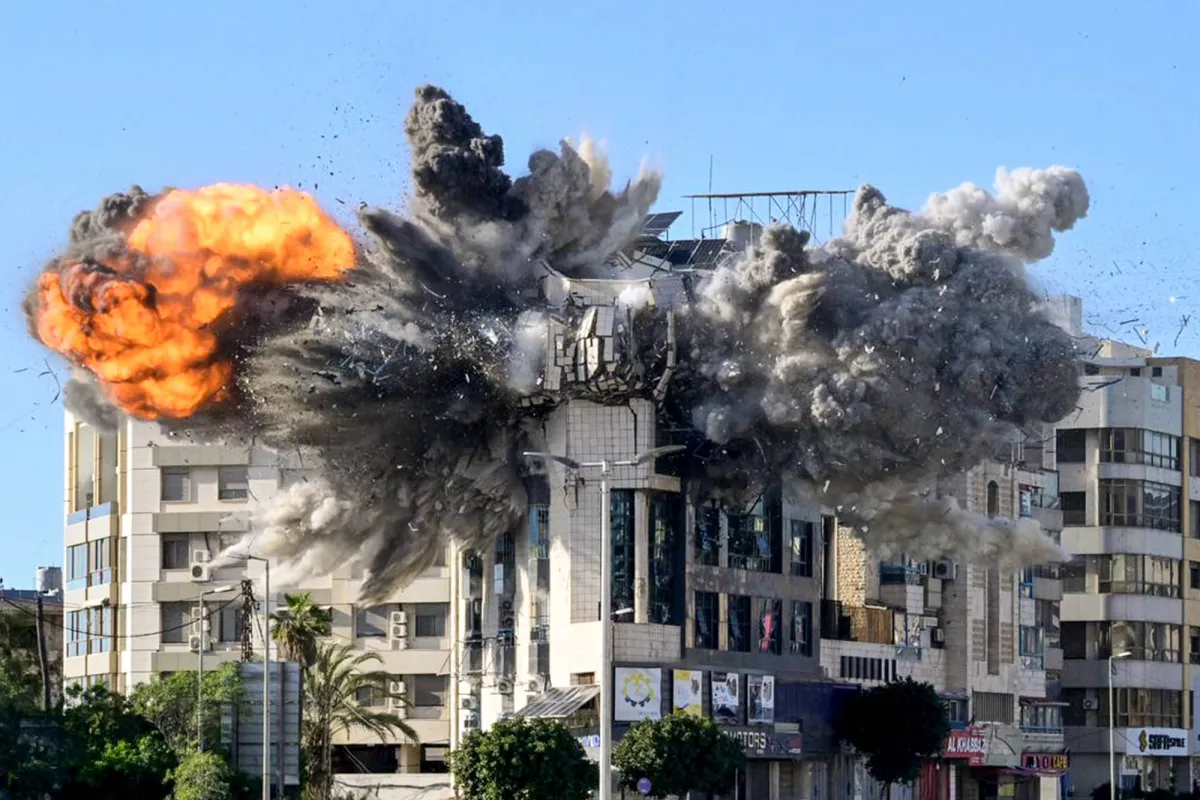
The Israeli army announced today (Friday) its intention to bomb two bridges in the western Bekaa region of eastern Lebanon, stating that its goal of disarming Hezbollah is considered 'unrealistic.' It clarified that this objective requires a comprehensive military invasion of Lebanese territory, which it does not intend to undertake, according to reports from the German news agency citing the Jerusalem Post.
The Israeli army also acknowledged its inability to completely disarm Hezbollah in southern Lebanon by the end of 2024, but confirmed that it is making efforts to achieve this goal in the meantime. The biggest challenge facing the Israeli army appears to be the widespread shelters for self-propelled missiles north of the Litani River.
Details of the Current Situation
Israeli military units in Lebanon are expected to complete control of areas located between 8 to 10 kilometers from the border with Israel within the next week. This step aims to reduce Hezbollah's capabilities to launch guided anti-tank missiles towards Israel and extend the early warning time for missiles launched from Lebanon.
Israeli Defense Minister Yoav Gallant announced last Tuesday his intention to destroy all homes in villages near the border in southern Lebanon, indicating that the goal is to 'eliminate definitively' the threat posed by Hezbollah to residents of northern Israel. Gallant considered the towns of Rafah and Beit Hanoun in the Gaza Strip, which were significantly destroyed in the Gaza War, as models for this approach.
Background & Context
Many towns in southern Lebanon are considered strongholds of Hezbollah, and Gallant's statements followed Israeli Prime Minister Benjamin Netanyahu's announcement to expand the scope of the Israeli invasion of southern Lebanon. In this context, the Israeli army announced its targeting of two bridges in the western Bekaa region, accusing Hezbollah of using them for 'terrorist' purposes.
Since the outbreak of the current war between Israel and Hezbollah on March 2, Israel has destroyed several bridges linking the southern Litani region with the rest of Lebanon, accusing Hezbollah of using them for military purposes. In response, Hezbollah has announced a series of attacks against Israeli forces, detonating an explosive device against an Israeli force in the town of Al-Bayyadah and targeting the Kiryat Shmona settlement and gatherings of Israeli soldiers.
Impact & Consequences
The total death toll from Israeli bombardments on Lebanon since March 2 has risen to 1,3454,040 injured. Emmy Pope, Director of the International Organization for Migration, warned of long-term displacement in Lebanon, as the war has forced over a million people to flee, resulting in widespread destruction.
Pope noted that there are areas in the south that have been completely leveled, and that the destruction will remain even if the war ends tomorrow, necessitating reconstruction efforts. More than a million displaced persons have been counted in Lebanon, with over 136,000 of them residing in collective shelters.
Regional Significance
The war in the Middle East is affecting Lebanon following Hezbollah's launch of missiles at Israel in response to the assassination of Iranian leader Ali Khamenei. Israel is responding with extensive airstrikes on Lebanon, further complicating the humanitarian and economic situations in the region.
Amid these conditions, tensions remain high between Israel and Hezbollah, threatening regional stability and increasing civilian suffering. The current situation requires urgent international efforts to resolve the conflict and provide humanitarian assistance to those affected.