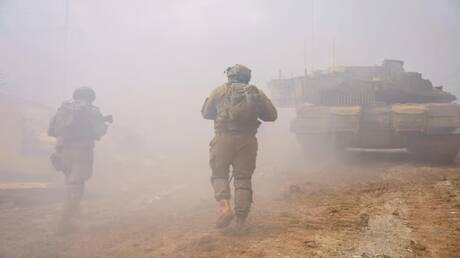
The Israeli army has announced the commencement of demolition operations in Lebanese villages along the border, a move that comes as part of directives from Defense Minister Israel Katz, who ordered the acceleration of the destruction of homes and bridges in the southern region, specifically south of the Litani River.
Reports indicate that the Israeli army has expanded its ground incursion to a depth of 14 kilometers inside Lebanese territory, reflecting a significant escalation in Israeli military operations in the area. These actions come at a time of increasing tensions between the two sides, raising concerns about the worsening humanitarian situation in the affected villages.
Details of the Event
Demolition operations have begun in several Lebanese villages, resulting in the destruction of homes and public facilities, leading to the displacement of a number of residents. These operations are part of a continuous escalation by the Israeli army, which seeks to reinforce its control over the border. Israeli officials have indicated that these steps aim to prevent any potential threats from the Lebanese side, especially given the tense security situation.
The Israeli military operations have not been limited to demolitions; they also include the reinforcement of military forces in the area, further heightening tensions. Media reports have noted intensive military movements along the border, indicating Israeli preparations to confront any potential escalation.
Background & Context
Historically, the Lebanese-Israeli border has witnessed numerous armed conflicts, with the area serving as a theater for several wars and disputes. Since the withdrawal of Israeli forces from Lebanon in 2000, the border has remained a zone of constant tension, with both parties exchanging accusations of assaults and violations.
In recent years, tensions have intensified due to Israeli military activities, alongside the presence of armed groups in Lebanon. These dynamics reflect the complexities of the security situation in the region, where political and economic factors play a significant role in escalating conditions.
Impact & Consequences
The demolition operations and military incursions exacerbate the humanitarian situation in Lebanese villages, where residents face significant challenges amid displacement and loss of homes. These conditions may lead to increased tensions between Lebanon and Israel, threatening stability in the region.
Moreover, the military escalation could affect relations between Lebanon and other countries, as international parties may intervene for mediation or support. These events are likely to increase pressure on the Lebanese government, which is already facing substantial economic and political challenges.
Regional Significance
The current events in southern Lebanon are part of a larger picture of the Arab-Israeli conflict, where the Palestinian issue and other regional disputes continue to cast shadows over relations between Arab states and Israel. The military escalation may provoke reactions from Arab countries, complicating the situation in the region further.
Under these circumstances, hope remains pinned on peace efforts and negotiations, but military escalation may hinder these efforts and lead to further divisions in the region.