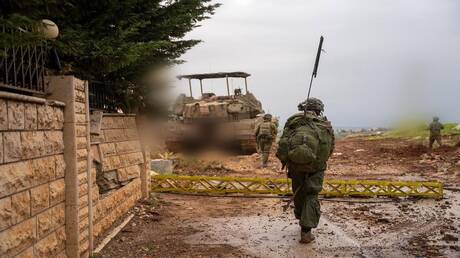
The Israeli army reported that the 8th Reserve Brigade, part of the 91st Division, is continuing military operations in southern Lebanon aimed at expanding the security zone and enhancing the protection of northern Israeli residents. These operations come at a time when the region is experiencing increasing tensions, as the Israeli army seeks to eliminate potential threats from Hezbollah.
The military operations being carried out by the Israeli army include the destruction of infrastructure belonging to Hezbollah, as well as the elimination of dozens of the organization's members. Some of these operations have been filmed, with aerial footage showing the destruction of strategic sites in the area.
Details of the Operations
The Israeli army announced that the military operations primarily target sites belonging to Hezbollah, which it considers a major threat to Israel's security. The army spokesperson confirmed that these operations are part of ongoing efforts to enhance security in the north, where many Israelis live in a state of anxiety due to border tensions.
The army also indicated that the operations involve the use of advanced technologies, including drones, to ensure target accuracy and minimize collateral damage. These operations are considered part of a broader strategy aimed at undermining Hezbollah's ability to carry out any attacks against Israel.
Background & Context
Historically, the border between Israel and Lebanon has witnessed recurring tensions, with Hezbollah regarded as an armed organization seeking to resist Israeli presence in the region. These tensions have escalated in recent years, particularly following previous military conflicts between the two parties.
The Israeli military operations in Lebanon are part of a self-defense policy, as the army aims to prevent any potential threats from armed groups. These operations have elicited mixed reactions from the international community, with some calling for dialogue while others advocate for strict measures against Hezbollah.
Impact & Consequences
These operations underscore the ongoing conflict in the region, which may lead to further escalation of tensions between Israel and Hezbollah. Additionally, these operations could impact the security situation in Lebanon, where civilians in conflict areas live in fear and anxiety.
It is likely that these operations will provoke reactions from Hezbollah, potentially intensifying the conflict. The international community is closely monitoring the situation, as these developments could affect regional stability overall.
Regional Significance
The developments in Lebanon are part of the larger picture of the Arab-Israeli conflict, influencing relations between Arab countries and Israel. These operations may lead to increased tensions in the region, which could affect ongoing peace efforts.
Moreover, the situation in Lebanon could impact neighboring countries, as the flow of refugees and the economy in the region may be affected. Thus, these military operations are not merely local events but have broad regional implications.
The situation in Lebanon remains under observation, as the Israeli army seeks to bolster its security in the north while Hezbollah faces new challenges. The continuation of these operations could lead to greater escalation in the conflict, warranting increased international attention.