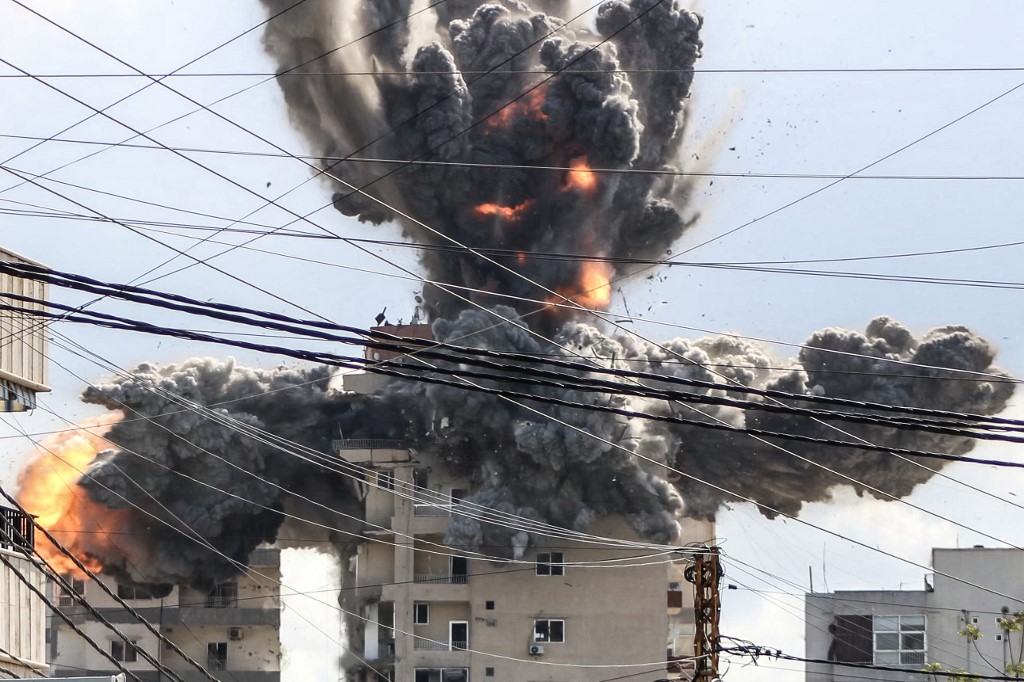
The Israeli army reported that it has conducted its largest coordinated airstrikes targeting what are believed to be Hezbollah assets in Lebanon since the onset of the conflict with Iran. The Israeli armed forces confirmed that these strikes targeted around 100 command centers and military sites belonging to Hezbollah in various areas, including Beirut, the Beqaa Valley, and southern Lebanon.
In an official statement, the Israeli army explained that "the Israeli Defense Forces have completed the largest coordinated strike targeting Hezbollah's infrastructure since the beginning of Operation Wild Lion," reflecting a significant escalation in Israeli military operations against the Lebanese group.
Details of the Strikes
These airstrikes come at a sensitive time, as the region is witnessing increasing tensions between Israel and Hezbollah, which is considered one of the most prominent armed factions in Lebanon. Military activities have surged recently, raising concerns about a larger escalation that could lead to a full-blown conflict in the region.
The targets hit in the strikes are spread across several areas, including the Lebanese capital Beirut, which is regarded as a vital center for Hezbollah, as well as the Beqaa Valley, known to be one of the party's strongholds. Images circulated through media outlets have shown the destruction left by the strikes, heightening concerns among civilians in those areas.
Background & Context
Historically, the relationship between Israel and Hezbollah has been tense, with the region experiencing several armed conflicts since 2006. In recent years, tensions have intensified due to Iran's interventions in Lebanese affairs and its support for Hezbollah, complicating the situation further.
The Israeli military operations are part of a broader strategy aimed at undermining Iran's influence in the region, as Tel Aviv seeks to prevent Hezbollah from enhancing its military capabilities. Reports have indicated that Hezbollah has significantly increased its military arsenal, prompting Israel to take preemptive actions.
Impact & Consequences
Analysts suggest that these airstrikes could lead to a greater escalation in the conflict between Israel and Hezbollah, which may adversely affect the security situation in Lebanon. The military escalation could also impact regional stability, potentially leading to external interventions from other countries in the area.
Moreover, the military pressures could heighten tensions among various Lebanese factions, threatening internal stability in Lebanon. Observers fear that this escalation could ignite a comprehensive conflict that might draw other nations into the fray.
Regional Significance
The implications of these airstrikes are significant, as they signal a marked escalation in regional tensions and may influence broader security dynamics. The situation remains fluid, with potential repercussions that could extend beyond Lebanon's borders.
In conclusion, the recent Israeli airstrikes represent a critical juncture in the ongoing conflict, with the potential for far-reaching consequences that could reshape the security landscape in the region.