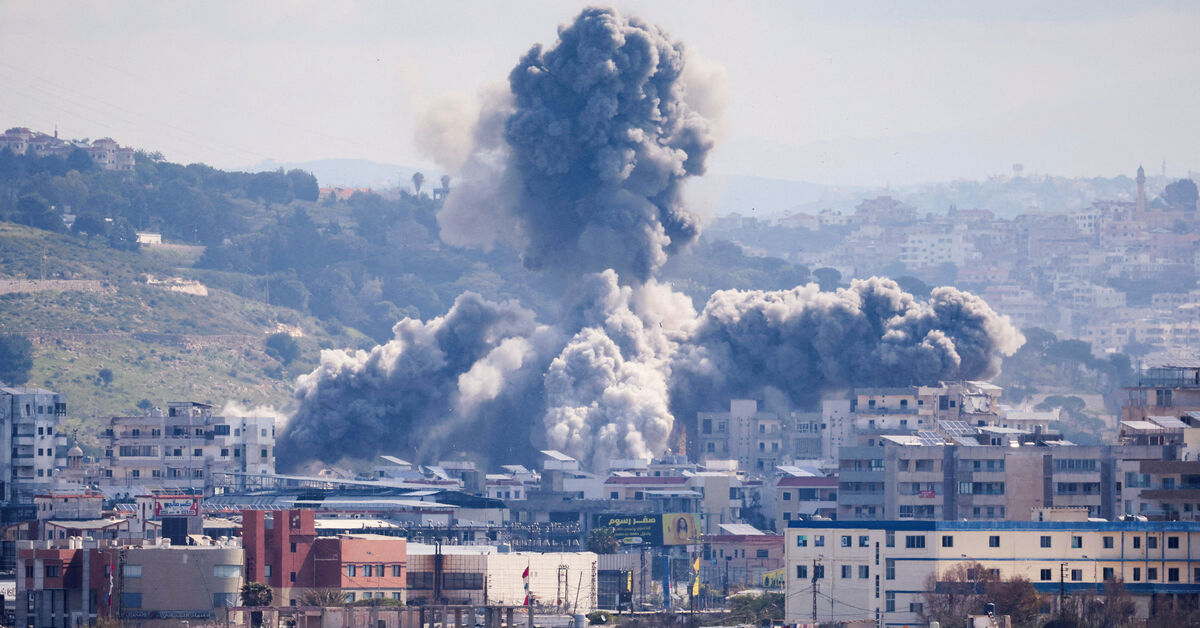
In an unprecedented escalation, the Israeli army announced on Wednesday, April 8, 2023, that it had carried out the largest airstrikes against Lebanese Hezbollah since the onset of the current conflict. These strikes targeted Hezbollah's infrastructure in civilian areas, raising international concerns about the safety of civilians in Lebanon.
These airstrikes come at a sensitive time as tensions in the region escalate, and it appears that Israel aims to undermine Hezbollah's ability to carry out military operations against it. The Israeli army indicated that these strikes are a response to repeated attacks by the armed group, which it considers a direct threat to its national security.
Details of the Event
According to official data, the Israeli strikes targeted a range of sites believed to be used by Hezbollah for storing weapons and preparing operations. These strikes resulted in widespread destruction in some areas, provoking angry reactions from the Lebanese government, which deemed these actions a violation of Lebanese sovereignty.
At the same time, local sources confirmed that the airstrikes resulted in injuries among civilians, further complicating the humanitarian situation in Lebanon, which is already suffering from severe economic and social crises.
Background & Context
Historically, relations between Israel and Hezbollah have seen increasing tensions since the 2006 war, which resulted in widespread destruction in Lebanon. Since then, sporadic clashes have continued, but the recent escalation reflects a shift in Israeli strategy aimed at preventing Hezbollah from enhancing its military capabilities.
The situation in Lebanon has also been significantly affected by political and economic crises, making the country more vulnerable to military tensions. The economic collapse has exacerbated humanitarian conditions, making any military escalation more dangerous for civilians.
Impact & Consequences
Analyses suggest that these airstrikes could lead to a greater escalation in the conflict, as Hezbollah is likely to respond to these strikes with retaliatory operations. Additionally, military escalation could affect regional stability, as other parties may intervene in the conflict, complicating the situation in the region.
Moreover, international pressures may increase on Israel to limit its military operations, especially with growing concerns about the humanitarian impact of these airstrikes. Such pressures may require Israel to reassess its military strategy in the region.
Regional Significance
Events in Lebanon directly affect neighboring Arab countries, as they could lead to an influx of refugees or increased border tensions. Any escalation may also reflect on the relations between Arab countries and Israel, especially amid attempts by some countries to normalize relations with Tel Aviv.
Ultimately, the situation in Lebanon remains complex, requiring a delicate balance between security and humanitarian considerations. Recent events indicate that the region may be on the brink of a larger escalation, necessitating close monitoring by the international community.