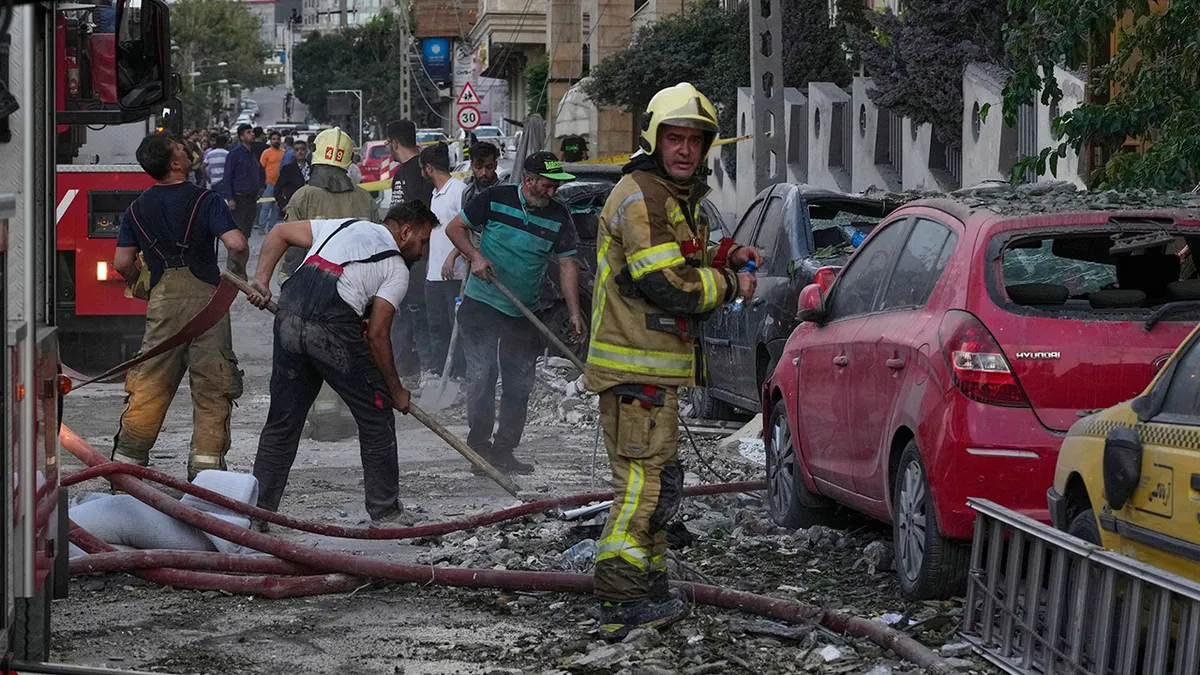
On Monday morning, the Israeli army announced the execution of airstrikes targeting Iranian military infrastructure in the capital, Tehran. These strikes come at a sensitive time as the conflict in the Middle East enters its second month, increasing tensions in the region.
These strikes are part of a broader Israeli strategy aimed at undermining Iranian military capabilities, which it views as a direct threat to its national security. It has been confirmed that these military operations aim to prevent Iran from enhancing its military presence in the region, especially in light of the rising Iranian military activities in recent years.
Details of the Event
According to official data, the Israeli strikes targeted several military sites in Tehran, including facilities used for weapon development. Initial reports indicated that the strikes caused significant damage to these facilities, reflecting Israel's capability to conduct complex military operations deep within Iranian territory.
In contrast, Iranian media reported that Iranian air defenses intercepted some of these strikes, resulting in the destruction of several Israeli aircraft before they reached their targets. This escalation in military operations reflects the rising tensions between the two sides and suggests the possibility of a wider conflict in the region.
Background & Context
Historically, relations between Israel and Iran have been tense, with Israel considering Iran a major enemy in the region. These tensions have escalated since the signing of the Iranian nuclear agreement in 2015, which Israel viewed as a threat to its security. Since then, Israel has carried out several military operations against Iranian targets in Syria and Lebanon, but these recent strikes represent an unprecedented escalation.
These events occur at a sensitive time as the region experiences significant political and economic changes, complicating the security landscape. Additionally, the war in Ukraine and its impact on energy prices may overshadow the conflict in the Middle East, making the situation even more complex.
Impact & Consequences
The Israeli strikes on Tehran are seen as a step that could lead to greater military escalation in the region. Iran is likely to respond to these strikes with retaliatory operations, either through direct attacks or via its proxies in the region. This escalation could destabilize countries like Iraq, Syria, and Lebanon, where Iran has significant influence.
Furthermore, these developments may affect international relations, particularly with Western countries seeking to revive the nuclear agreement with Iran. These countries may find themselves in a difficult position, having to deal with potential military escalation while trying to achieve stability in the region.
Regional Significance
These events directly impact Arab countries, as tensions may increase between Iran and Arab nations that feel threatened by Iran's growing influence. Any military escalation could lead to an influx of refugees and an increase in humanitarian crises in the region, placing additional burdens on neighboring countries.
Ultimately, the situation in the Middle East remains complex, with regional and international interests intertwining, making it difficult to predict the course of events. As military and political pressures continue, the region may be on the brink of a larger conflict, necessitating urgent diplomatic efforts to avoid further escalation.