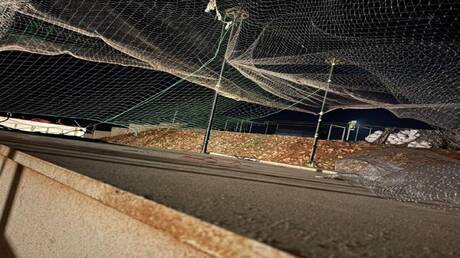
The Israeli army disclosed on Thursday evening that it has supplied its forces in southern Lebanon with approximately 158,000 meters of anti-drone wire networks, a move aimed at bolstering defense capabilities against the escalating threats posed by Hezbollah. The army confirmed that these networks are part of its evolving strategies to address security challenges in the region.
This step comes at a time when concerns are rising regarding Hezbollah's potential use of suicide drones as a means to increase pressure on Israeli forces. The army indicated that these networks will help reduce the effectiveness of these drones, which pose a real threat to Israeli security.
Details of the Initiative
The Israeli army clarified that the anti-drone wire networks have been specifically designed to effectively counter the unmanned aerial vehicles that armed groups like Hezbollah may use. It also noted that these measures are part of a comprehensive plan to enhance security along the northern borders, where military activities have recently intensified.
The Israeli plans also include doubling the available quantity of these networks, reflecting the army's commitment to strengthening its defensive capabilities. A portion of these networks has already been deployed on the ground, with expectations for increased deployment in the near future.
Background & Context
Historically, the Israeli-Lebanese border has witnessed increasing tensions, especially with the rise in military activities by Hezbollah. Since 2006, when the Second Lebanon War broke out, Hezbollah has become a key player in the security equation of the region, prompting the Israeli army to adopt stricter measures to counter potential threats.
In recent years, Hezbollah has employed advanced techniques in the use of drones, complicating the security situation further. Therefore, enhancing Israeli defenses is a necessary step in the context of the ongoing conflict between the two sides.
Impact & Consequences
These new measures by the Israeli army indicate a rise in tensions in the region. With the increasing threats from Hezbollah, these actions may lead to escalated military confrontations, impacting regional stability.
Moreover, these steps may provoke reactions from Hezbollah, which might seek to enhance its offensive capabilities in response to these measures. Consequently, the situation could become more complex, necessitating close monitoring by the international community.
Regional Significance
The ramifications of these events extend beyond the Israeli-Lebanese borders, affecting regional security as a whole. As tensions rise, neighboring countries may also be impacted, increasing instability in the region.
Additionally, these events could affect relations between Arab countries and Israel, as some nations may seek to bolster their security cooperation in the face of shared threats. Thus, the situation requires special attention from decision-makers in Arab states.
In conclusion, the steps taken by the Israeli army reflect the increasing security challenges in the region, necessitating an effective response from all concerned parties.