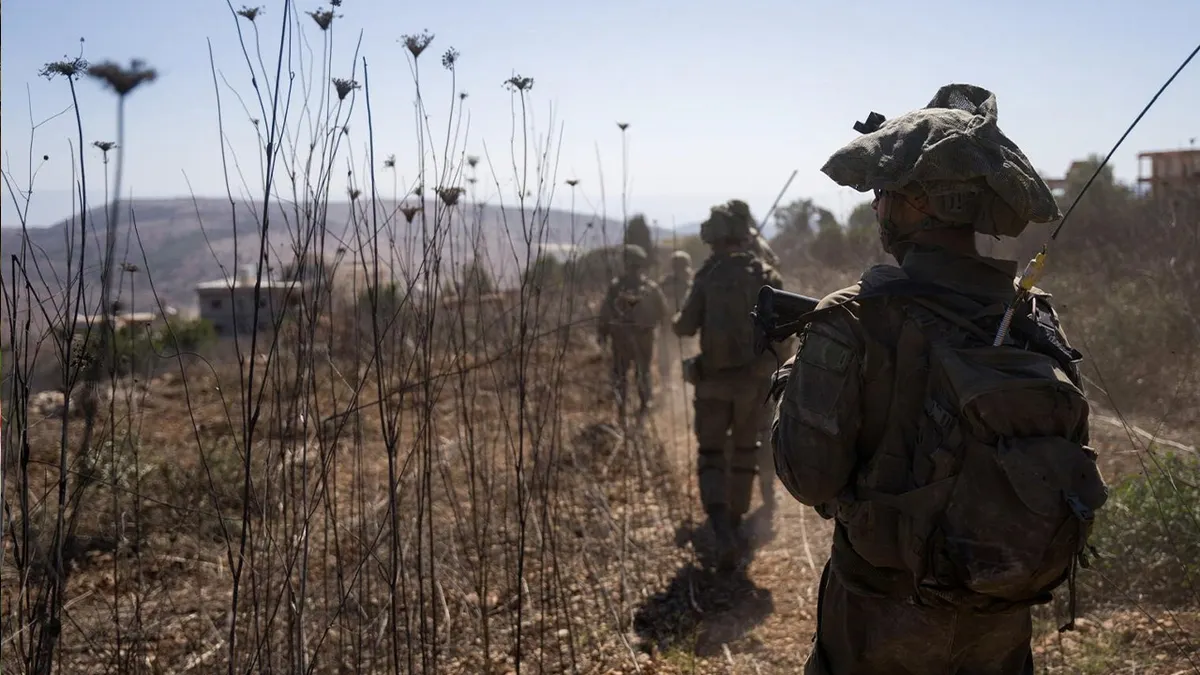
Israeli military sources have confirmed that there is no intention for the Israeli army to advance further into Lebanon, reflecting a shift in military strategy. This announcement comes amidst rising tensions in the region, where fears of worsening security conditions are increasing.
These statements come at a sensitive time, as there had been speculation about the possibility of conducting extensive military operations in Lebanese territory. However, it appears that the Israeli army prefers to focus on air and naval operations rather than a ground incursion, which may indicate a new assessment of risks and opportunities.
Details of the Situation
In a report published by Haaretz, sources clarified that the Israeli army is currently focusing on enhancing its defensive capabilities at the border, rather than taking escalatory steps that could lead to a direct confrontation with Hezbollah or Lebanese forces. This approach reflects a desire to avoid escalation that could lead to a large-scale conflict.
Reports also indicated that the Israeli army has bolstered its military presence along the border, concentrating on monitoring Hezbollah's military activities. This strategy seems aimed at reducing potential risks without engaging in direct conflict.
Background & Context
Historically, the Lebanese-Israeli border has experienced recurring tensions, particularly with Hezbollah as a major military force in Lebanon. Since the Israeli war on Lebanon in 2006, there have been repeated attempts by both sides to avoid escalation, although sporadic incidents continue to occur.
In recent years, fears of a new conflict have increased, especially amid the political and economic crises plaguing Lebanon. These conditions could lead to heightened tensions, making it essential for the parties involved to adopt more cautious strategies.
Impact & Consequences
The Israeli army's decision not to advance ground forces into Lebanon could significantly affect regional dynamics. The shift towards air and naval operations may provide the Israeli army with greater flexibility in addressing threats without risking a full-scale ground conflict.
This decision may also contribute to calming the situation in the region, as the international community seeks to avoid a new escalation that could lead to a larger humanitarian crisis in Lebanon. At the same time, it may increase pressure on Hezbollah, which could find itself compelled to respond to threats without engaging in direct confrontation.
Regional Significance
The situation in Lebanon is part of a broader landscape in the Middle East, where political and economic crises intersect with military tensions. Any escalation in Lebanon could impact neighboring countries, including Syria and Palestine, complicating regional conditions further.
Ultimately, the question remains as to how this new strategy of the Israeli army will affect regional security. While all parties aim to avoid escalation, tensions persist, necessitating ongoing dialogue and cooperation among the involved nations.