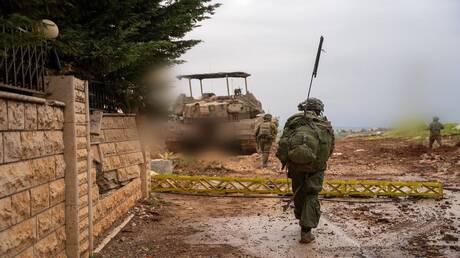
The Israeli newspaper Haaretz reported that the Israeli army is struggling to achieve tangible progress in southern Lebanon, where Hezbollah continues to be present in areas controlled by the army. Reports show that the advance towards the Litani River remains partial, aimed at enhancing fire control in the region.
These developments come at a sensitive time, as tensions between Israel and Hezbollah escalate, raising fears of a potential military escalation. Observers have noted that Hezbollah's presence in these areas reflects the challenges faced by the Israeli army in implementing its military strategies.
Details of the Event
The Israeli forces are seeking to achieve a strategic advance towards the Litani River, which is considered an important step in the ongoing conflict with Hezbollah. However, the progress made so far remains limited, raising questions about the effectiveness of Israeli military operations in the region.
Reports indicate that Hezbollah has strengthened its presence in border areas, complicating the military situation. Additionally, Israeli military operations face multiple challenges, including rugged terrain and Hezbollah's advanced combat capabilities.
Background & Context
Historically, the Lebanese-Israeli border has witnessed increasing tensions, especially since 2006 when the Second Lebanon War broke out. Since then, Hezbollah has become a prominent military and political force in Lebanon, making it a key adversary for Israel. Israeli military operations in southern Lebanon are part of a broader strategy aimed at undermining Hezbollah's capabilities.
In recent years, concerns have grown over the escalation of conflict between the two sides, particularly with Hezbollah's increasing military activities and armament. The volatile regional situation, including conflicts in Syria and Iraq, has also affected the dynamics of the conflict in Lebanon.
Impact & Consequences
Recent developments in southern Lebanon could lead to an escalation of military tensions, threatening the stability of the region. If Hezbollah continues to bolster its presence, Israel may find itself compelled to intensify its military operations, potentially leading to a larger escalation in the conflict.
Furthermore, any escalation in the conflict could impact regional security, as neighboring countries such as Syria and Jordan could be affected. The escalation may also lead to serious humanitarian consequences for civilians in the affected areas.
Regional Significance
The developments in southern Lebanon are of great importance to the Arab region, reflecting the security challenges faced by neighboring countries. Any escalation in the conflict could have political and economic repercussions for Arab nations, especially those grappling with internal crises.
In light of these circumstances, Arab countries must closely monitor the situation, as any escalation could affect peace and stability efforts in the region. Additionally, tensions in Lebanon may lead to increased political divisions within Arab states, complicating regional cooperation efforts.
In conclusion, the situation in southern Lebanon remains under scrutiny, with expectations that tensions between the Israeli army and Hezbollah will continue, raising concerns about the future stability of the region.