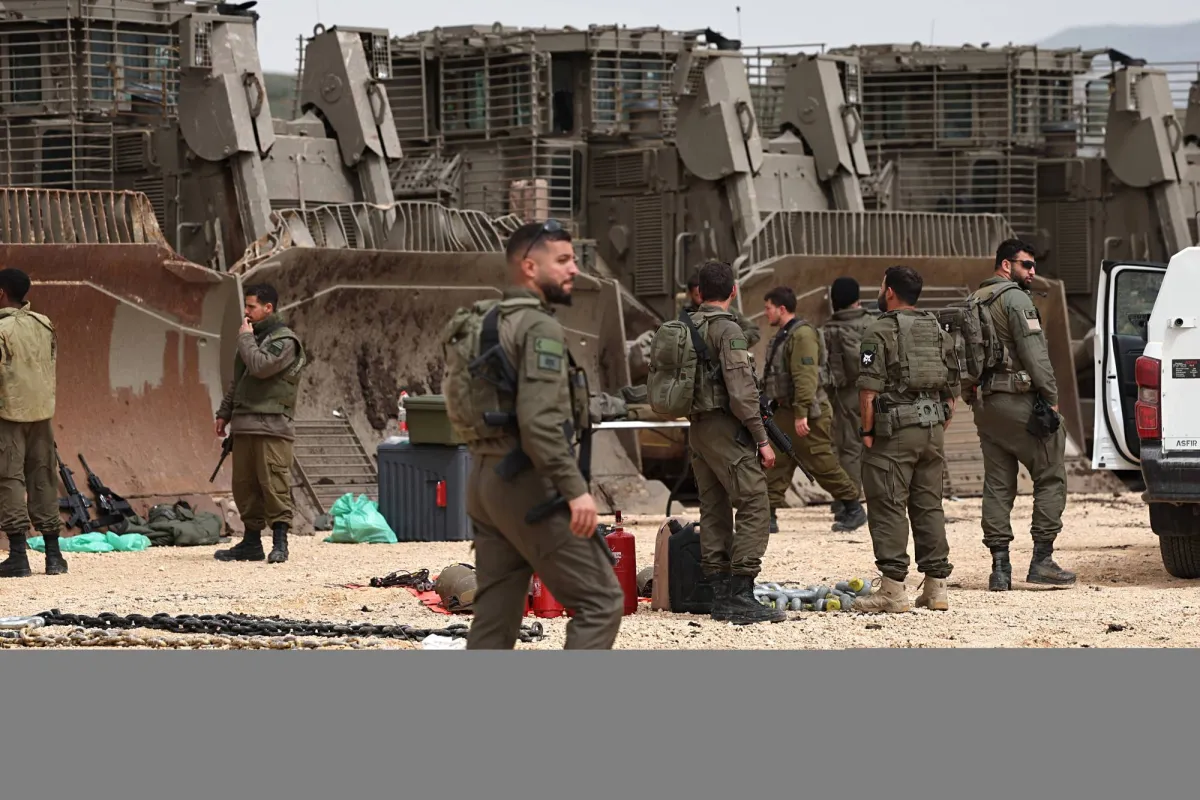
The Israeli government is facing mounting pressure following a letter from the families of several soldiers in the 'Nahal' infantry brigade addressed to Prime Minister Benjamin Netanyahu and Defense Minister Israel Katz. They are calling for a reassessment of their sons' presence in southern Lebanon, arguing that the risks faced by the soldiers are unjustified, especially given the lack of air support, and warning of increasing casualties.
As the Israeli army announced an expansion of its deployment in the Ras al-Bayada area near the border with Galilee, the families asserted that the continued presence of their sons in Lebanon exposes them to significant danger. They deemed this operation unreasonable under the current circumstances.
Details of the Situation
Reports indicate that the Israeli government had requested to occupy southern Lebanon entirely, establishing the Litani River as a new border for Israel. However, the Israeli army rejected this, preferring to establish the Litani as a 'fire border' monitored through what is known as the 'yellow line', a term referring to the border line in the Gaza Strip. Tens of thousands of soldiers have been deployed to Lebanon for this purpose.
The families expressed concern over the rising number of casualties among the soldiers, with 13 fatalities reported so far (10 soldiers and 3 civilians) and 20 others injured. They noted that most of the air force resources are currently dedicated to countering Iran, which means that soldiers in Lebanon are not receiving adequate air support.
Context and Background
These developments come at a time when Lebanon is witnessing military escalation between the Israeli army and Hezbollah. The families pointed out that one of the objectives of the ground invasion is to compel Hezbollah to direct its fire towards Israeli forces instead of the northern residents. While defending the residents of northern towns is important, the families believe that drawing fire towards combatants is not a legitimate goal, and all available tools should be used to ensure their safety.
The families also called for considering alternatives to protect northern residents, such as temporary evacuation or adding more shelters and fortified rooms in at-risk towns.
Consequences and Impact
Concerns are growing that the continuation of military operations could lead to greater escalation in the region. Israeli reports have warned that Hezbollah remains capable of targeting Israeli forces in southern Lebanon, despite its inability to launch hundreds of rockets daily as it did previously. The military situation appears more complex than anticipated, especially following the assassination of Iranian leader Ali Khamenei.
The Israeli forces present in southern Lebanon include most regular brigades, except for those that remained in the Gaza Strip. Some officers fear that political pressure could lead to greater incursions, potentially resulting in more severe exchanges of fire.
Impact on the Arab Region
The Arab region is significantly affected by the military escalation between Israel and Hezbollah. 18 European countries have called for a ceasefire in a joint statement, emphasizing the need to respect Lebanon's sovereignty and unity. This comes at a time when international pressure on Israel to halt military operations in Lebanon is increasing.
In closing, the families urged accountability regarding the events and the continuation of combat methods, asserting that exploiting their sons in this war is an injustice that cannot be accepted.