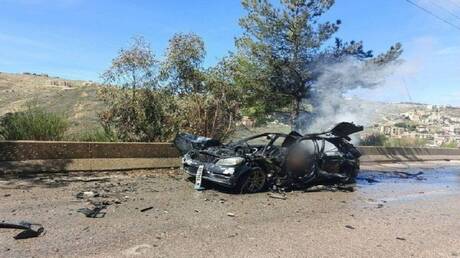
The Israeli army has revealed a video documenting the targeting of the vehicle belonging to Lebanese journalists Ali Shaib and Fatima Fatouni, accusing Shaib of being an operative for Hezbollah's 'Radwan Force'. He has reportedly worked undercover as a journalist for several years. This announcement comes at a time when the region is experiencing increasing tensions between Israel and Hezbollah, complicating the media and political landscape in Lebanon.
The video published by the Israeli army details the attack, showing the vehicle being targeted while in transit, which has sparked widespread reactions in media and political circles. This incident is part of a series of events reflecting the ongoing tensions between Israel and Hezbollah, which have been escalating in recent years.
Details of the Incident
In the video, the Israeli army illustrates how the vehicle was targeted, directing accusations at Ali Shaib for allegedly working as an intelligence operative for Hezbollah. This accusation has sparked significant controversy, as many consider targeting journalists a blatant violation of press freedom. Fatima Fatouni, who was accompanying Shaib, is also part of this case, as they were both targeted together in the incident.
It is worth noting that Ali Shaib is a well-known journalist in Lebanon, having worked for several media outlets, which adds complexity to the situation. The Israeli army claims that Shaib was operating under the guise of journalism, raising questions about how authorities handle journalists in conflict zones.
Background & Context
Historically, the relationship between Israel and Hezbollah has seen increasing tensions since the party's inception in the 1980s. These tensions have particularly escalated following the 2006 war, where the Lebanese-Israeli border became a site for numerous clashes. In recent years, military and intelligence activities from both sides have intensified, leading to heightened tensions.
The situation in Lebanon is also complex, as the country suffers from severe political and economic crises. Under these circumstances, journalists become potential targets, facing assaults or threats from various parties. This raises significant concerns regarding press freedom in the region.
Impact & Consequences
Targeting journalists in any conflict is a serious issue, as it threatens freedom of expression and increases the risks faced by journalists in conflict areas. This incident may lead to increased pressure on the Lebanese government to protect journalists and provide a safe environment for media work.
Furthermore, this incident could affect relations between Lebanon and Israel, potentially leading to escalated tensions along the border. International reactions may also be crucial in determining how this issue is addressed, especially from human rights organizations monitoring press freedom worldwide.
Regional Significance
This event serves as a wake-up call for journalists across the Arab region, who face increasing challenges amid ongoing conflicts. Targeting journalists could lead to a decline in media freedom, affecting their ability to cover events independently and objectively.
Ultimately, the international community must take a firm stance against violations of journalists' rights and work to ensure the protection of freedom of expression worldwide. Recent events reflect the urgent need to bolster and protect journalists' rights in conflict zones.