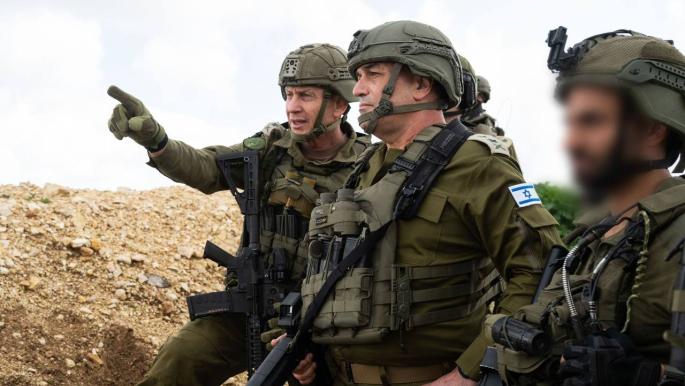
In a controversial statement, Israeli Chief of Staff Eyal Zamir confirmed on Friday that the Israeli army is working to fundamentally change the security reality from Tehran to Beirut. Zamir noted that this step is part of a comprehensive strategy to confront the threats posed by the Lebanese Hezbollah.
Zamir's remarks come at a sensitive time, as tensions in the region escalate, with Hezbollah being one of Israel's most prominent adversaries. He stressed the importance of continuing the fight against Hezbollah, considering it an integral part of Israeli national security.
Details of the Announcement
During his address, Zamir explained that the military operations carried out by the Israeli army aim to achieve security stability in the region, pointing out that Iranian threats and their allies in Lebanon require an effective and swift response. He also emphasized that the Israeli army is working to enhance its military and technological capabilities to face these challenges.
These statements come at a time when Israeli-Iranian relations are increasingly strained, with Israel accusing Iran of supporting Hezbollah and supplying it with advanced weapons. Zamir believes that this dynamic necessitates Israel taking proactive steps to ensure its security.
Background & Context
Historically, the relations between Israel and Hezbollah have been tense, with the region witnessing numerous armed conflicts between the two parties. Since 2006, when the Second Lebanon War broke out, tensions between Israel and Hezbollah have not ceased, as each side seeks to enhance its influence in the region.
In recent years, Iran has increased its support for Hezbollah, leading to growing concern in Israel. Israel considers Hezbollah's presence on its northern borders a direct threat to its security, which explains the military strategy announced by Zamir.
Impact & Consequences
Zamir's statements may lead to an escalation of tensions in the region, as they could be interpreted as a call for new military operations against Hezbollah. This strategy may also affect Israel's relations with other Arab countries, especially those seeking peace and stability in the region.
Furthermore, any military escalation could have serious humanitarian consequences, potentially causing civilian displacement and increasing suffering in the conflict-affected areas. This underscores the need for the international community to intervene to mitigate escalation and ensure civilian protection.
Regional Significance
These statements are particularly significant for Arab countries, as they reflect the ongoing tensions in the region and their impact on regional security. Under current circumstances, Arab nations may find themselves in a difficult position, needing to balance support for Palestinian rights with confronting Israeli threats.
Moreover, any military escalation could affect peace efforts in the region, leading to a decline in dialogue among different parties and exacerbating divisions. Therefore, observers are calling for de-escalation and dialogue to avoid further escalation.
In conclusion, Zamir's statements serve as a wake-up call for the region, reflecting the complex security challenges faced by Israel and its allies. As tensions continue, there remains hope that wisdom will prevail and steps will be taken towards peace and stability.