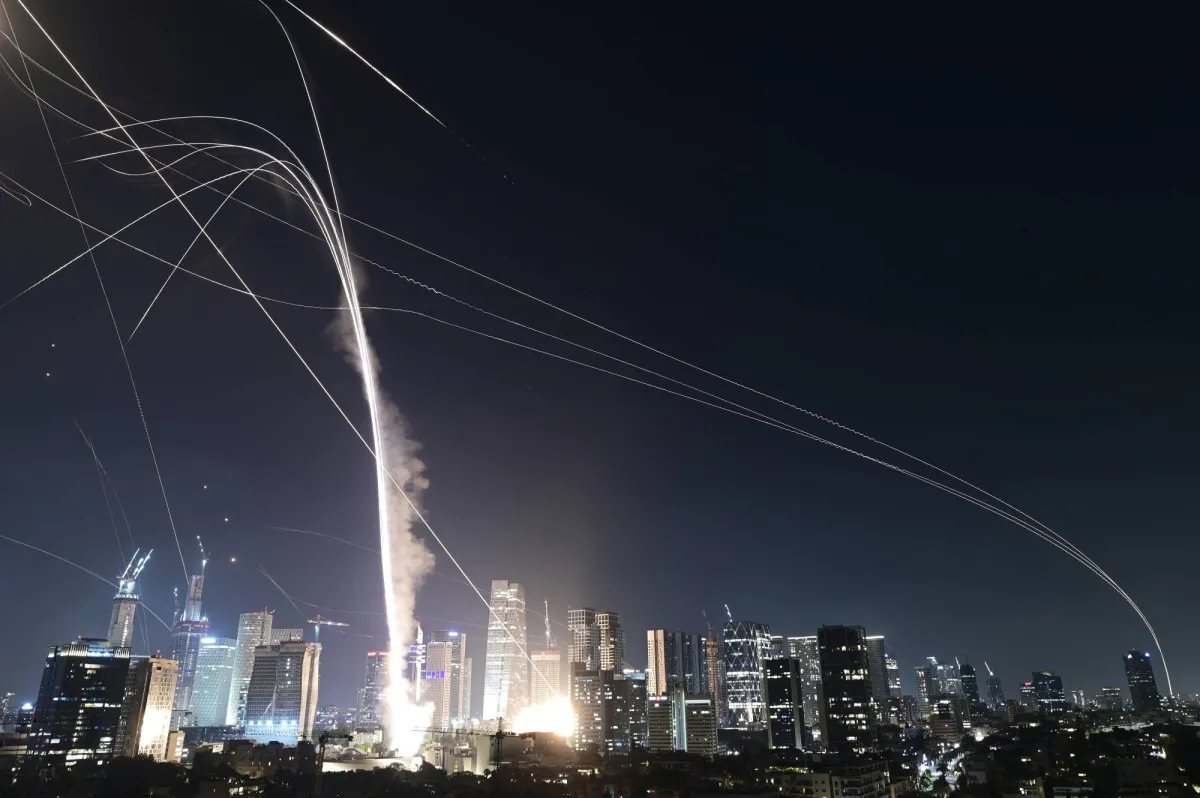
The Israeli army announced this morning (Monday) that it has started launching strikes on military infrastructure belonging to the Iranian regime in the capital, Tehran, at a time when it is responding to a rocket attack that originated from Iran. This reflects the rising tensions in the Middle East as the war enters its second month.
The Israeli army stated via the Telegram app that the strikes are targeting "military infrastructure belonging to the Iranian terrorist regime throughout Tehran." It also added that it has detected rockets launched from Iran towards Israeli territory, confirming that air defense systems are working to intercept these threats.
Details of the Incident
In a related context, the International Atomic Energy Agency reported that the Iranian heavy water production plant in Khondab suffered significant damage and has ceased operations, which Iran confirmed was due to an attack. The agency noted that the plant does not contain any declared nuclear materials, complicating the current situation further.
At the same time, the German Foreign Ministry issued a statement expressing the concern of the foreign ministers of Germany, France, Italy, and the United Kingdom regarding an Israeli bill that threatens to enhance the chances of imposing the death penalty in Israel, reflecting international concern over the rising violence in the region.
Context and Background
The U.S.-Iranian confrontation is heading towards a more dangerous phase, with Tehran warning of a potential ground attack while the U.S. military prepares for operations that could extend for weeks. This escalation comes at a time when military buildup around the Strait of Hormuz is increasing, which is considered a strategic point in global maritime navigation.
The Speaker of the Iranian Parliament, Mohammad Baqer Qalibaf, stated that the United States is sending public negotiation messages while simultaneously planning a ground attack, indicating that Iranian forces are prepared to confront any U.S. intervention. He also warned that the United States' regional partners would face permanent punishment if the situation escalates into a ground intervention.
Military Escalation and Its Consequences
The military escalation between Iran and Israel could lead to an increase in conflict in the region, with growing fears of an outbreak of a comprehensive war. Some analysts have pointed out that any U.S. ground attack may face fierce resistance from Iranian forces, complicating the military situation further.
Moreover, international pressure on Iran may increase, especially with warnings from European countries about the rising violence, which could push Tehran to take more hardline steps in its responses.
Impact on the Arab Region
The Arab region is directly affected by the rising tensions between Iran and Israel, as any military operations could have negative repercussions on security and stability in neighboring countries. The escalation of conflict could also reopen old wounds between Arab states and Iran, increasing divisions in the region.
In conclusion, the situation in the Middle East remains tense, with ongoing military and political pressures. Intensive diplomatic efforts are required to avoid a larger escalation that could lead to dire consequences for all parties involved.