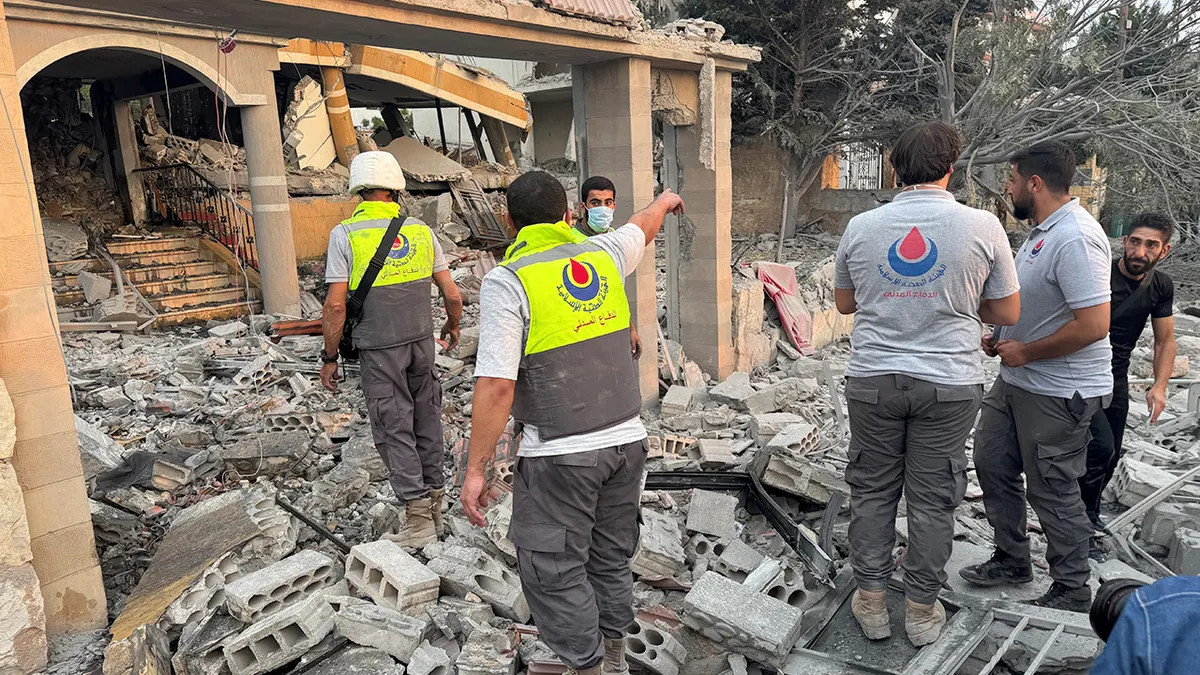
The Israeli army has carried out attacks targeting around 100 sites associated with the Lebanese Hezbollah, representing a new military escalation that reflects the increasing tensions between the two sides. These operations occur in a tense atmosphere, raising fears of a larger escalation that could drag the region into new conflicts.
The targeted sites are spread across various regions in Lebanon, with reports indicating that the attacks included military locations and others used by the group for logistical purposes. The Israeli army has confirmed that these operations are part of its ongoing efforts to counter the threats posed by Hezbollah, which it considers a primary enemy in the region.
Details of the Incident
According to official data, the attacks were executed using drones and precision missiles, showcasing the advancement of Israeli military capabilities. A spokesperson for the army noted that these operations aim to undermine Hezbollah's ability to carry out any attacks against Israel, especially amid ongoing tensions along the border.
It was also emphasized that the Israeli army will continue to monitor Hezbollah's military activities, with increased preparations for any potential escalation. These attacks follow a series of skirmishes along the border, where the area has witnessed exchanges of fire between the two sides.
Background & Context
Historically, Hezbollah is considered a key player in the Lebanese-Israeli conflict, having emerged in the 1980s in response to the Israeli occupation of Lebanon. Since then, the party has evolved into a significant military and political force in Lebanon, making it a constant target for the Israeli army.
In recent years, tensions between the two sides have escalated, particularly following the Syrian civil war, where Hezbollah supported the Syrian regime, complicating the regional conflict. Additionally, tensions between Iran and Israel play a significant role in escalating the situation, as Hezbollah is seen as part of the resistance axis supported by Iran.
Impact & Consequences
Analysts suggest that these attacks could lead to a greater escalation in the region, with Hezbollah likely to respond to these strikes with retaliatory operations. This escalation could drag Lebanon into a new cycle of conflict, exacerbating the suffering of the Lebanese people who are already grappling with severe economic and political crises.
The military escalation may also affect relations between Lebanon and Western countries, as the Lebanese government could face increased pressure to curb Hezbollah's activities. This situation could further complicate the political landscape in Lebanon, where the country is already experiencing deep internal divisions.
Regional Significance
These events serve as a wake-up call for Arab nations, reflecting the ongoing tensions in the region and the security challenges they face. Such escalations could lead to a reshaping of alliances in the area, with some countries potentially seeking to strengthen their ties with Israel as a means to counter Iranian threats.
At the same time, these events may increase popular support for Hezbollah in Lebanon, where many view it as a symbol of resistance against occupation. This support could complicate the Lebanese government's efforts to address both internal and external crises.
In light of these tense circumstances, the question remains about how events will unfold in the region. The military escalation between Israel and Hezbollah may have far-reaching implications for security and stability in the Middle East.