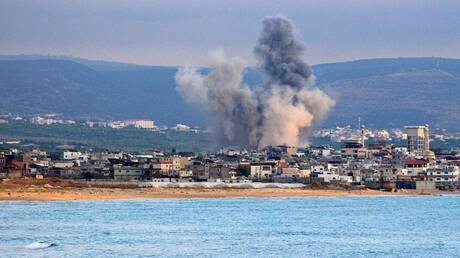
On Wednesday, the Israeli army announced that it has carried out attacks on around 550 targets affiliated with Hezbollah in different areas of Lebanon since the start of this week. These attacks included targeting military buildings, headquarters, and rocket launch sites, reflecting a notable escalation in Israeli military operations against the group.
These strikes come at a sensitive time for the region, where tensions between Israel and Hezbollah are rising. Hezbollah is considered one of the most prominent armed factions in Lebanon. The Israeli army indicated that these operations aim to undermine Hezbollah's military capabilities and prevent any potential threats against Israeli territories.
Details of the Operations
According to data released by the Israeli army, the attacks targeted multiple Hezbollah sites, including weapons depots and command centers. These operations were executed using drones and artillery shells, showcasing an advanced use of military technology in the operations.
The Israeli army also stated that these operations are part of a broader strategy to counter security threats, as the army seeks to enhance its defensive and offensive capabilities in the face of any potential escalation from Hezbollah or other armed factions in the region.
Background & Context
Historically, relations between Israel and Hezbollah have been marked by increasing tensions, especially following the war that erupted in 2006. Since then, Hezbollah has continued to bolster its military capabilities, prompting Israel to take precautionary measures to address any threats. This situation has led to an escalation of military operations from both sides, complicating the security landscape in Lebanon and the region.
In recent years, the Israeli-Lebanese border has witnessed numerous incidents, including exchanges of gunfire and limited military operations. As tensions rise, it has become clear that any escalation could lead to a full-blown conflict, raising concerns in international circles.
Impact & Consequences
These attacks represent a serious escalation in the ongoing conflict and may provoke responses from Hezbollah, increasing the likelihood of armed conflict. Furthermore, these operations could affect stability in Lebanon, where the country is already grappling with severe economic and political crises.
Moreover, military escalation could negatively impact relations between Lebanon and neighboring countries, potentially leading to international interventions in the conflict, threatening regional security overall.
Regional Significance
Recent developments suggest that the conflict between Israel and Hezbollah could have wide-ranging implications for the Arab region. As tensions escalate, neighboring countries, such as Syria and Palestine, may be affected, potentially exacerbating security situations and leading to refugee flows or escalating disputes.
These events could also influence the political stances of Arab countries towards the conflict, potentially altering the dynamics of alliances in the region. In light of this situation, it becomes essential for Arab nations to take diplomatic steps to alleviate tensions and achieve stability.
In conclusion, these attacks highlight a potential escalation in the conflict between Israel and Hezbollah, necessitating urgent international attention to prevent further deterioration of the situation.