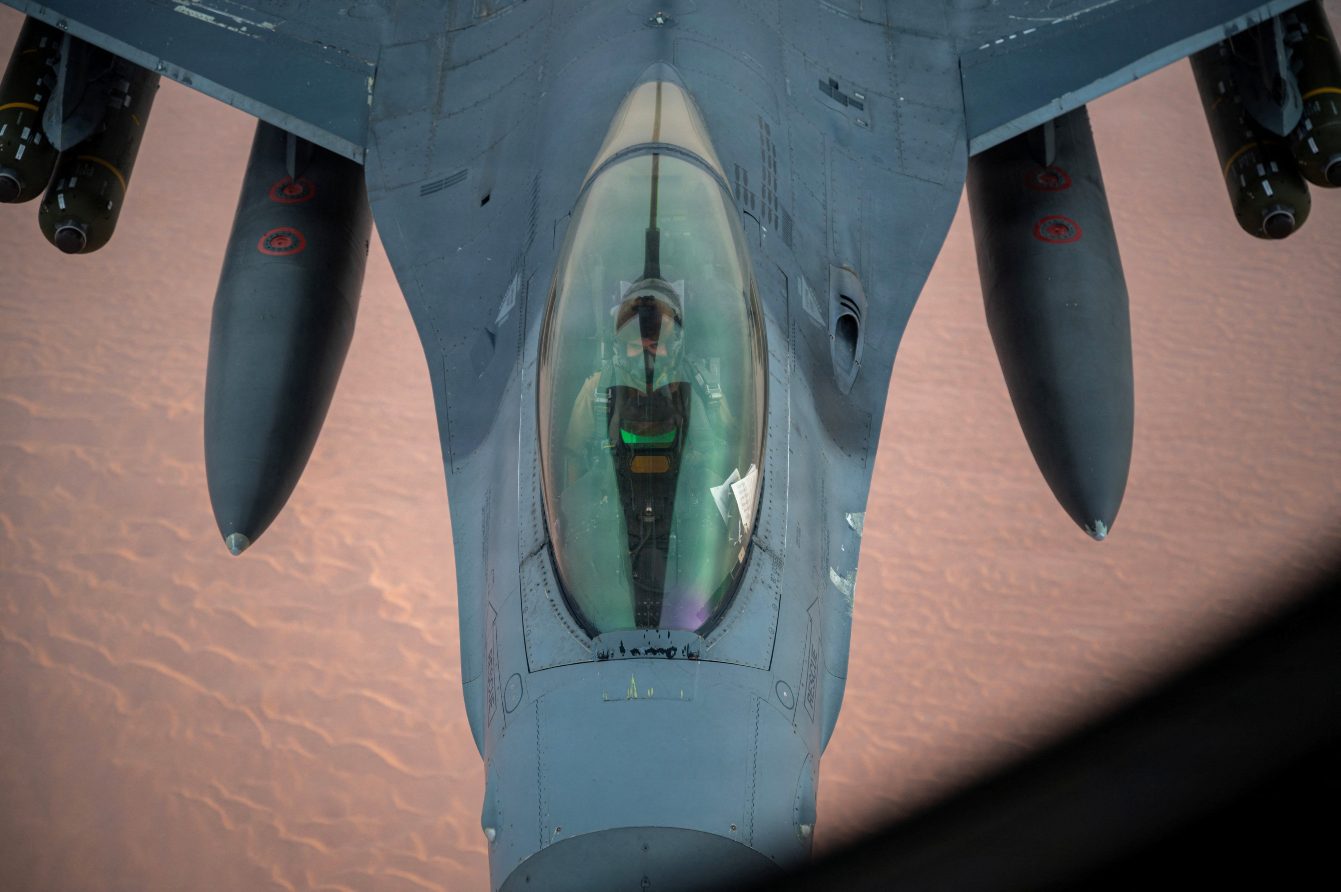
The Israeli army has announced that it conducted airstrikes on military sites in the Iranian capital, Tehran, on Friday, targeting what it described as defensive facilities and key weapons production sites. The army stated in a press release that the Israeli Air Force targeted Iranian air defense sites, including a location belonging to the Iranian Revolutionary Guard where missiles intended for targeting aircraft were stored.
The Israeli army also claimed to have attacked a military site responsible for protecting weapons research and development facilities, in addition to another site used for storing ballistic missiles. Despite confirming the targeting of these sites, the Israeli army did not provide further details or evidence to support its claims.
Details of the Event
These airstrikes come at a sensitive time, as tensions between Israel and Iran are escalating, particularly amid Israeli concerns over the Iranian nuclear program and the development of ballistic missiles. Israel has previously warned that Iran seeks to enhance its military capabilities, which it considers a threat to Israeli national security.
The Israeli army did not specify the number of airstrikes or the damage inflicted on the targeted sites, but it confirmed that the attacks were necessary to ensure Israeli security. This attack is considered part of Israel's broader strategy to confront Iranian threats in the region, which include Iran's support for armed militias in Iraq, Syria, and Lebanon.
Background & Context
Historically, relations between Israel and Iran have seen increasing tensions since the Islamic Revolution in Iran in 1979. Since then, Israel has viewed Iran as an existential threat, particularly with the development of its nuclear program. Israel has carried out several military operations against Iranian targets in Syria, but these airstrikes on Tehran are considered an unprecedented step.
In recent years, Iran has increased its military activity in the region, raising concerns among neighboring countries, including Gulf states. Israeli officials have repeatedly warned that Iran is seeking to develop nuclear weapons, a claim denied by Iranian officials, who assert that their nuclear program is peaceful.
Impact & Consequences
These airstrikes could lead to an escalation of tensions in the region, as Iran is likely to respond to the attacks in various ways, either by enhancing its military capabilities or by supporting its affiliated militias in Iraq and Syria. Additionally, these events may affect relations between Israel and Arab countries, especially amid ongoing normalization efforts in the region.
The military escalation in the region could also have economic repercussions, as the oil market and financial markets in general may be affected. Any military escalation could negatively impact peace and stability efforts in the region.
Regional Significance
These developments are of significant importance to Arab countries, as the escalation between Iran and Israel may impact regional security. Many Arab nations are concerned about Iran's increasing influence in the region, particularly in Iraq, Syria, and Lebanon. These events may also reopen discussions on the necessity of enhancing security cooperation among Arab states to confront common threats.
In conclusion, the situation in the region remains tense, and Arab countries must closely monitor developments, as any escalation could affect the stability of the entire region.