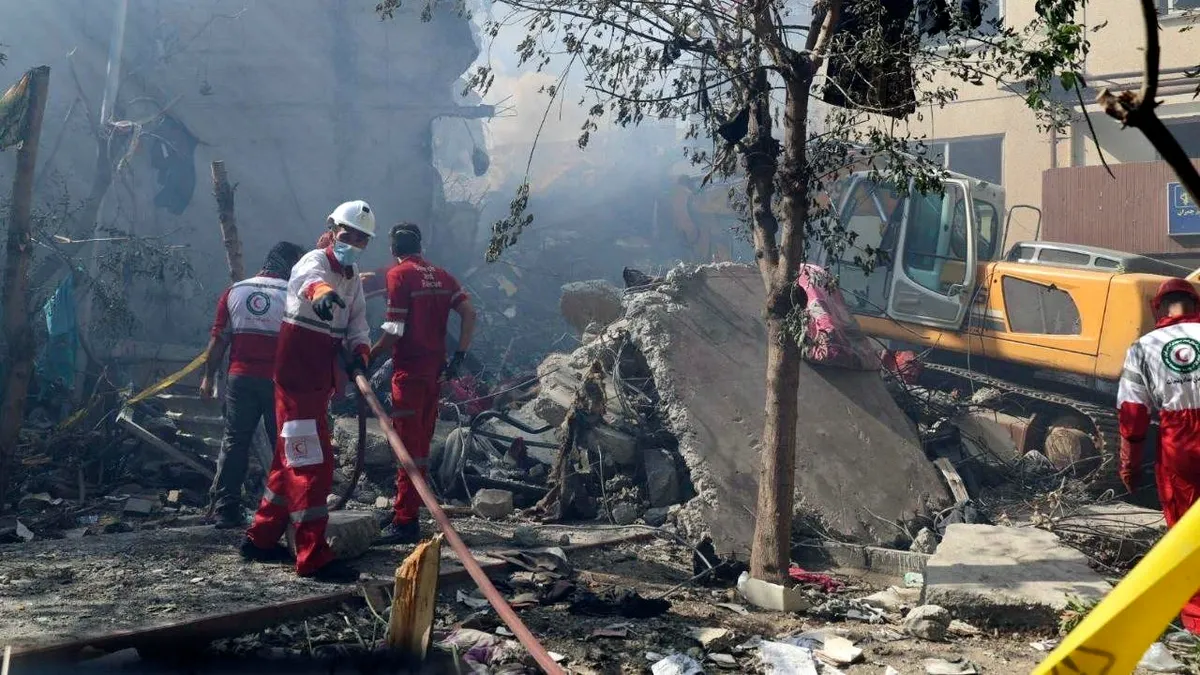
On Monday, the Israeli army announced its targeting of the main military university affiliated with the Iranian Revolutionary Guard in Tehran, in a move that reflects escalating tensions between Israel and Iran. This operation comes at a sensitive time, as fears grow over increasing Iranian military activities in the region.
The military university in Tehran is a vital center for training military officers and developing Iranian defense strategies. This operation has elicited mixed reactions in political and military circles, with some viewing it as a preemptive step by Israel to counter potential threats from Iran.
Details of the Operation
According to official statements, the Israeli operation targeted specific facilities within the university, resulting in significant material damage. No human casualties have been reported so far, but reports indicate that the attack may have impacted some academic and military activities at the university.
This operation is part of a broader Israeli strategy to confront what it perceives as increasing threats from Iran, particularly concerning its nuclear program and its expanding influence in the region. Israel has previously conducted similar operations against Iranian targets in Syria and Lebanon, reflecting its concerns over the strengthening capabilities of the Iranian Revolutionary Guard.
Background & Context
Historically, relations between Iran and Israel have seen increasing tensions since the Islamic Revolution in 1979. Israel considers Iran an existential threat, especially given its support for armed groups such as Hezbollah in Lebanon and Hamas in Gaza. Conversely, Iran seeks to enhance its regional influence, further intensifying the conflict between the two sides.
In recent years, tensions have notably escalated, particularly following the United States' withdrawal from the Iranian nuclear deal in 2018. This withdrawal led to the re-imposition of economic sanctions on Iran, exacerbating tensions in the region.
Impact & Consequences
This operation could lead to an escalation of military tensions between Israel and Iran, threatening the stability of the region. It may also affect Iran's relations with other countries, especially those seeking to mediate in the conflict.
Moreover, this operation might encourage Iran to bolster its defensive and offensive capabilities, increasing the likelihood of future conflicts. International reactions to this operation will be of interest, as they could influence the political dynamics in the region.
Regional Significance
This Israeli operation is part of a broader conflict in the region, impacting the national security of neighboring Arab states. Some Arab countries may feel concerned about the rising tensions, especially those with ties to Iran or those affected by the Iranian-Israeli conflict.
These events could also affect peace efforts in the region, as some Arab countries seek to normalize relations with Israel, while Iran remains a significant challenge in this context.
In conclusion, the recent Israeli operation reflects rising tensions in the Middle East, necessitating close monitoring by the international community. The military and political dimensions of these events could significantly impact the future of regional relations.