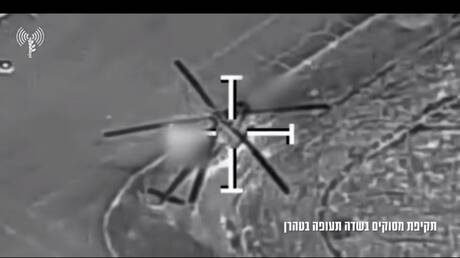
The Israeli military has launched a significant attack on airports in the Iranian capital, Tehran, targeting dozens of aircraft and helicopters belonging to the Iranian Air Force. This operation occurs at a sensitive time as tensions between Israel and Iran escalate amid ongoing regional crises.
The attack, announced early this morning, is considered one of the largest military operations by Israel against Iranian military assets. Initial reports indicated the destruction of several aircraft, reflecting Israel's capability to conduct complex military operations deep within Iranian territory.
Details of the Operation
According to military sources, Israeli forces utilized drones and precision-guided missiles during the assault. The operation primarily targeted military airports used for assembling and launching warplanes. Reports also indicated significant damage to airport infrastructure, which could impact Iranian air operations in the future.
This move follows a series of mutual threats between the two sides, with Iran having threatened to retaliate against any Israeli aggressions. Israeli officials have indicated that this attack is part of a broader strategy aimed at undermining Iranian military capabilities.
Background & Context
Historically, relations between Israel and Iran have been increasingly strained since the Iranian Revolution in 1979. Israel views Iran as an existential threat, particularly given its advanced nuclear program. In recent years, Israel has intensified its military operations against Iranian targets in Syria and Lebanon, leading to heightened tensions in the region.
Regional alliances play a significant role in this context, as Iran seeks to enhance its influence through support for armed militias. Conversely, Israel aims to forge alliances with Arab nations to counter the Iranian threat, complicating the regional landscape further.
Impact & Consequences
The attack on Iranian airports may provoke strong reactions from the Iranian government, which could launch retaliatory strikes against Israeli targets or its allies in the region. This escalation could lead to increased tensions in the Middle East, threatening regional stability.
Furthermore, this attack may impact international relations, as major powers like the United States and Russia might intervene to de-escalate the situation. The military escalation could also affect global markets, particularly in the energy sector.
Regional Significance
Neighboring Arab countries are on high alert regarding the situation between Iran and Israel. The attack could affect regional security and heighten fears of escalating conflicts. Arab nations seeking to improve relations with Israel may find themselves in a difficult position with their populations.
At the same time, this escalation could strengthen cooperation among Arab nations to confront shared threats, potentially altering the dynamics of relationships in the region.
The Israeli attack on Iranian airports represents a serious escalation in the conflict between the two sides, underscoring the ongoing tensions in the Middle East. Under these circumstances, the question remains as to how Iran will respond and whether it will take retaliatory steps that could lead to further escalation in the region.