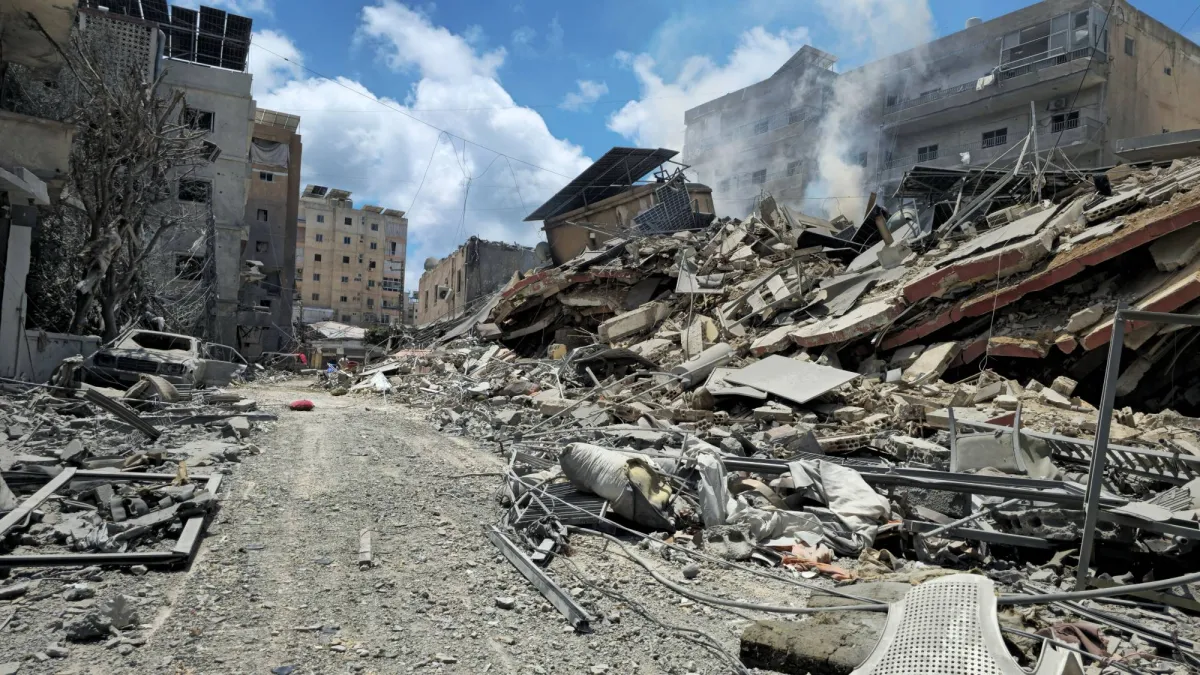
The Lebanese Ministry of Foreign Affairs condemned the continuous Israeli strikes on the city of Tyre on Thursday, noting that these attacks threaten historic neighborhoods, religious sites, and cultural landmarks in one of the oldest cities in the region.
In an official statement, Minister Youssef Raji expressed his "deep pain and concern" regarding the ongoing bombardment, along with the evacuation warnings issued by Israeli forces for areas in the city and its surroundings.
Details of the Incident
Tyre, which is listed as a UNESCO World Heritage site, is home to some of the most significant Phoenician and Roman ruins. Minister Raji has conducted intensive diplomatic communications to push for an immediate halt to the attacks, emphasizing that the archaeological and cultural heritage of Tyre is part of the "shared human conscience."
In a related context, Israeli warplanes launched an airstrike on the town of Sahmar in the Bekaa Valley, eastern Lebanon, where Israeli army spokesperson Avichai Adraee renewed his warning to the residents of Tyre and the surrounding camps and neighborhoods, urging them to evacuate the area.
Background & Context
Historically, Tyre has been an important commercial and cultural center, witnessing numerous historical events that shaped its identity. With rising tensions in the region, the city has become a target for Israeli bombardment, raising concerns about potential damage to cultural and religious landmarks.
These events coincide with a military escalation in the region, as the Lebanese-Israeli border experiences increasing tensions, heightening worries about the safety of civilians and heritage sites.
Impact & Consequences
Reports indicate that Israeli bombardment could lead to the destruction of cultural and historical landmarks, threatening the cultural identity of the city. Furthermore, the continuation of these attacks may exacerbate the humanitarian situation in Lebanon, where residents are suffering from the ongoing conflict's repercussions.
These attacks are also part of a broader strategy aimed at undermining Hezbollah's capabilities, complicating the security landscape in the region.
Regional Significance
The events in Lebanon are part of a larger conflict in the Middle East, where regional and international interests intersect. The destruction of heritage sites not only affects Lebanon but also negatively impacts the cultural identity of Arabs as a whole.
In conclusion, the current situation necessitates urgent international action to protect Lebanon's cultural and human heritage and ensure the safety of civilians amid escalating hostilities.