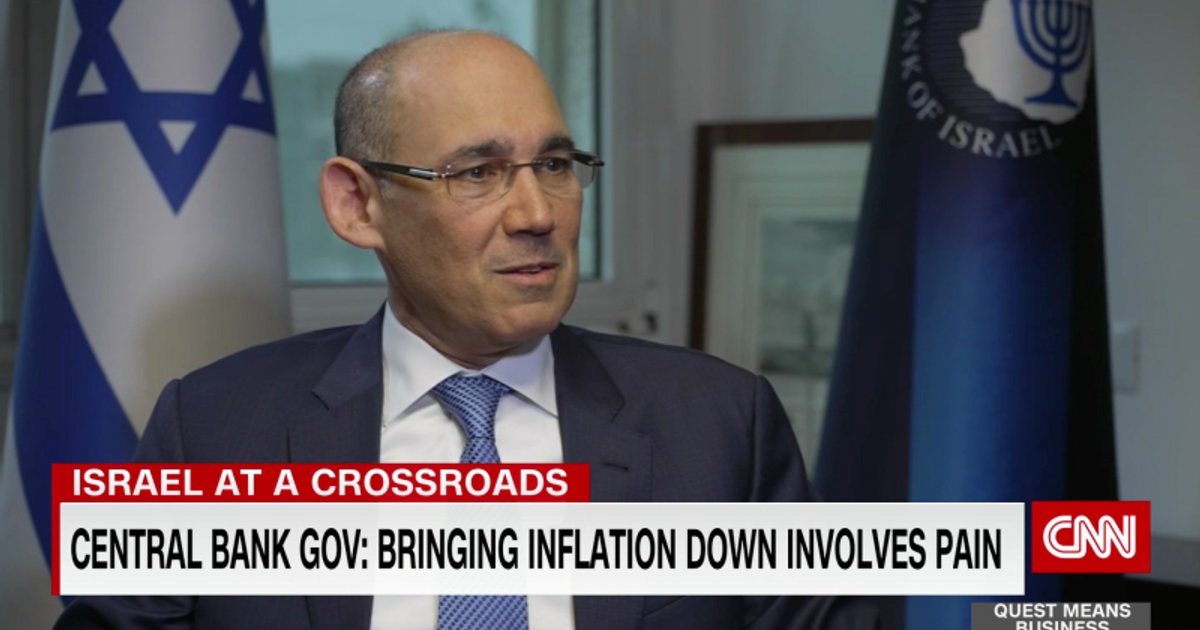
Amir Yaron, the Governor of the Bank of Israel, has warned of escalating financial pressures facing the country, indicating that tax cuts at this time are an inappropriate step. In statements made by Yaron, he emphasized that the Israeli economy is suffering from increasing pressures due to the ongoing war, necessitating strict financial decisions.
Yaron explained that the budget deficit has exceeded 5%, while public debt surpasses 70% of the gross domestic product. He noted that these estimates assume the war will end soon, reflecting the fragility of Israel's financial situation.
Details of the Situation
In the context of his remarks, Yaron affirmed that it would be better to refrain from cutting taxes, stressing the need to reduce unnecessary expenditures and improve the efficiency of public spending. He clarified that the upcoming phase will witness greater financial challenges, especially with preparations for the 2027 budget, where maintaining a downward trajectory for the debt-to-GDP ratio will require cutting expenses and increasing revenues.
Yaron also pointed out that financing high security expenditures, along with investments in infrastructure and economic reforms, will not be feasible without making tough financial decisions. He confirmed that inflationary pressures are not solely due to the effects of war but also include internal factors such as rising wages and rental prices.
Background & Context
These statements come amid an atmosphere of economic uncertainty in the Israeli economy, where concerns about rising inflation rates are increasing. Yaron indicated that the risks of inflation have heightened, tending to rise, especially with the continuation of the war or a prolonged closure of the Strait of Hormuz, which could keep energy prices elevated.
In this context, Yaron asserted that stabilizing interest rates is the appropriate decision under current conditions, noting that any future reduction in these rates will depend on a decline in inflation and stabilization of economic conditions. Previous expectations for interest rate cuts in the coming months have diminished amid rising uncertainty associated with the war.
Impact & Consequences
Yaron's warnings suggest that the Israeli economy may face significant challenges in the near future, which could affect financial and social stability. This situation reflects the urgent need for prudent financial decisions to ensure economic stability and avoid exacerbating financial crises.
Additionally, inflationary pressures may impact citizens' purchasing power, increasing their suffering amid difficult economic conditions. It is anticipated that the Israeli government may move towards austerity measures that could affect public services and social programs.
Regional Significance
The economic conditions in Israel have a direct impact on the Arab region, as financial and economic pressures may lead to increased tensions in the area. Furthermore, the continuation of war and economic instability could affect relations between Israel and Arab countries, complicating peace efforts in the region.
In conclusion, the statements made by the Governor of the Bank of Israel highlight the importance of making prudent financial decisions under current circumstances, as the deteriorating economic situation requires a swift and effective response to ensure financial and social stability in the country.