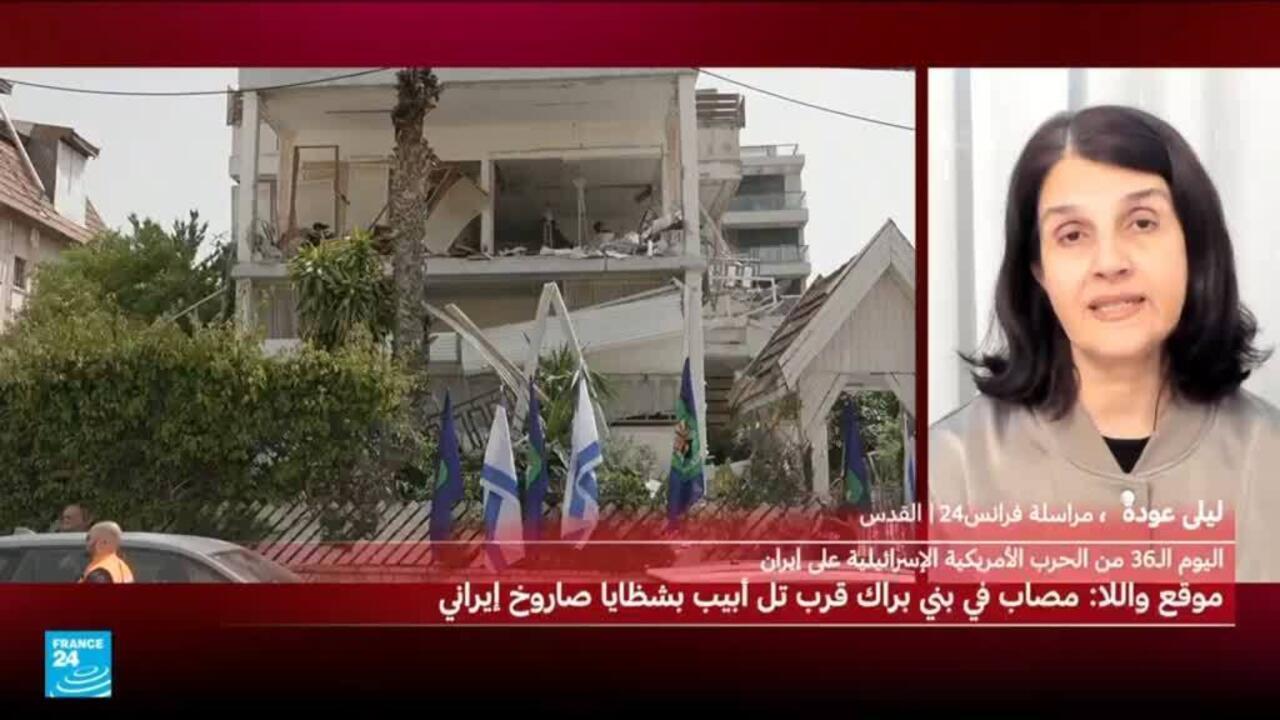
The Israeli military reported on Saturday that its air defenses successfully intercepted a batch of missiles fired from Iranian territory towards Israel, leading to one person being injured. This attack occurs at a time when the region is witnessing heightened tensions between Iran and Israel, as both countries have been exchanging attacks since the beginning of the joint U.S.-Israeli military campaign against the Islamic Republic in late February.
In a statement published by the military on the Telegram app, it confirmed that "air defense systems are working to intercept this threat," noting that the missiles were detected before reaching their targets. This incident reflects the escalating military tensions in the region, which are directly affected by the ongoing conflict between regional and international powers.
Details of the Incident
The recent missile attack is part of a series of reciprocal strikes between Iran and Israel, as each seeks to achieve its strategic objectives in the region. Paramedics reported that the injured individual was transported to the hospital for treatment, while no party has officially claimed responsibility for the attack.
These developments come at a sensitive time, as pressures on Iran from the United States and its allies are increasing, raising the likelihood of military escalation. The repeated attacks indicate that the conflict may expand to involve other countries in the region.
Background & Context
Historically, relations between Iran and Israel have been marked by ongoing tensions, with Israel viewing Iran as an existential threat due to its nuclear program and support for armed groups in the region. Since the start of the U.S.-Israeli military campaign against Iran, attacks have significantly increased, raising international concerns about the potential outbreak of a full-scale war in the region.
In recent years, Iran has intensified its military activities, including the development of long-range missiles, which has raised alarms in both Israel and the United States. Additionally, new alliances in the region, such as normalization agreements between Israel and several Arab states, have complicated the security landscape.
Impact & Consequences
This attack could lead to further escalation of tensions between Iran and Israel, which may negatively impact regional security. If attacks continue, the situation could escalate towards a full military confrontation, affecting stability across the Middle East.
Moreover, military escalation could impact the regional economy, as oil prices and financial markets may be affected due to rising concerns about war. Additionally, relations between Arab states and Iran may also be impacted, further complicating the political landscape in the region.
Regional Significance
These events are particularly significant for Arab countries, as any escalation in the conflict between Iran and Israel could affect security and stability in the region. Arab nations seeking stability may find themselves compelled to address the repercussions of this conflict, either by bolstering their military capabilities or seeking diplomatic solutions.
Ultimately, the situation in the Middle East remains fragile, as any new escalation could lead to unforeseen consequences. It is crucial for Arab nations to stay informed about developments and work to enhance regional cooperation to address increasing security challenges.