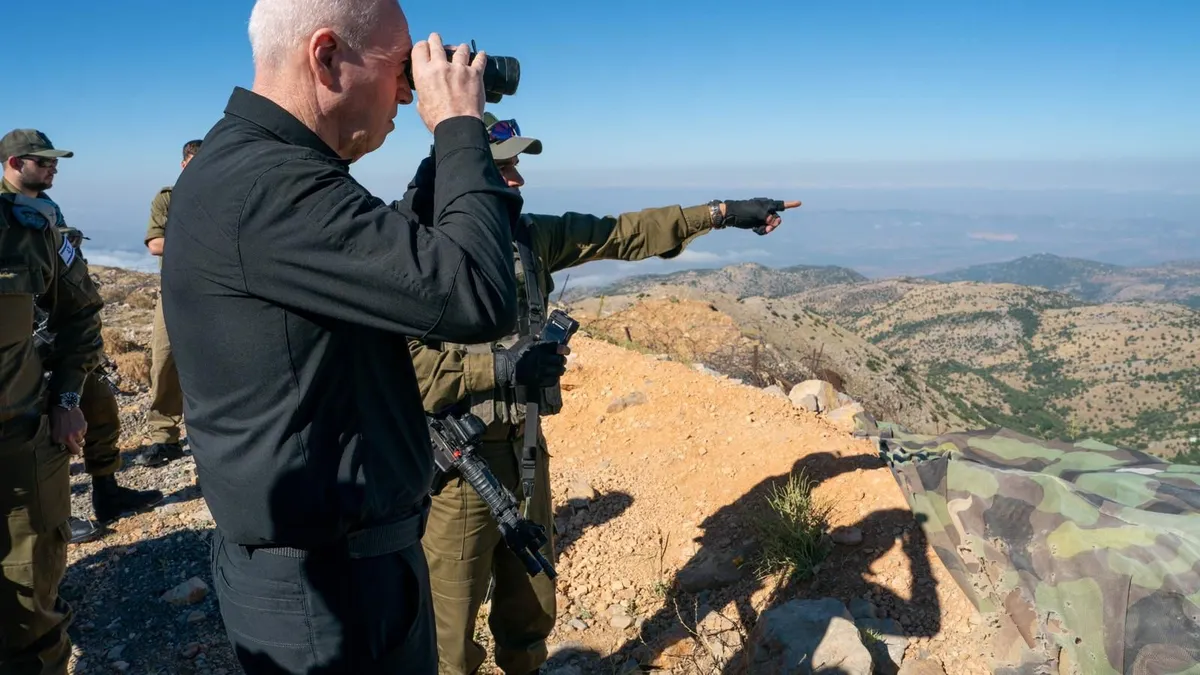
In a serious development reflecting the rising tensions in the region, Israeli Defense Minister Yoav Galant threatened Lebanese Hezbollah Secretary-General Hassan Nasrallah, stating: "You will pay dearly." This statement comes at a sensitive time, as fears of a potential military escalation between the two sides are increasing, particularly following a series of border clashes.
The remarks were made during a press conference, where Galant emphasized that any escalation from Hezbollah would be met with a harsh response from the Israeli army, indicating that his forces are prepared for any possible scenario. These threats have sparked mixed reactions in political and media circles, with some viewing them as a provocative step that could exacerbate the situation.
Details of the Threat
During the conference, Galant pointed out that Hezbollah has crossed red lines, warning that any attack on Israel would be met with violent retaliation. He also added that the Israeli army is closely monitoring the party's movements and is ready to deal with any threats that may arise along the border.
This threat comes at a time when Lebanon is experiencing a severe economic crisis, complicating the security situation in the region. Analysts have noted that Hezbollah may seek to exploit internal crises in Lebanon to bolster its regional position.
Background & Context
Historically, the relationship between Israel and Hezbollah has been marked by increasing tensions, especially since the 2006 war that resulted in heavy losses on both sides. Since then, Hezbollah has continued to enhance its military capabilities, making it difficult for Israel to ignore its threats.
In recent years, military activities along the border have increased, with both sides exchanging accusations of inciting violence. Additionally, Iranian interventions in Lebanese affairs have further complicated the situation, as Hezbollah is considered one of Iran's military arms in the region.
Impact & Consequences
The recent statements by the Israeli Defense Minister could lead to a potential military escalation, threatening the stability of the entire region. Should any confrontation occur, the consequences would be dire for civilians on both sides, potentially leading to mass displacement and destruction of infrastructure.
Any military escalation could also significantly affect international relations in the region, as major powers such as the United States and Russia will closely monitor the situation. These powers may intervene to curb the escalation, but given the current circumstances, it appears that matters are heading towards increased tension.
Regional Significance
The mutual threats between Israel and Hezbollah could directly impact security and stability in neighboring countries, such as Syria and Lebanon. Furthermore, any escalation could revive old conflicts, jeopardizing peace efforts in the region.
Additionally, the economic and political crises faced by Arab countries may make them more susceptible to the effects of military tensions, further complicating the regional landscape.
In light of these escalating tensions, hope remains pinned on diplomacy as a means to avoid escalation. However, recent statements suggest that matters could spiral out of control at any moment.