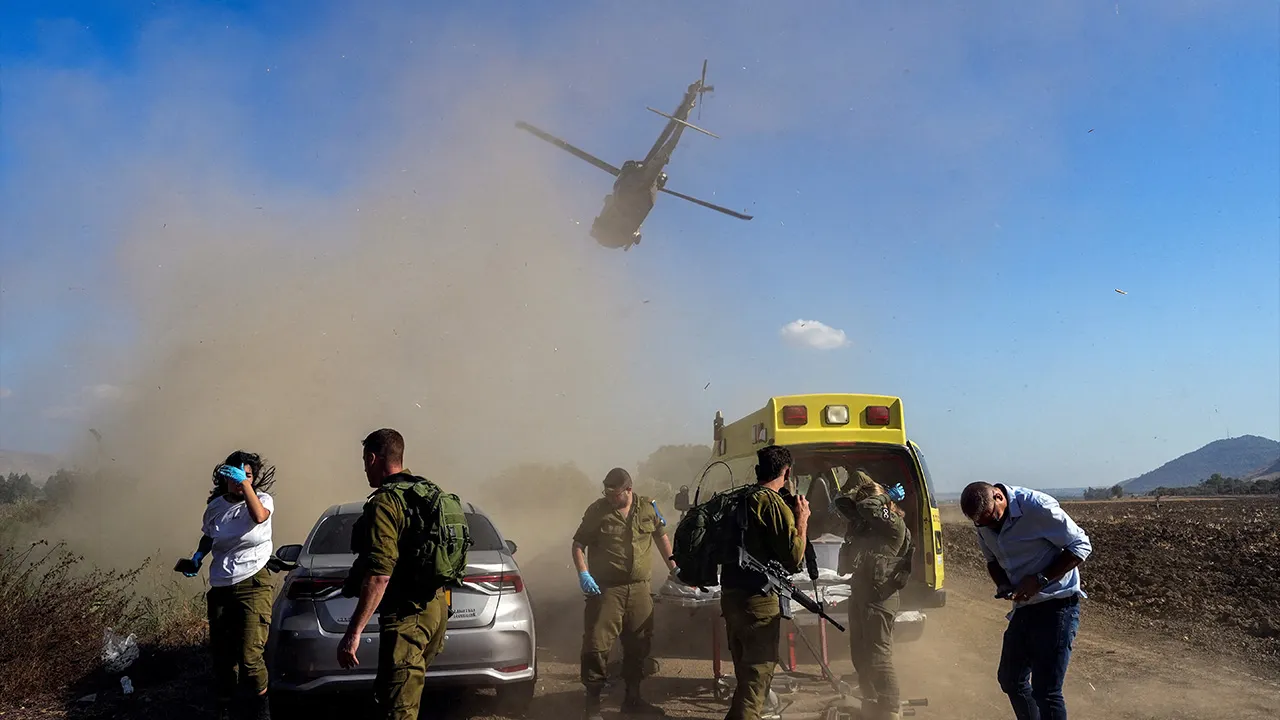
Israeli Defense Minister Yoav Gallant has warned Hezbollah's Secretary-General Na'im Qassem and his associates of severe repercussions for their escalation against Israeli civilians during the Jewish Passover celebrations. Gallant pointed out that these hostile actions will not go unpunished, reminding them of the fate of leaders like Hassan Nasrallah, Ali Khamenei, and Yahya Sinwar.
Gallant's statements come amid rising tensions between Israel and Hezbollah, with recent days witnessing repeated gunfire from the group, raising significant concern within Israeli circles. These remarks also reflect a state of military and political mobilization in Israel, as the government seeks to take stringent measures against any potential threats from the northern border.
Details of the Incident
As Jews celebrate the Passover, one of the most important religious holidays, Gallant's statements highlight the escalating tensions in the region. He asserted that any escalation by Hezbollah would be met with a strong response, indicating that the Israeli government will not hesitate to protect its citizens. He also added that Hezbollah must bear the consequences of its actions, and that Israel will respond forcefully to any aggression.
It is worth noting that Hezbollah has carried out several shooting incidents recently, resulting in injuries among Israeli civilians. These events come at a sensitive time, as fears of a larger escalation in the conflict between the two sides increase, especially with ongoing political tensions in both Lebanon and Israel.
Background & Context
Historically, the border between Israel and Lebanon has seen ongoing tensions, with Hezbollah being one of the most prominent armed factions challenging Israel. The group was founded in the 1980s in response to the Israeli occupation of Lebanon, and since then has become a key player in the Lebanese-Israeli conflict. The group has fought several wars with Israel, the most recent being in 2006, which resulted in widespread destruction in Lebanon and significant damage in Israel.
In recent years, Hezbollah's military activities have increased, particularly due to ongoing Iranian support. This backing has made the group stronger, leading to heightened tensions in the region. Additionally, the political situation in Lebanon, which is suffering from economic and political crises, complicates matters further, as Hezbollah seeks to bolster its position domestically through escalation against Israel.
Impact & Consequences
Gallant's statements could lead to military escalation in the region, as any reaction from Hezbollah may draw Israel into a full-scale military confrontation. This escalation could affect stability in Lebanon, as any Israeli attack could provoke a violent response from the group, increasing the suffering of civilians on both sides.
Moreover, military escalation could impact relations between Israel and Arab countries, especially amid normalization attempts seen in the region in recent years. Any escalation could hinder peace efforts and increase tensions in the Middle East, negatively affecting regional security.
Regional Significance
These statements are part of a series of events reflecting ongoing tensions in the Middle East. The conflict between Israel and Hezbollah is not merely a bilateral dispute but has broader implications for neighboring Arab countries. Any escalation could lead to a flow of refugees into neighboring states, increasing the economic and social burdens on those countries.
Additionally, any military escalation could lead to international interventions, as major powers like the United States and Russia may be affected by such events. This intervention could further complicate the situation in the region, reflecting the geopolitical conflicts it suffers from.
In conclusion, the situation in the region remains tense, as military and political statements reflect a state of instability. It is crucial to monitor events closely, as any new developments could significantly impact the future of the entire region.