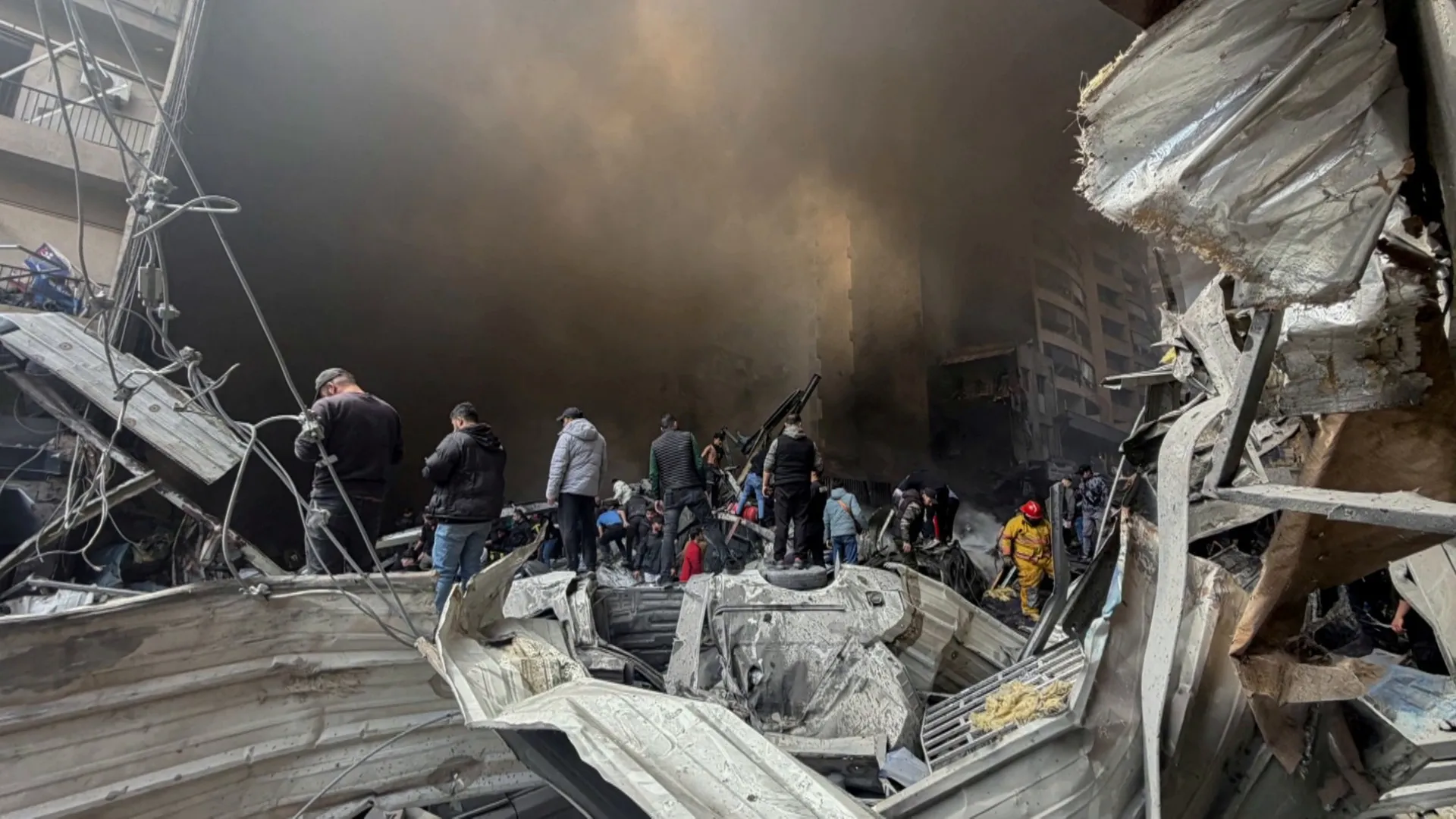
The Israeli strikes on Lebanon continue to escalate, despite the announcement of a ceasefire between the United States and Iran. The attacks, which targeted various areas, have led to hundreds of casualties, igniting a wave of outrage on social media platforms.
In a large-scale military operation, the Israeli army announced the execution of its most severe attack since the beginning of the war, targeting over 100 sites within just 10 minutes. This escalation reflects a qualitative shift in the nature of Israeli military operations.
Details of the Incident
Footage circulating on social media has shown the extent of the destruction caused by the airstrikes, which affected several areas in the capital Beirut, as well as Baalbek, Hermel, the city of Tyre, and vast regions in southern Lebanon. The Lebanese Minister of Health reported that hundreds of casualties, both dead and injured, have been recorded, indicating that hospitals are experiencing severe overcrowding.
Earlier, the Israeli army confirmed that Lebanon is not included in the ceasefire agreement made between the United States and Iran, meaning that military operations within Lebanese territory will continue, irrespective of regional understandings. On the other hand, a senior Hezbollah official stated that the party is awaiting the results of ongoing communications, emphasizing that it is allowing diplomatic efforts a chance to compel Israel to adhere to the agreement.
Background & Context
These developments come at a sensitive time for the region, where tensions between regional powers are escalating. Israeli attacks on Lebanon are not new, but they have noticeably intensified under the current circumstances. This escalation coincides with international diplomatic efforts aimed at calming the situation, further complicating the landscape.
The Israeli army indicated that the attack was based on accurate intelligence, targeting elite units and missile and drone systems belonging to Hezbollah. However, reports suggest that civilian sites were also targeted, with one airstrike hitting a cemetery in the town of Shamsar during a funeral, resulting in a significant number of casualties.
Impact & Consequences
The Israeli escalation has triggered widespread reactions across social media, where activists expressed their concerns and anger over the ongoing bombardment. Many comments emphasized the necessity for a strong military response from Iran and other factions to these atrocities, reflecting a state of alert in the region.
Some observers have warned about the intentions behind the escalation, suggesting that the ceasefire with Iran may merely serve as a cover for increasing attacks on Lebanon. These conditions could lead to a larger escalation in the region, threatening regional stability.
Regional Significance
The repercussions of these events extend beyond Lebanon's borders, raising concerns in other Arab countries. The Israeli military escalation could lead to a reordering of priorities in the region, as attention may shift towards Lebanon instead of Iran, altering the dynamics of conflict in the area.
In conclusion, the situation in Lebanon remains tense, with ongoing military and humanitarian pressures. The international community is urged to take swift action to halt these atrocities and protect civilians before conditions worsen further.