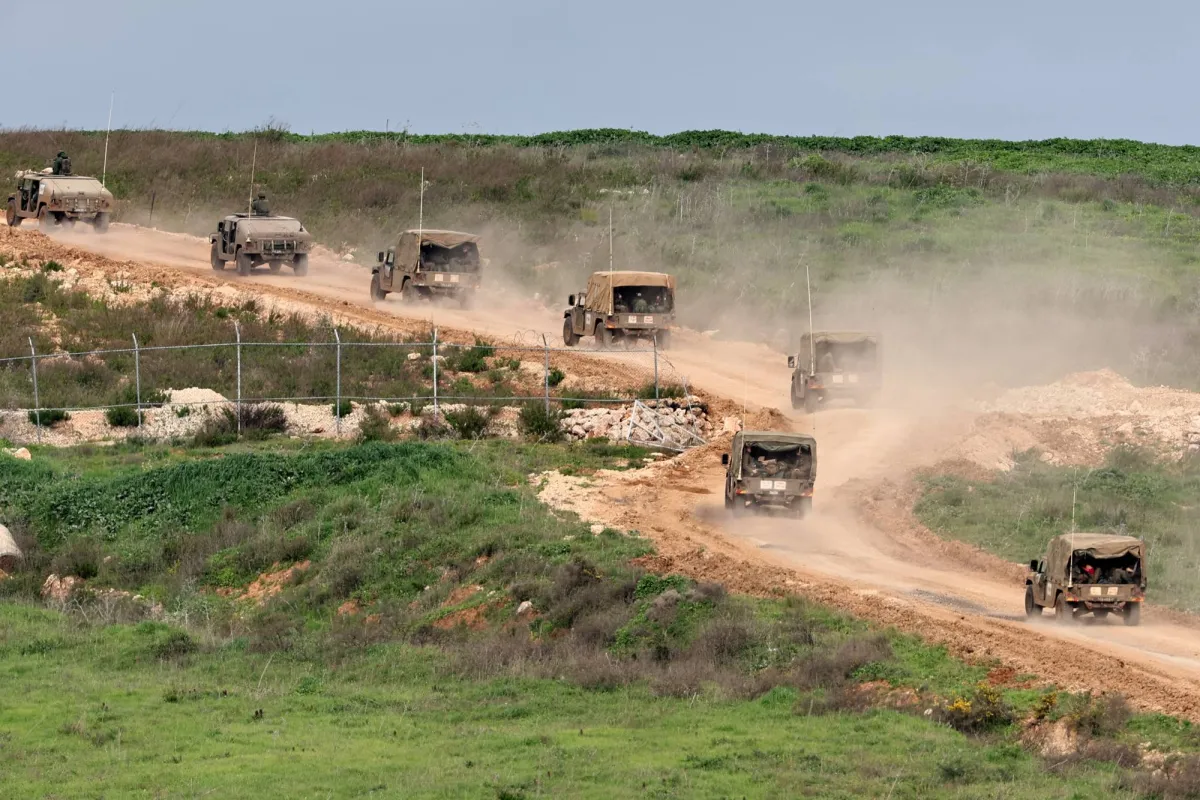
Israeli forces are advancing into southern Lebanon following a gradual approach based on a 'scorched earth' strategy, where extensive destruction of villages and infrastructure precedes the incursion. This strategy reflects a clear Israeli intention to impose a security strip by force. Concurrently, evacuation warnings have been issued for several villages in the south, indicating a trend towards establishing a long-term military and security reality.
Meanwhile, the Lebanese arena has witnessed a significant development with the use of surface-to-air missiles by Hezbollah in an attempt to restrict Israeli air movement. However, the launch of these missiles from the vicinity of southern Beirut poses direct risks to navigation safety, particularly at Rafic Hariri International Airport.
Details of the Incident
Israel continues its military escalation in areas controlled by Hamas in the Gaza Strip, where military operations have resulted in an increasing number of casualties. This escalation comes ahead of new meetings scheduled to take place in Cairo in the coming days, aimed at advancing the terms of the second phase of the ceasefire. Investigations conducted by Al-Sharq Al-Awsat with armed gang members revealed that they are receiving training on advanced weaponry, including drones, to target Hamas activists and other factions. Recently, security elements from Hamas thwarted an assassination attempt on a prominent leader of a Palestinian faction in central Gaza and arrested two individuals from those gangs who attempted to carry out the operation.
On the Lebanese front, official media reported that Israeli fighter jets broke the sound barrier over Beirut on Saturday night, with loud explosions heard in the capital and its surroundings. The National News Agency confirmed that Israeli warplanes broke the sound barrier in two waves over Beirut and its suburbs, reaching the Beqaa and Hermel regions.
Background & Context
The roots of the current tensions in the Middle East date back to March 2, when Hezbollah, backed by Tehran, launched missiles at Israel in response to the assassination of Iranian Supreme Leader Ali Khamenei on the first day of the American-Israeli attack. Since then, Israel has responded with extensive airstrikes on Lebanon, with its forces advancing into the south.
In a related context, Iraqi air defenses intercepted two drones heading towards the American embassy in Baghdad on Saturday evening, marking the first similar attack on this diplomatic mission in ten days. An official from the Iraqi Joint Operations Command confirmed that the drones were shot down outside the Green Zone, which houses diplomatic missions and international institutions.
Impact & Consequences
These developments raise concerns about a larger military escalation in the region, as tensions between Israel and Hezbollah intensify, potentially leading to a comprehensive military escalation. Additionally, the use of advanced weaponry by armed factions in Gaza reflects a shift in the nature of the conflict, complicating the security situation in the region.
These events coincide with increasing international calls for a ceasefire, as some countries seek to mediate talks aimed at achieving de-escalation. However, military escalation from both sides may hinder these efforts and exacerbate the suffering of civilians in the affected areas.
Regional Significance
The ongoing events in Lebanon and Gaza directly impact the situation in the Arab region, raising concerns about the possibility of new conflicts erupting. The military escalation also reflects the ongoing tensions between regional powers, complicating the political landscape in the Middle East.
In conclusion, the situations in Lebanon and the Gaza Strip remain under close observation, as fears grow of a military escalation that could lead to severe humanitarian consequences for civilians, amid increasing international calls for de-escalation.