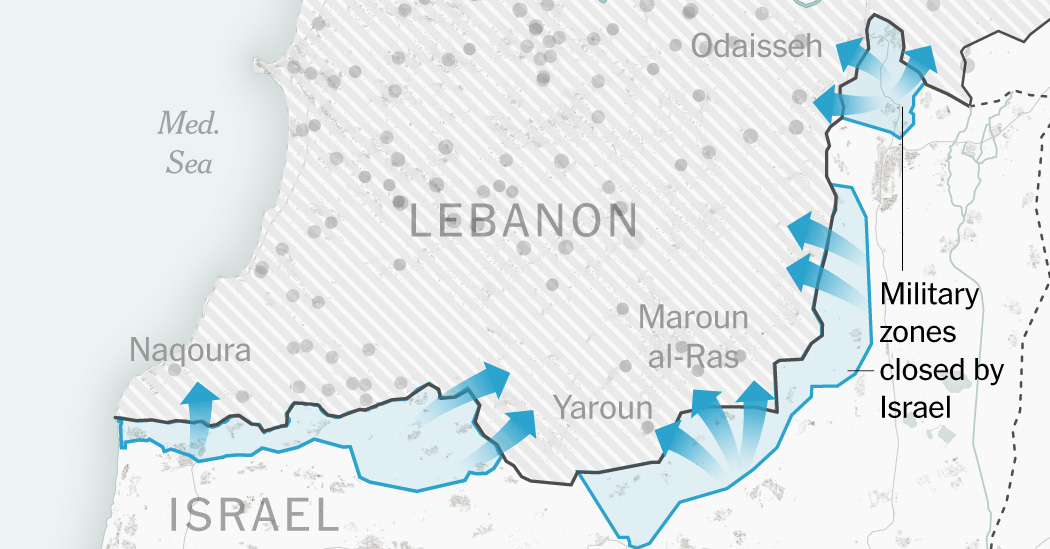
Israeli forces have advanced towards the banks of the Litani River in Lebanon, where Tel Aviv seeks to establish a buffer zone separating its borders from Lebanon. This move comes amid escalating tensions in the region, raising concerns about its implications for regional security.
According to reports, these Israeli military maneuvers aim to enhance control over the borders, amid fears of increased military activities by Hezbollah. It has been noted that Israeli forces have already reached strategic points near the river, reflecting an escalation in Israeli military operations.
Details of the Event
Information indicates that Israeli forces have begun conducting military operations on the ground, positioning themselves close to the Litani River. This area is considered vital as it forms a natural boundary between Lebanon and Israel, and has witnessed numerous armed conflicts in the past.
This step is part of a broader Israeli plan aimed at securing the borders and preventing any potential threats from the Lebanese side. Reports suggest that these operations may include bolstering military forces, in addition to employing advanced technology for border surveillance.
Background & Context
Historically, the Lebanese-Israeli border has experienced ongoing tensions, especially since the 2006 war that erupted between Israel and Hezbollah. Since then, there have been multiple attempts from both sides to secure the borders, but the situation remains fragile. In recent years, Hezbollah's military activities have increased, prompting Israel to take proactive measures to enhance its security.
Furthermore, regional tensions, particularly concerning Iranian influence in the area, play a significant role in these dynamics. Iran is considered a key ally of Hezbollah, complicating the security situation in Lebanon.
Impact & Consequences
The recent developments could lead to further escalation in the conflict between Israel and Hezbollah, which may negatively impact stability in Lebanon. If Israeli military operations continue, we may witness reactions from Hezbollah, increasing the likelihood of a new armed conflict.
Moreover, these moves could affect relations between Lebanon and other Arab countries, as they may be viewed as interference in Lebanese internal affairs. The international community may also intervene for mediation, especially amid fears of escalating violence.
Regional Significance
These events are part of the broader conflict in the Middle East, where regional and international interests intersect. The situation in Lebanon directly impacts regional security and may have repercussions for neighboring countries, including Syria and Palestine.
Ultimately, the situation in Lebanon remains under close observation, as any escalation could lead to unforeseen consequences at both regional and international levels. It is crucial for Arab nations to remain vigilant to these developments and work towards enhancing dialogue and cooperation to avoid any potential military escalation.