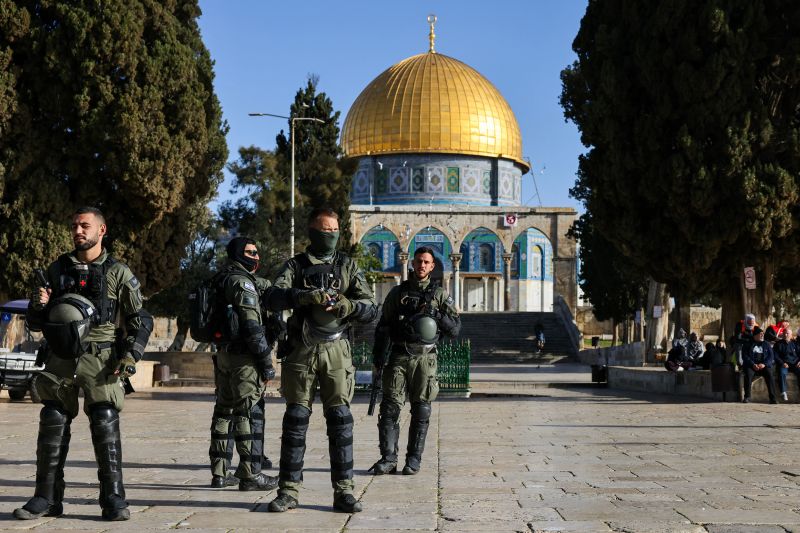
The Israeli occupation continues to close Al-Aqsa Mosque for the 35th consecutive day, raising fears of escalating tensions in Jerusalem. This closure comes at a time when the city is witnessing significant military reinforcements, with additional forces deployed around Al-Aqsa Mosque and its surrounding areas.
Concerns are growing among Palestinians that the continuation of this closure may lead to further escalation, especially with increasing calls from settler groups to storm Al-Aqsa Mosque. In recent days, confrontations have occurred between Palestinians and occupation forces, further heightening tensions in the city.
Details of the Event
Since the beginning of the closure, the occupation authorities have imposed strict restrictions on Palestinians' access to Al-Aqsa Mosque, allowing only a limited number of individuals to enter, which has significantly affected the performance of prayers at this holiest of Islamic sites. Security measures around the mosque have also been tightened, leading to thorough searches of worshippers.
This closure comes at a sensitive time, coinciding with the anniversary of significant historical events in the Israeli-Palestinian conflict, which intensifies national sentiments among Palestinians. Many observers have pointed out that these measures could exacerbate the situation in the city, especially with increasing provocations from settlers.
Background & Context
Historically, Al-Aqsa Mosque is considered a focal point of the conflict between Palestinians and Israelis, symbolizing Palestinian identity. In recent years, tensions surrounding the mosque have escalated, particularly with attempts by the occupation to assert control over the site. The current closure is part of a broader policy aimed at undermining the Palestinian presence in Jerusalem.
In past years, Al-Aqsa Mosque has witnessed numerous incursions by settlers, leading to violent confrontations with Palestinians. These events raise significant concern in the Islamic world, as Al-Aqsa Mosque is regarded as the third holiest site in Islam.
Impact & Consequences
The continued closure of Al-Aqsa Mosque may exacerbate security conditions in Jerusalem, potentially affecting stability in the surrounding areas. Additionally, these measures could increase tensions between Palestinians and occupation forces, negatively impacting peace efforts in the region.
Moreover, the ongoing closure of Al-Aqsa Mosque could affect relations between Israel and Arab countries, as Al-Aqsa Mosque is a central issue in the Israeli-Palestinian conflict. Any escalation in the situation could provoke strong reactions from Arab nations and the international community.
Regional Significance
Al-Aqsa Mosque represents an important symbol of Islamic and Arab identity, and any violation of Palestinian rights at this sacred site could lead to strong reactions from Arab nations. The continuation of the closure may enhance feelings of Arab solidarity with Palestinians and increase pressure on Arab governments to intervene.
In conclusion, the situation in Jerusalem remains under close observation, as Palestinians look forward to ending this closure and reclaiming their rights to freely practice their religious rituals. Events at Al-Aqsa Mosque are part of a broader conflict that requires genuine international efforts to reach a lasting and just solution.