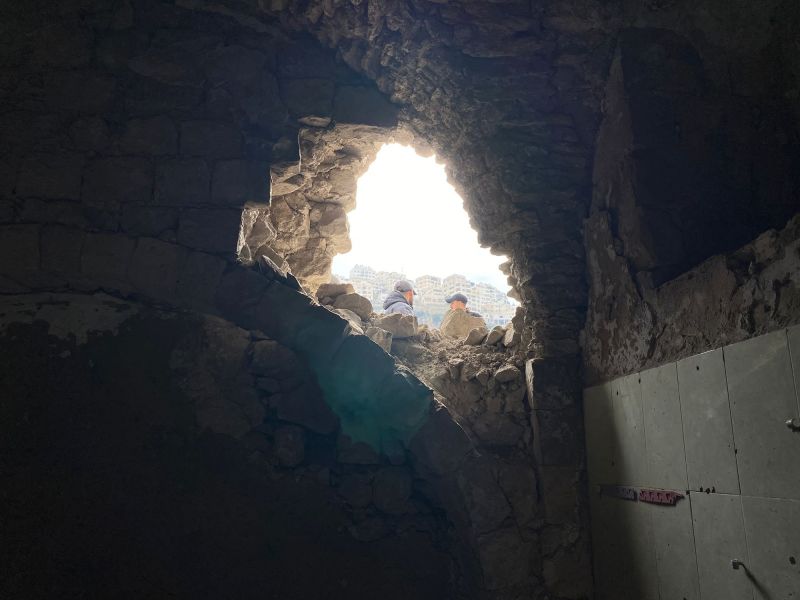
On Saturday morning, the Israeli military demolished a three-story residential building in Nablus, located in the northern West Bank, belonging to the family of Mahmoud Al-Aqad, who was killed by the Israeli army last year. The occupation forces stormed the city before midnight, using several military vehicles from multiple directions, surrounding the residential building located in the neighborhood.
This operation is part of Israel's punitive demolition policy, which aims to punish the families of Palestinians deemed responsible for attacks against the occupation. This policy has drawn widespread criticism from human rights organizations, which consider it a blatant violation of international law.
Details of the Incident
According to local sources, the demolition was carried out hours after the city was invaded, with Israeli forces closing the roads leading to the building and preventing residents from approaching. The area witnessed heightened tension as a number of Palestinians gathered in an attempt to prevent the demolition, but the occupation forces used force to disperse them.
This demolition follows the killing of Mahmoud Al-Aqad, who was considered by the occupation as one of the suspects involved in attacks against Israeli forces. His death sparked angry reactions within Palestinian circles, where many viewed him as a victim of the occupation.
Background & Context
The punitive demolition policy is part of Israel's broader strategy to confront Palestinian resistance. This policy has been increasingly used in recent years, with numerous homes demolished in the West Bank and Gaza Strip. Palestinians view this policy as an attempt to intimidate them and weaken their resistance.
Historically, the region has seen many instances of punitive demolitions, often following specific events such as attacks or military operations. These policies have exacerbated humanitarian conditions in the affected areas, with many Palestinians losing their homes and livelihoods.
Impact & Consequences
Punitive demolitions worsen humanitarian conditions in the West Bank, where Palestinians live under difficult circumstances. These policies also heighten feelings of frustration and anger among Palestinians, increasing the likelihood of escalating violence in the region.
Moreover, these operations negatively affect relations between Palestinians and Israelis, as they increase distrust between the two sides. They may also lead to international reactions, with many countries and human rights organizations condemning these policies.
Regional Significance
These events are part of the ongoing Israeli-Palestinian conflict, which impacts the situation in the Arab region as a whole. Arab countries are closely monitoring developments in the occupied territories and are calling for a peaceful resolution to the conflict.
Additionally, these events contribute to strengthening Arab solidarity with the Palestinian cause, which many Arab nations consider a central issue. In recent years, there has been an increase in Arab support for Palestine, both politically and humanitarianly.
In conclusion, the punitive demolition policy remains one of the most controversial policies in the Israeli-Palestinian conflict, provoking feelings of anger and frustration among Palestinians and complicating peace efforts in the region.