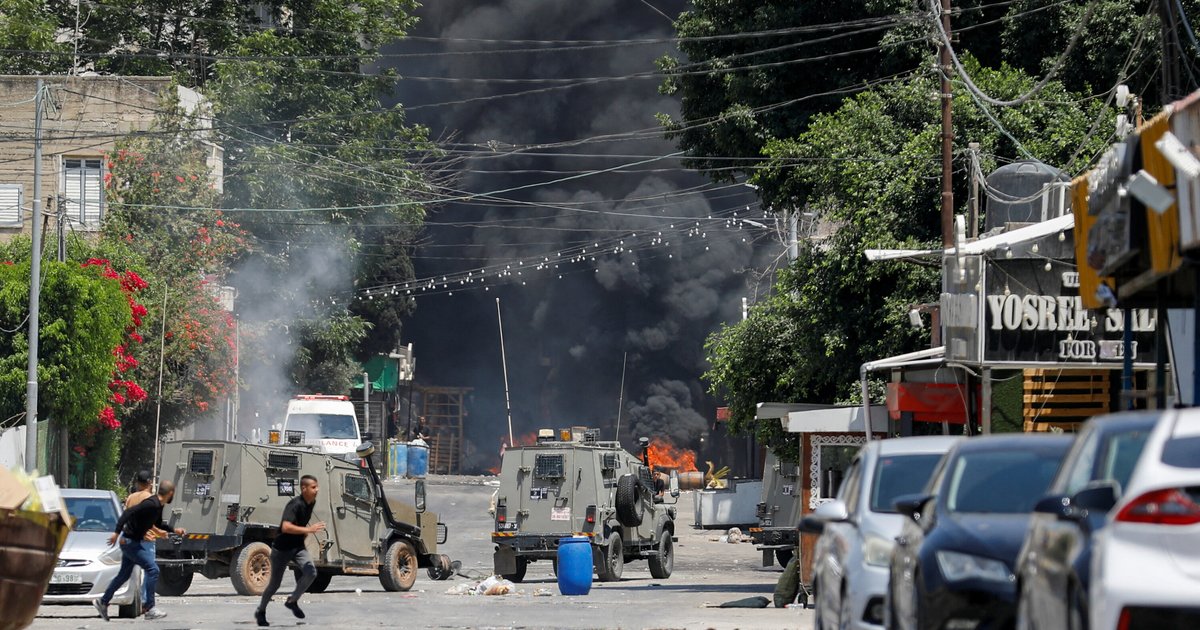
Israeli occupation forces continue their aggression on the city of Jenin, where they have destroyed over 600 homes, leading to a worsening humanitarian situation in the area. This escalation comes at a time when the city is suffering from a severe humanitarian crisis.
Field reports indicate an increase in the intensity of Israeli attacks, with military operations concentrated in residential neighborhoods, resulting in widespread destruction of citizens' homes. This aggression is part of the ongoing occupation policy aimed at destroying Palestinian infrastructure.
Details of the Incident
According to local sources, the Israeli aggression on Jenin began several days ago, with forces launching intensive attacks using warplanes and armored vehicles. Reports have documented the random destruction of homes, displacing many families who have lost their houses and belongings.
Information suggests that the occupation specifically targets neighborhoods considered strongholds of resistance, increasing tensions in the area. The attacks coincided with widespread arrests of young Palestinians, further adding to the suffering of the population.
Background & Context
Historically, the city of Jenin has witnessed numerous Israeli military operations, especially during the two Palestinian intifadas. Jenin is regarded as a center of Palestinian resistance and has suffered the ravages of war and repeated assaults. In recent years, the frequency of Israeli attacks has escalated, worsening the humanitarian situation.
The Israeli government aims through these operations to undermine the morale of Palestinians, yet these strategies often lead to counterproductive results, as resistance increases and humanitarian crises intensify.
Impact & Consequences
The destruction of homes in Jenin has serious humanitarian and social repercussions. This aggression has displaced many families, increasing the burdens on humanitarian organizations attempting to provide assistance. Furthermore, the destruction of homes reflects the policy of collective punishment adopted by the occupation against Palestinians.
Concerns are growing over the worsening humanitarian situation in the city, where residents face severe shortages of food and water, in addition to deteriorating health services. These conditions may lead to the spread of diseases and an increase in poverty and unemployment rates.
Regional Significance
The events in Jenin are part of the ongoing Israeli-Palestinian conflict, which directly impacts the situation in the Arab region. The increase in Israeli assaults raises concerns among Arab countries, as many governments express their condemnation of the crimes committed against Palestinians.
The deteriorating conditions in Jenin require urgent Arab and international action, as the international community must take responsibility for protecting Palestinian civilians. Additionally, the events in Jenin could escalate tensions in the region, affecting security and stability in neighboring countries.
In conclusion, the city of Jenin remains a symbol of Palestinian resistance, and recent events underscore the necessity of supporting Palestinians in their struggle for their legitimate rights. The continuation of Israeli aggression will not deter Palestinians from demanding their rights but may instead strengthen their resolve and determination to confront the occupation.