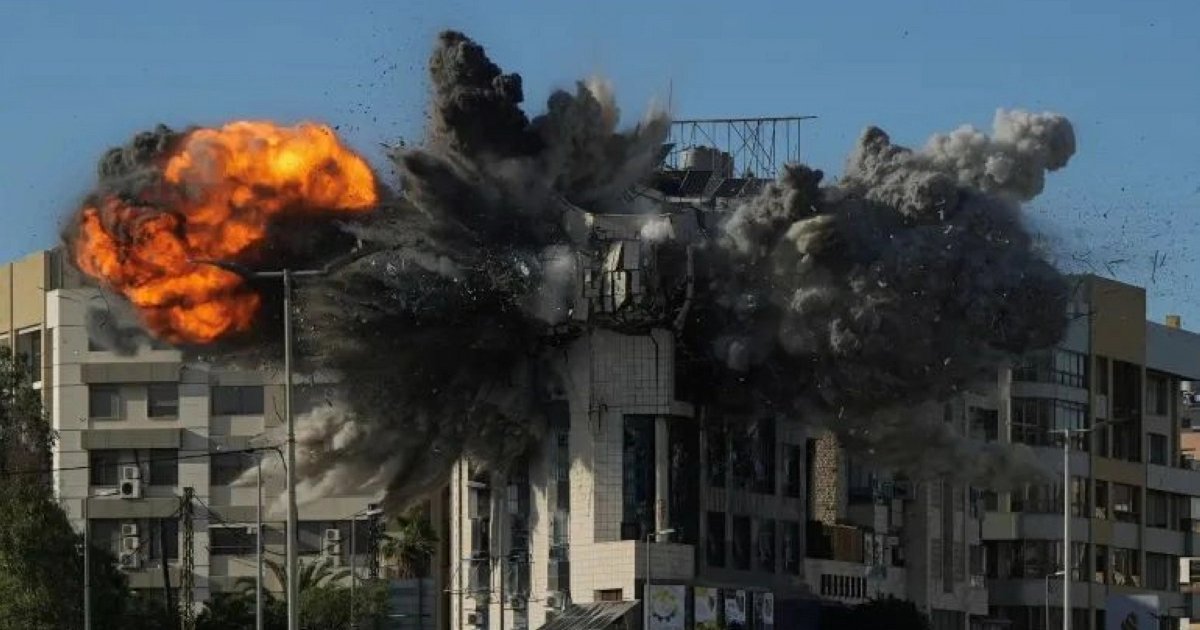
Israeli forces announced today, Thursday, that they killed 40 Hezbollah fighters within 24 hours, as part of their ongoing attacks on military targets in Lebanon. These developments come at a time when the intensity of the conflict between the two sides is escalating, with Israeli airstrikes continuing on the party's sites in various Lebanese regions.
In their latest update on military operations, Israeli forces reported that they targeted several military sites belonging to Hezbollah, including weapon depots and launch sites. They also confirmed that Israeli ground forces, which are advancing into parts of southern Lebanon, managed to identify and destroy a Hezbollah cell, in addition to targeting extensive infrastructure belonging to the party.
Details of the Incident
According to reports, the Israeli airstrikes resulted in the deaths of seven individuals in southern Lebanon, as Israeli military operations entered their second month. Among the victims, four people were killed in an airstrike on the town of Ramadiyah in the Tyre region, while three others died in a strike on a two-story building in the town of Kfar Sir in the Nabatieh area.
Other strikes were reported in the towns of Yater, Harouf, and Zabdeen, leading to the destruction of several homes. These events follow a strike in the Nabatieh area that resulted in the deaths of an entire family, further escalating tensions in the region.
Background & Context
The roots of the current conflict between Israel and Hezbollah stem from long-standing historical tensions, with the region witnessing numerous armed conflicts. Since the start of Israeli military operations on March 2, 1,318 individuals have been killed in Lebanon, and 3,935 others have been injured. On the Israeli side, 24 individuals have died since the beginning of the war against Iran on February 28, along with 13 American soldiers in the area.
Hezbollah, considered one of Iran's allies, has begun launching attacks on Israel, announcing the firing of a series of rockets targeting Israeli forces and infrastructure in northern Israel and border areas. In a statement, the party confirmed that it launched a barrage of rockets at the Israeli military infrastructure in the Kiryat Ata area, east of the city of Haifa.
Impact & Consequences
Analyses suggest that Israeli military operations may continue to escalate, especially with statements from Israeli Defense Minister Israel Katz regarding Israel's intention to occupy parts of southern Lebanon even after the current war ends, aiming to establish a security zone. This statement reflects Israel's intention to strengthen its military presence in the region, which could lead to further escalation of the conflict.
On the other hand, analysts believe that Israel is facing internal challenges, as elections are expected to be held at the end of the year, putting pressure on Prime Minister Benjamin Netanyahu to achieve military victories that would bolster his political position.
Regional Significance
The ramifications of the current conflict extend beyond Lebanon, affecting regional stability in general. The tensions between Israel and Hezbollah could lead to an escalation of conflict in the region, threatening security in neighboring countries. Additionally, the continuation of military operations may complicate peace efforts in the region and increase civilian suffering.
In conclusion, the situation in Lebanon remains tense, with growing fears of a larger escalation in the conflict, necessitating the search for peaceful solutions to avoid further human and material losses.