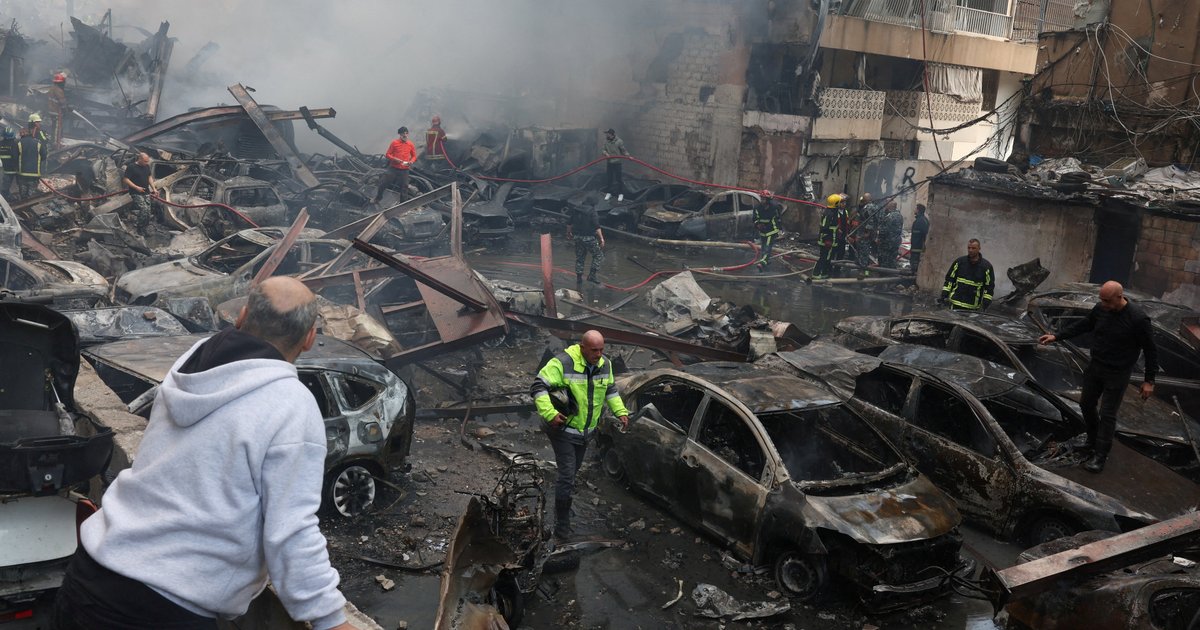
Israeli forces have launched new attacks on the Lebanese capital, Beirut, targeting nine different neighborhoods. These attacks are part of a growing military escalation, increasing tensions in the region. Reports indicate that the attacks have caused significant property damage, along with injuries among civilians.
The Israeli attacks focused on residential and commercial areas, raising major concerns among local residents. Images circulated on social media show the destruction inflicted on infrastructure, with many buildings and public facilities damaged.
Details of the Incident
According to reports, the attacks began early this morning and continued for hours. The Israeli forces used drones and missiles in this assault, reflecting an escalation in their military tactics. Eyewitnesses noted that the attacks were unprecedented in their intensity, targeting areas that were considered relatively safe.
These attacks come at a time when Lebanon is facing multiple crises, including economic and political turmoil. Many citizens have expressed fears that these attacks will exacerbate the security situation in the country.
Background & Context
Historically, relations between Lebanon and Israel have been marked by ongoing tensions, especially since the Lebanese Civil War in the 1970s and 1980s. There have been several rounds of conflict between the two sides, including the 2006 war that resulted in widespread destruction in Lebanon. Over the years, Israel has continued to carry out military operations in Lebanese territory, worsening humanitarian conditions.
In recent years, tensions in the region have increased due to political and economic disputes. As pressures mount on the Lebanese government, the situation has become more complicated, placing civilians in the line of fire.
Impact & Consequences
These attacks represent a serious escalation that could provoke strong reactions from the Lebanese government and Hezbollah. These events are expected to heighten tensions in the region, potentially leading to greater military escalation. The economic impacts will also be felt, as Lebanon is already grappling with a crippling economic crisis.
These developments may affect Lebanon's relations with other Arab countries, as some nations may take supportive stances towards Lebanon amid these aggressions. Additionally, the international community may intervene to pressure Israel to cease these attacks.
Regional Significance
These events come at a sensitive time for the Arab region, where many countries are suffering from internal and external crises. The military escalation in Lebanon could impact the stability of neighboring countries, such as Syria and Palestine. Furthermore, these events may reopen discussions about the Palestinian issue, as many feel that the situation in Lebanon is linked to the broader conflict in the region.
In conclusion, the international community must urgently intervene to halt the military escalation in Lebanon and ensure the protection of civilians. The continuation of these attacks could lead to dire consequences for security and stability in the region.