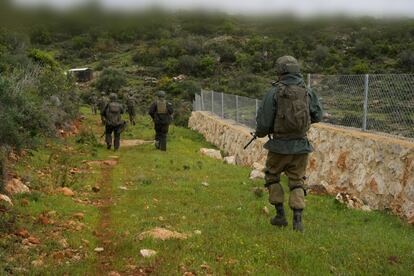
The Israeli army has commenced evacuation and occupation operations in areas of southern Lebanon, aiming to mitigate the missile threats posed by Hezbollah militia on northern Israel. This move comes at a sensitive time as military tensions between Israel and Iran escalate, threatening stability in the region.
Israeli forces are currently deploying units approximately 10 kilometers from the border, south of the Litani River, according to Hebrew media reports. This maneuver is part of an Israeli strategy aimed at reducing the risks that Israeli cities face from missile attacks.
Details of the Incident
In a related context, the Iranian army has threatened to launch 'more destructive' attacks on the United States and Israel in response to attacks targeting infrastructure in Iran, including the bombing of a bridge under construction in Alborz province. Iranian army spokesman Colonel Ibrahim Zolghari confirmed that any aggression against these facilities would be met with a strong response.
On the other hand, reports indicate that Israeli forces have destroyed about 70% of Iran's steel production capacity, which Israeli Prime Minister Benjamin Netanyahu described as a significant achievement that limits the Iranian Revolutionary Guard's ability to fund its military activities.
Background & Context
Historically, relations between Israel and Iran have seen a notable escalation over the years, especially after Iran expressed support for Hezbollah in Lebanon, which is considered one of Iran's military arms in the region. Since 1982, when Israel withdrew from Lebanon, there have been ongoing attempts by Israel to curb Iran's influence and that of its allies in the region.
These events coincide with rising tensions in the Middle East, where the region is facing increasing political and military pressures. Furthermore, the Israeli military movements come at a sensitive time, coinciding with Jewish Passover celebrations, which complicates the security situation.
Impact & Consequences
Analyses suggest that the current escalation may lead to a larger escalation in the conflict, as Iran may respond to Israeli attacks with military operations against Israeli or American targets. Additionally, these tensions could affect regional security, potentially necessitating international interventions to calm the situation.
Moreover, the continuation of these military operations could exacerbate the humanitarian situation in the region, where civilians are suffering from the effects of the ongoing conflict. Humanitarian organizations have warned of the repercussions of these operations on civilians in Lebanon and Iran.
Regional Significance
These events are particularly significant for Arab countries, as any escalation in the conflict between Israel and Iran could impact the stability of the entire region. Arab nations seeking peace and stability may find themselves in a difficult position, especially if military operations escalate.
In conclusion, the situation in the Middle East appears to be heading towards further complexity, with rising tensions between regional powers. It is crucial for Arab countries to closely monitor these developments and work to enhance dialogue and diplomacy to avoid further escalation.