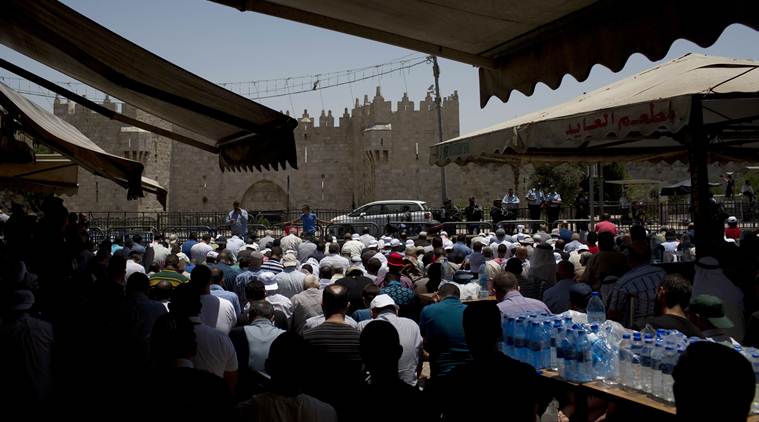
For the fourth consecutive Friday, Israeli occupation forces have barred worshippers from praying at Al-Aqsa Mosque, leading to clashes in the surrounding area. This escalation occurs during a sensitive period marked by increasing tensions at the mosque, provoking widespread condemnation in Palestinian and Arab circles.
The prohibition of prayer coincided with heightened measures taken by the occupation forces, who conducted searches on worshippers and prevented them from reaching the mosque, resulting in clashes in the vicinity of the Old City of Jerusalem. Local sources reported that the occupation forces used tear gas and rubber bullets to disperse the worshippers, resulting in injuries among them.
Details of the Incident
This escalation comes amid the tense atmosphere in Jerusalem, where attacks on worshippers at Al-Aqsa Mosque have increased, constituting a blatant violation of the religious rights of Palestinians. Images and videos circulated on social media have shown scenes of clashes between worshippers and occupation forces, resulting in injuries and arrests.
At the same time, the Palestinian Ministry of Awqaf and Religious Affairs condemned these actions, emphasizing that Al-Aqsa Mosque is an exclusive right of Muslims and that any attempt to change the status quo will be met with rejection. They also called on the international community to intervene to stop these violations.
Background & Context
Historically, Al-Aqsa Mosque is a center of worship for Muslims, attracting thousands of worshippers annually during the month of Ramadan. However, the Israeli occupation has increasingly taken steps to limit access to the mosque, especially during sensitive times. These measures are not new; they are part of a systematic policy aimed at imposing control over the holy sites in Jerusalem.
These events coincide with rising political tensions in the region, as the Israeli government continues to make controversial decisions regarding settlements and Jerusalem, exacerbating the conflict and negatively impacting peace prospects in the area.
Impact & Consequences
These events underscore the rising tensions in Jerusalem and their impact on the security situation in the region. Furthermore, the prohibition of prayer at Al-Aqsa reflects the occupation's policy of targeting Islamic sanctities, which may lead to angry reactions from both Palestinians and Arabs.
Moreover, these actions could affect relations between Israel and Arab countries, especially amid attempts by some nations to normalize relations with Israel. The continuation of these violations may hinder peace efforts and increase polarization in the region.
Regional Significance
The events at Al-Aqsa Mosque are a central issue for Arabs and Muslims, stirring feelings of anger and condemnation across the Arab world. Attacks on holy sites fuel resistance sentiments and heighten tensions between Palestinians and Israelis, potentially leading to greater escalation in the conflict.
Ultimately, the issue of Al-Aqsa Mosque remains pivotal in the Palestinian-Israeli conflict, calling for international community intervention to protect Palestinian rights and ensure freedom of worship at holy sites.