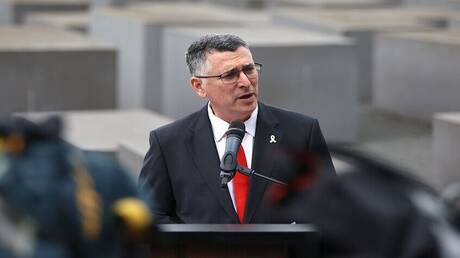
In controversial statements, Israeli Foreign Minister Gideon Sa'ar criticized Lebanese President Joseph Aoun and Prime Minister Nawaf Salam, emphasizing what he perceives as threats from Hezbollah to Lebanon and the region. These comments emerge at a time when political tensions are rising, complicating the situation in Lebanon.
Sa'ar, who recently assumed his position, asserted that the current Lebanese government is responsible for the deteriorating conditions, noting that Hezbollah controls the political decision-making in the country. These statements reflect Israeli concerns about the party's influence, which Tel Aviv views as a direct threat to its national security.
Details of the Criticism
During a press conference, Sa'ar stated, "The current Lebanese government cannot make independent decisions due to Hezbollah's dominance." He pointed out that this dominance leads to instability in Lebanon, negatively affecting relations between Lebanon and Israel. Sa'ar also criticized the Lebanese government's handling of the economic and social crises plaguing the country.
These remarks are part of a broader Israeli strategy aimed at pressuring the Lebanese government, as Tel Aviv seeks to strengthen its position in international forums by highlighting the challenges facing Lebanon.
Background & Context
Historically, Lebanese-Israeli relations have been marked by ongoing tensions, especially following the wars that erupted between the two sides. Hezbollah, established in the 1980s, is one of the most prominent armed factions in Lebanon and has engaged in several confrontations with Israeli forces. With the escalation of economic and political crises in Lebanon, fears of worsening conditions have increased, potentially leading to a new military escalation.
In this context, Sa'ar's comments serve to underscore the precarious situation in Lebanon, where the combination of internal strife and external pressures creates a volatile environment.
Impact & Consequences
The implications of Sa'ar's statements extend beyond Lebanese borders, as they could affect Israel's relations with other Arab countries. These remarks may lead to heightened tensions in the region, negatively impacting peace and stability efforts. Furthermore, the continued Israeli pressure on Lebanon could exacerbate the humanitarian situation in the country, where the Lebanese people are suffering from multiple crises.
As the situation evolves, the international community will be closely watching the developments, particularly in how they may influence regional dynamics and the potential for conflict.
Regional Significance
The remarks by Sa'ar highlight the increasing tensions in the region and their impact on Lebanese-Israeli relations. The ongoing crises in Lebanon, compounded by Hezbollah's role, present significant challenges not only for Lebanon but also for regional stability.
In conclusion, the Israeli Foreign Minister's comments reflect a broader concern regarding the influence of Hezbollah and the implications for Lebanon's political landscape, as well as the potential for future conflicts in the region.