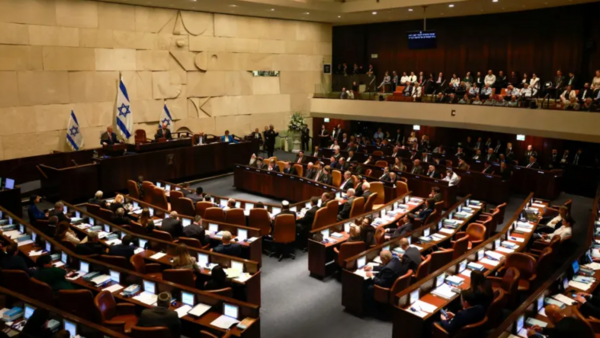
In an unprecedented escalation, the Israeli National Security Committee has pushed a bill aimed at executing Palestinian prisoners to the final approval stages, triggering a wave of anger and warnings of potentially catastrophic consequences for the lives of thousands of Palestinian prisoners.
The committee approved the bill on Tuesday after making amendments, moving it forward for the necessary second and third readings for its enactment. The law primarily targets Palestinian prisoners accused of killing Israelis in operations classified as having national or security motives, rendering it a discriminatory law lacking in justice.
Details of the Legislative Process
The Israeli Minister of National Security, Itamar Ben Gvir, whose party Otzma Yehudit introduced the bill, confirmed that the law does not leave the decision-making authority in the hands of the government's legal advisor. The committee made amendments to the bill in an attempt to soften its severity, responding to pressures from Prime Minister Benjamin Netanyahu, who deemed its initial draft harsher than the standards of the death penalty in the United States.
The amendments came amid fears that Israel could face diplomatic and legal accountability internationally, according to the Times of Israel. Nevertheless, the law continues to provoke widespread controversy, with many viewing it as a step towards imposing the death penalty on Palestinian prisoners without fair trials.
Background & Context
This bill emerges against a long history of violations faced by Palestinians in Israeli prisons. Approximately 10,000 Palestinian prisoners live under harsh conditions, facing continuous threats from the occupying authorities. This law has raised concerns about the potential for mass executions without trials, which could lead to a significant escalation in the Israeli-Palestinian conflict.
Historically, Israeli prisons have witnessed numerous violations of prisoners' rights, including torture and mistreatment. This bill is seen as a dangerous escalation in the occupation's policy towards prisoners, reflecting the extreme right-wing trends within the Israeli government.
Impact & Consequences
Human rights organizations warn that the implementation of this law could lead to severe human rights violations and exacerbate tensions in the region. It may provoke angry reactions from Palestinians and the international community, potentially worsening the security situation in the occupied territories.
This bill could also negatively impact Israel's relations with other countries, particularly those that support human rights. The law may be viewed as a blatant violation of international laws that prohibit the death penalty in certain cases, exposing Israel to increased diplomatic pressures.
Regional Significance
This bill represents a threat to security and stability in the region, as it may escalate the Israeli-Palestinian conflict. It could trigger a wave of protests in Arab countries, where many view this law as a violation of Palestinian rights.
At the same time, this law may affect the stance of Arab countries on the Palestinian issue, as it could be seen as a challenge to peace efforts in the region. It may strengthen the position of Palestinian groups advocating for resistance, complicating the situation further.
In conclusion, activists and international human rights organizations have called for urgent intervention to prevent the implementation of this bill and to protect Palestinian prisoners from a fate they describe as "dangerous and uncertain."