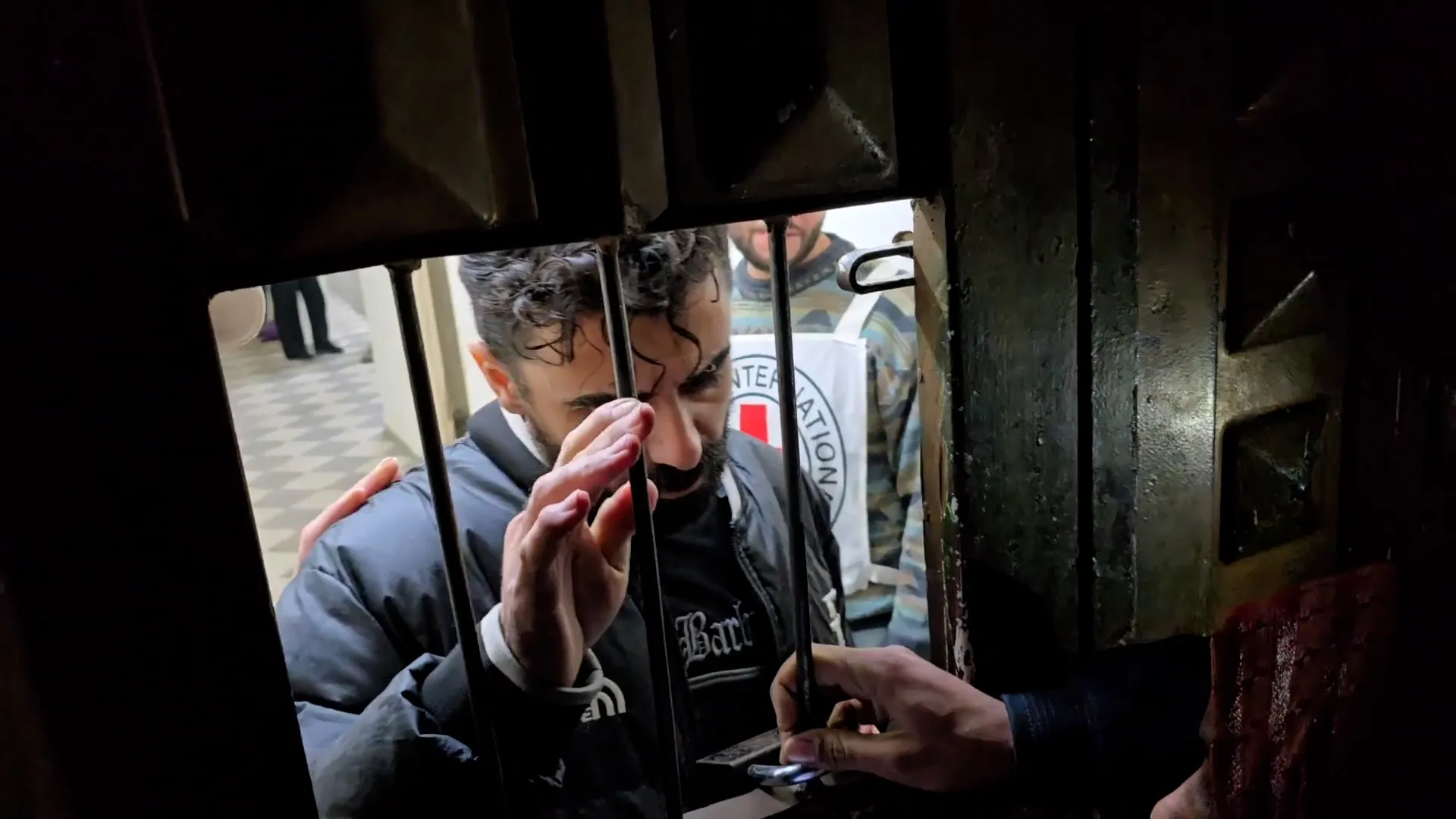
Children in Gaza are experiencing shock and anxiety following the Israeli Knesset's approval of a law allowing the execution of prisoners, which exacerbates their suffering due to the absence of their fathers. Their childhood is now surrounded by fear and waiting, as these children grow up in the corners of demolished homes, carrying burdens beyond their years.
Playing is no longer a priority, and dreams are no longer innocent; they are now conditional upon the return of fathers who are imprisoned, threatened today by even harsher laws. As discussions about the law on executing Palestinian prisoners escalate, the news for these children is not just a political headline; it has become an emotional earthquake that has shaken their remaining certainty that their fathers will one day return.
Details of the Event
Abir Al-Mubayyid, a girl who has not yet reached her early years, encapsulates a pain that cannot be measured in words; she says in a voice choked with longing, "I haven't seen my dad for a year and a half... I want to hug him again." Beside her stands her brother Hamdan, who recalls the moment of their father's arrest as if it happened yesterday, repeating with sorrow, "I miss dad a lot," as if the memory has turned into a daily burden accompanying him in the details of his small life.
Meanwhile, Jouri Sabih has found temporary refuge in dreams, visiting her father every night, memorizing his words, and rearranging them in her memory for fear of forgetting them, as she clings to a fragile hope, saying, "I remember every word he told me... and I’m waiting for him to return."
In another place, child Abdul Aziz Shaath finds no expression more complex than a single sentence that summarizes everything: "I don’t want dad to die... I want him to come back." A simple sentence, yet it carries a fear greater than his age, revealing the extent of the terror that has seeped into the hearts of children with every new piece of news.
The picture becomes even harsher in the story of Janna Hamid, who points out that her little sister has not yet learned to say the word "dad," as if absence has stolen not only the father's presence but also his presence in the children's first language. She says, "We grew up and he’s not with us... but we are still waiting for him."
Background & Context
When the news of the law reached these children, the reaction was not just anxiety but complete shock; one of them recounts, "When I heard that they were going to execute them... I cried a lot, it was the worst day of my life," in a moment that encapsulates how a political decision can transform into daily fear that resides in an entire childhood.
The suffering of these children is reflected in the details of their daily lives, where they face psychological and social challenges due to the absence of their fathers, negatively impacting their mental health and emotional development.
Impact & Consequences
The effects of this law extend beyond Gaza, raising deep concerns in the Palestinian and Arab communities in general. Children living in harsh conditions need psychological and social support to face these challenges.
This situation requires international action to pressure the Israeli occupation to stop its violations against prisoners and to provide protection for children suffering from the effects of wars and conflicts.
Regional Significance
The issue of Palestinian prisoners is a central theme in the Israeli-Palestinian conflict, evoking feelings of solidarity in the Arab world. The suffering of children in Gaza reflects the reality of many children in conflict zones, necessitating Arab and international action to protect their rights.
In conclusion, these small voices do not ask for much. They are not seeking slogans or analyses, but rather a simple right: the right to return to the embrace of their fathers.