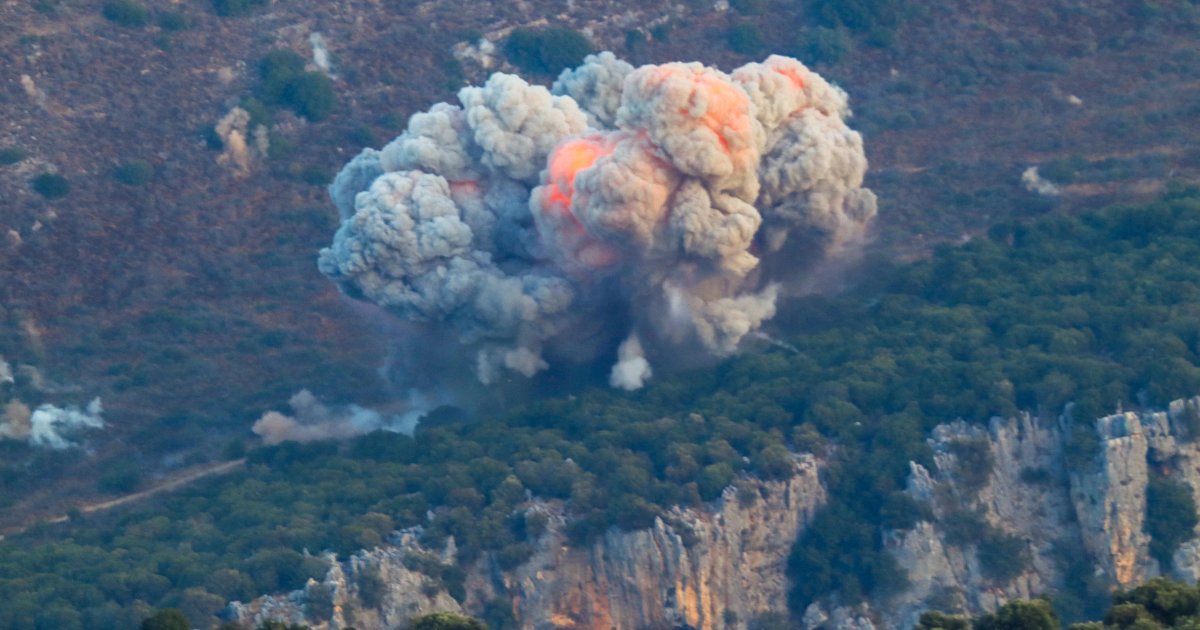
In an unprecedented military escalation, the Israeli armed forces executed their largest airstrike campaign against Hezbollah positions in Lebanon on Wednesday, targeting over 100 command centers and military sites. The Lebanese Ministry of Health confirmed that these attacks resulted in dozens of deaths and hundreds of injuries, raising widespread concern among political and public circles.
The Israeli army stated that these strikes are part of anti-terror operations, targeting sites that Tel Aviv considers a threat to its security. Meanwhile, Lebanese officials described this escalation as posing a significant danger to regional security and stability, warning of its negative repercussions on civilians.
Details of the Event
According to sources, the Israeli airstrikes began at noon and lasted for several hours, utilizing advanced fighter jets and precision-guided missiles. Significant damage to civilian facilities and infrastructure in the targeted areas has been documented, exacerbating the suffering of local populations.
These events come amid increasing tensions between Israel and Hezbollah, with the Lebanese-Israeli border witnessing a surge in clashes over the past few weeks. Observers have noted that these airstrikes could be a precursor to further military operations in the future.
Background & Context
Historically, relations between Israel and Hezbollah have been marked by ongoing tensions for decades, with the 2006 Lebanese War being a pivotal turning point in the conflict. Since then, Hezbollah has continued to enhance its military capabilities, making it difficult for Israel to ignore potential threats.
In recent years, concerns have grown regarding the escalation of conflict in the region, particularly with the increasing Iranian interventions in Lebanese affairs. These interventions have bolstered Hezbollah's position, leading Israel to feel a greater threat to its national security.
Impact & Consequences
Analyses suggest that this escalation could worsen the humanitarian situation in Lebanon, which is already suffering from economic and social crises. Experts have warned that the continuation of military operations could lead to mass displacement of populations and increased pressure on the struggling healthcare system.
Moreover, these events could affect regional relations, as some parties may exploit the situation to strengthen their political positions. The military escalation could also lead to new international interventions, further complicating the security landscape in the region.
Regional Significance
These events serve as a wake-up call for Arab countries, reflecting the ongoing tensions in the Middle East. They could lead to a reassessment of Arab nations' strategies in dealing with regional crises, especially amid the security and economic challenges they face.
In conclusion, the situation in Lebanon remains concerning, necessitating international and regional efforts to mitigate military escalation and ensure stability in the region. Recent events underscore the urgent need for dialogue and negotiation as a pathway to achieving lasting peace.