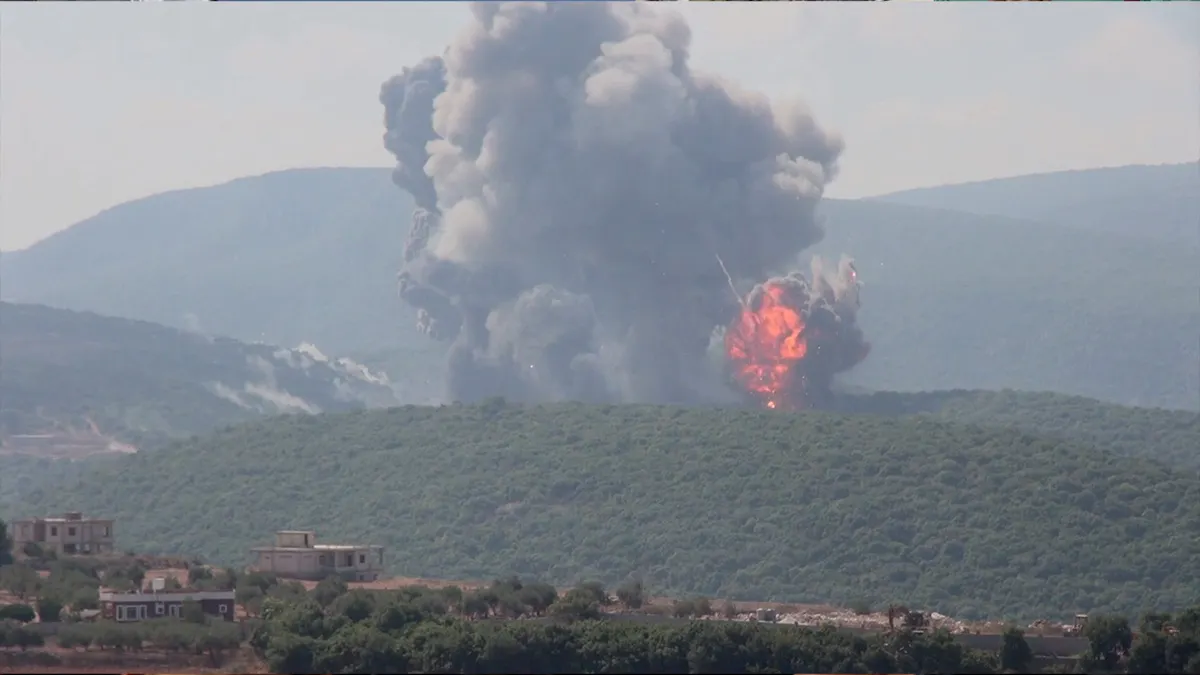
Israeli security estimates reported by the newspaper Yedioth Ahronoth indicate that the ongoing military operation in southern Lebanon may continue for several years, with no signs of an imminent withdrawal of Israeli forces, even if a ceasefire agreement is reached.
According to an Israeli security official, the Lebanese government is unable to disarm Hezbollah, meaning that the presence of the Israeli army inside Lebanese territory is likely to continue for at least several months, and possibly years. Defense officials have also noted that any potential ceasefire agreement would not necessarily entail the withdrawal of forces from their current positions.
Details of the Ongoing Conflict
Israeli ground forces are facing heavy fire, including artillery and missiles, as well as anti-tank rockets, creating a complex battlefield reality. Soldiers express concern over receiving warnings only seconds before incoming shells, limiting their chances for shelter. They rely on armored vehicles or seek refuge in natural terrain and buildings, amid ongoing threats from indirect fire, despite the limited direct clashes with Hezbollah fighters.
Israeli estimates indicate that the central objective of the operation is to establish a buffer zone within southern Lebanon to reduce fire directed at northern Israel. In this context, the army is conducting operations described as "methodical and slow," which include the destruction of military infrastructure and the removal of weapons.
Background & Context
These developments come at a sensitive time, as Israeli Prime Minister Benjamin Netanyahu seeks to "radically change the situation in Lebanon," linking it to the broader conflict with Iran. In this context, the Israeli newspaper reported that Israel is attempting, according to Western diplomats, to separate any potential agreement with Iran from operations in Lebanon, while Tehran is trying to connect the two fronts.
Israel is receiving extensive support from the United States, which grants it significant maneuverability in Lebanon, while emphasizing the need to avoid targeting civilian infrastructure. However, there are expectations that American pressure may intervene later to limit military operations.
Impact & Consequences
Concerns are growing that the continuation of military operations could lead to greater escalation in the region, significantly affecting relations between Israel and Lebanon. Additionally, the long-term presence of Israeli forces may increase tensions with Hezbollah, potentially leading to military or political reactions from both sides.
Moreover, these operations could impact the humanitarian situation in southern Lebanon, potentially causing population displacement and increasing human suffering. At the same time, they may lead to changes in the political dynamics within Lebanon, as these operations could be used as a pretext to strengthen Hezbollah's position domestically.
Regional Significance
The situation in southern Lebanon is part of a broader conflict in the region, where regional and international interests intersect. The continuation of Israeli military operations may exacerbate crises in neighboring countries and heighten tensions between regional powers.
Ultimately, the situation in southern Lebanon remains complex and requires close monitoring by the international community, as any escalation could have serious repercussions for regional security.