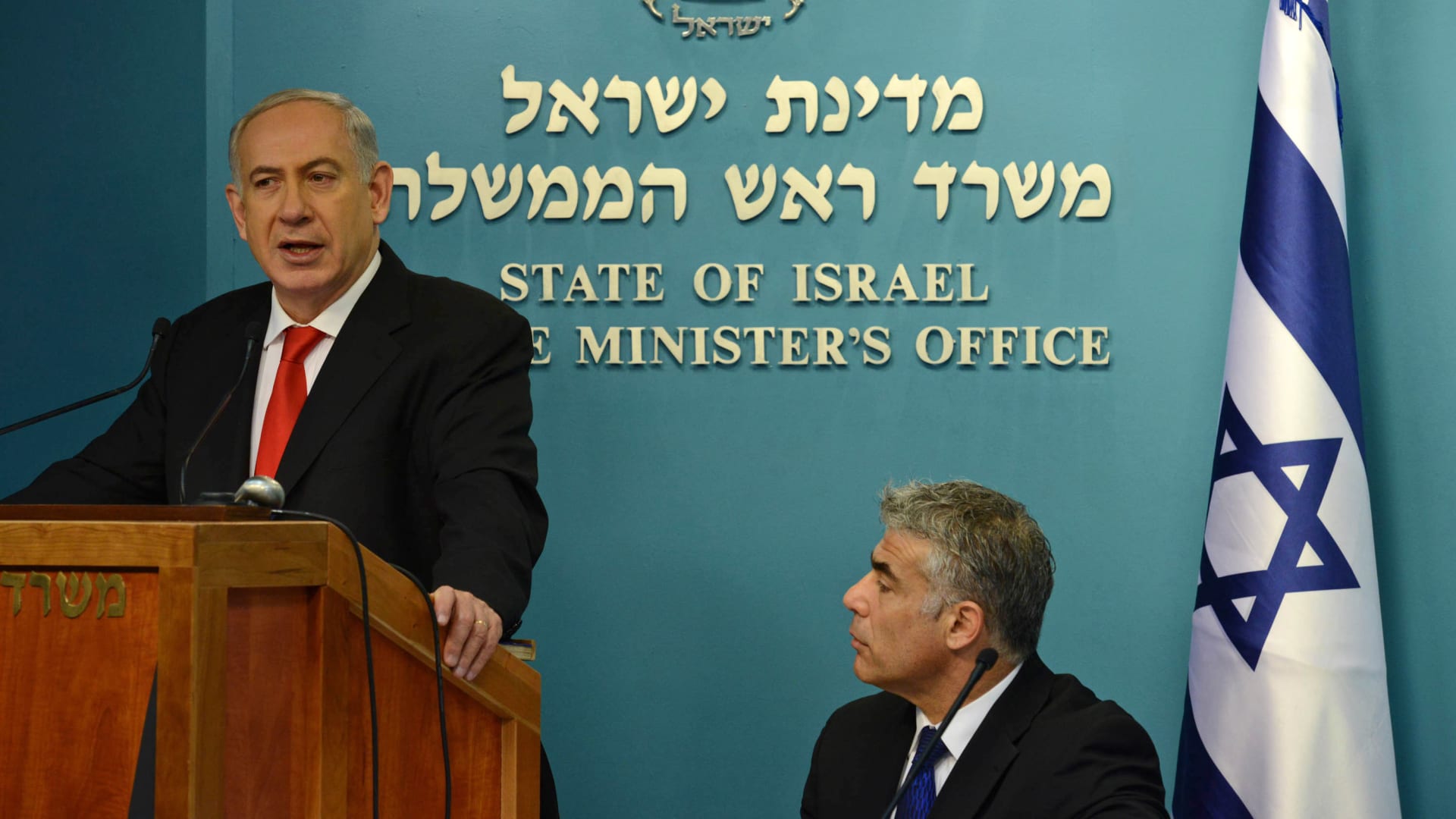
Israeli opposition leader Yair Lapid announced on Thursday that the Israeli government is engaged in a multi-front war against Iran without a clear strategy and with an inadequate number of soldiers. Lapid emphasized that this war requires careful planning and effective military coordination, which seems to be lacking in the current government.
In his remarks, Lapid pointed out that the Israeli government cannot claim ignorance of the potential consequences of this situation. He also criticized the military performance of the government, asserting that the current situation could exacerbate security crises in the region.
Details of the Situation
Lapid's statements come at a sensitive time, as Israeli-Iranian relations are experiencing a notable escalation. Israel has launched several airstrikes on Iranian sites in Syria, in addition to targeting Iranian facilities in Iraq. These military operations are part of an Israeli policy aimed at undermining Iranian influence in the region, but they appear to lack the necessary strategic coordination.
Lapid, who leads the Yesh Atid party, criticized the current government led by Benjamin Netanyahu, noting that the military strategy should include a thorough assessment of available forces and potential threats. He added that the current war requires a comprehensive response that encompasses all military and political aspects.
Background & Context
Historically, relations between Israel and Iran have been tense since the Islamic Revolution in Iran in 1979. These tensions have significantly escalated in recent years, as Israel views Iran as an existential threat due to its nuclear program and its support for armed groups in the region such as Hezbollah.
In recent years, Israel has increased its military operations against Iranian targets, but these operations have not always been supported by a clear strategy, leading to both internal and external criticism. Lapid is one of the most prominent opponents of these policies, calling for a comprehensive plan to address Iranian threats.
Impact & Consequences
The continuation of the war against Iran without a clear strategy could exacerbate security conditions in the region and potentially drag Israel into broader conflicts. This situation may also affect Israel's relations with its allies, particularly the United States, which may be concerned about escalating tensions.
Moreover, the lack of an effective strategy could lead to an increase in casualties among civilians and military personnel, negatively impacting Israel's image in the international community. At the same time, Iran may exploit this situation to enhance its influence in the region, further complicating security conditions.
Regional Significance
The neighboring Arab countries to Israel and Iran are directly concerned with the developments of this conflict. The war against Iran could lead to indirect repercussions on security and stability in countries like Iraq, Syria, and Lebanon. Any military escalation could threaten Arab interests and increase instability in the region.
In conclusion, the current situation in the Middle East requires a clear strategic vision from all parties involved, including Israel and the Arab states. The war against Iran is not merely a military issue; it is a matter that requires a comprehensive political solution to ensure security and stability in the region.