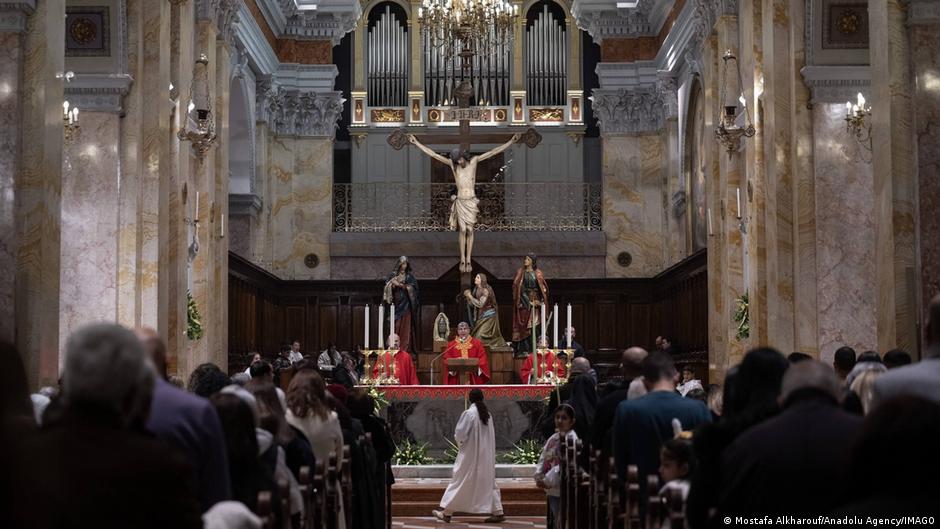
Israeli police have barred Catholic leaders from celebrating Palm Sunday at the Church of the Holy Sepulchre, marking the first time in centuries that such a restriction has been imposed. Reports indicate that Israeli authorities cited security concerns stemming from escalating tensions related to the war with Iran. The mass was to be overseen by the Cardinal of Jerusalem, Pierbattista Pizzaballa, and the head of the Custody of the Holy Land, but police prevented them from entering.
According to a joint statement from the Latin Patriarchate of Jerusalem, the Catholic leaders were on their way to hold a private mass without any celebratory procession, but they were forced to turn back. The statement emphasized that this incident represents a serious precedent that disregards the sentiments of billions of people around the world who look to Jerusalem during this time.
Details of the Incident
The Israeli police clarified that all holy sites in the Old City of Jerusalem have been closed to worshippers since the onset of the war between the United States, Israel, and Iran. They noted that the patriarch's request was not approved, as they deemed the Old City and its holy sites to be a complex area that does not permit the entry of large vehicles, posing a real danger to human life in the event of any mass incident.
On the other hand, the spokesperson for the Latin Patriarchate, Fried Jabra, confirmed that the Church of the Holy Sepulchre, considered the holiest site in Christianity, has hosted private masses not open to the public since the war began on February 28. He explained that Palm Sunday is a very sacred day for Christians and that there is no justification for this decision.
Background & Context
Palm Sunday, celebrated on the Sunday before Easter, marks the beginning of Holy Week, commemorating Jesus' entry into Jerusalem. Historically, Jerusalem has been a significant religious center for Christians, witnessing numerous historical and religious events. With rising tensions in the region, the situation has become more complicated, affecting the freedom of worship.
It is noteworthy that relations between Israel and the Catholic Church have experienced tensions in recent years, particularly concerning religious rights and freedom of worship at holy sites. This incident illustrates how political and security situations can impact religious practices.
Impact & Consequences
This action is viewed as a violation of freedom of worship and may provoke angry reactions from Christian communities worldwide. Additionally, this incident could lead to increased tensions between Israel and the Catholic Church, potentially affecting diplomatic relations among the involved countries.
At the same time, this incident may foster solidarity among Christian communities globally, as Palm Sunday is considered a worldwide event that transcends geographical boundaries. This could lead to international calls for pressure on Israel to ensure freedom of worship at holy sites.
Regional Significance
This incident demonstrates how political and security conditions affect freedom of worship in the region, raising concerns among Arab communities. As tensions escalate in the area, it becomes essential to promote dialogue and understanding among different religions and cultures.
Moreover, this incident highlights the importance of Jerusalem as a religious and cultural center, reflecting the challenges faced by religious communities under current conditions. Arab countries must play an active role in supporting worship rights and preserving holy sites.