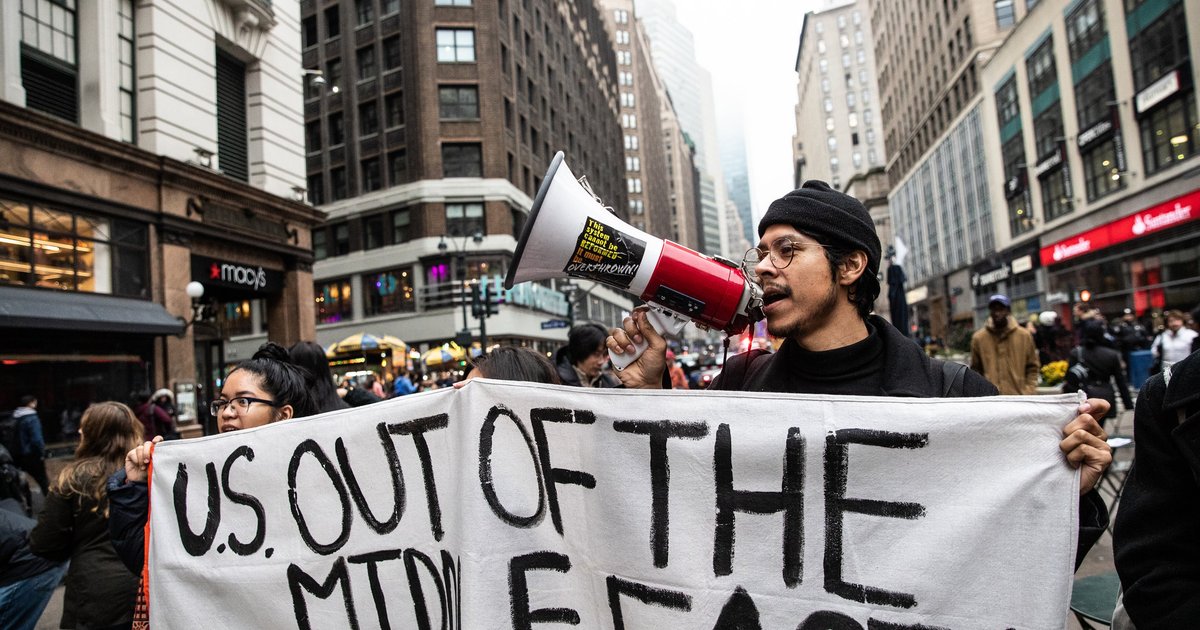
Israeli police dispersed large protests in Tel Aviv, where demonstrators gathered to oppose a potential war with Iran. These protests come at a sensitive time when the region is experiencing increasing tensions, reflecting public concern over the implications of a possible conflict.
Yesterday, Tel Aviv witnessed large gatherings of Israeli citizens expressing their rejection of any military escalation against Iran. The police used tear gas to disperse the crowds, leading to clashes between protesters and security forces. These demonstrations reflect a division within Israeli society regarding how to handle Iranian threats.
Details of the Event
The protests began late in the afternoon, with hundreds gathering in Rabin Square in central Tel Aviv. Protesters carried signs with slogans calling for peace and denouncing war. Many participants expressed concern that any military escalation could have dire consequences for domestic security.
These protests come at a time when tensions between Israel and Iran are escalating, with Tel Aviv accusing Tehran of supporting armed groups in the region. Some analysts have suggested that these protests could be the beginning of a larger movement against the Israeli government's military policies.
Background & Context
Historically, Israeli-Iranian relations have been marked by ongoing tensions, with Israel viewing Iran as an existential threat. These tensions have notably escalated since the United States withdrew from the Iranian nuclear deal in 2018. Since then, Israel has intensified its military operations against what it considers Iranian sites in Syria.
In recent years, fears have grown that any military escalation could lead to a full-scale war in the region. Polls have shown that a significant portion of the Israeli public opposes war, reflecting increasing concern over the potential consequences.
Impact & Consequences
These protests could lead to changes in Israeli policies towards Iran. If the demonstrations continue, the government may be forced to reassess its military strategy. Additionally, these protests could affect relations between Israel and the United States, as the U.S. administration seeks to avoid any escalation in the region.
Furthermore, these events may increase divisions within Israeli society, as part of the population shows strong support for military policies, while others express concern over the humanitarian and economic consequences of war.
Regional Significance
These protests are an indicator of the growing concern over military conflicts in the region. Any potential war between Israel and Iran could destabilize neighboring countries, exacerbating civilian suffering and complicating peace efforts in the area.
Moreover, rising tensions could negatively impact relations between Arab states and Israel, especially amid normalization attempts witnessed in recent years. Arab nations may find themselves in a precarious position, needing to balance their national interests with international pressures.
In conclusion, these protests reflect a state of anxiety and uncertainty in the region, as citizens seek to express their opinions at a time of increasing global tensions. It remains to be seen how these events will affect Israeli policies and regional relations in the future.