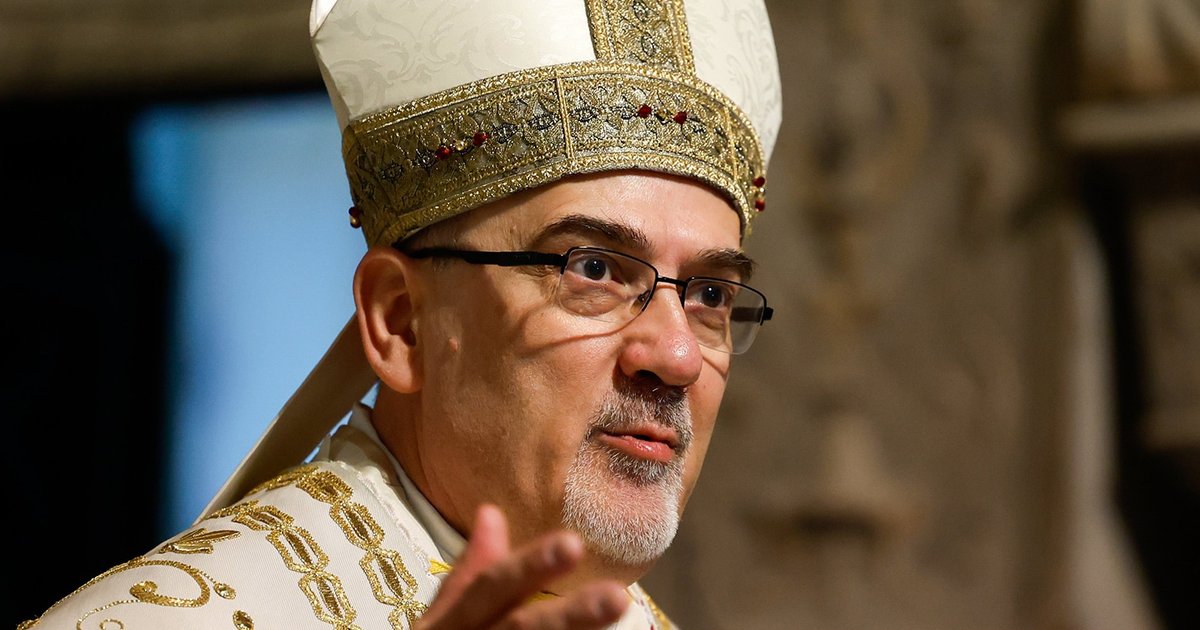
In a controversial incident, Israeli police barred the Latin Patriarch of Jerusalem, Cardinal Pierbattista Pizzaballa, from participating in the Palm Sunday Mass held at the Church of the Holy Sepulchre, one of the holiest sites for Christians. This prohibition comes at a sensitive time when many believers focus on religious celebrations during Holy Week.
Patriarch Pizzaballa reported that he was stopped along with the local priest, Father Francesco Ilbo, while heading to the church, where they were forced to turn back. This incident marks the first time a religious leader has been prevented from participating in Palm Sunday celebrations, raising alarm among Christian communities worldwide.
Details of the Incident
This action is part of a series of restrictions imposed by Israeli authorities on religious activities in Jerusalem, particularly following heightened tensions in the region after the war with Iran. The Patriarch noted that these restrictions include the cancellation of public activities and the organization of prayers in a manner that aligns with imposed limitations, significantly curtailing freedom of worship.
The Patriarch described these measures as "unreasonable" and "disproportionate," pointing out that they contradict the principles of freedom of worship and respect for the status quo that has been maintained for years. He also expressed deep concern for believers in Jerusalem and around the world, who have been severely affected by this prohibition on one of the most important days in the Christian calendar.
Background & Context
Historically, Jerusalem is considered an important spiritual center for Christians, housing numerous sacred sites. However, the city has witnessed increasing tensions in recent years, particularly with the escalation of the Israeli-Palestinian conflict. Restrictions on religious activities are not new, but they have become more pronounced recently, raising concerns within the international community.
It is worth noting that religious celebrations in Jerusalem often attract global attention, especially during major holidays such as Easter and Palm Sunday. However, recent events suggest that the situation may deteriorate further if these restrictions continue.
Impact & Consequences
This incident serves as a wake-up call for churches and Christian communities worldwide, highlighting that freedom of worship may be threatened in contested areas. Furthermore, this prohibition could provoke strong reactions from the international community, particularly from countries that advocate for human rights and freedom of worship.
The continuation of this policy may exacerbate tensions among different religions in Jerusalem, potentially negatively impacting stability in the region. Additionally, these events could lead to increased calls for boycotting Israeli activities within Christian circles.
Regional Significance
These events are part of the larger picture of the Israeli-Palestinian conflict, where religious and political dimensions intertwine in complex ways. The prevention of the Patriarch from participating in the Palm Sunday Mass reflects the challenges faced by Christian communities in the region and heightens concerns about the future of peaceful coexistence among religions.
Ultimately, Jerusalem remains a symbol of peace and coexistence, but recent events indicate that this symbol may be threatened if current policies persist. It is crucial for the international community to unite in protecting the rights of all religions in this holy city.