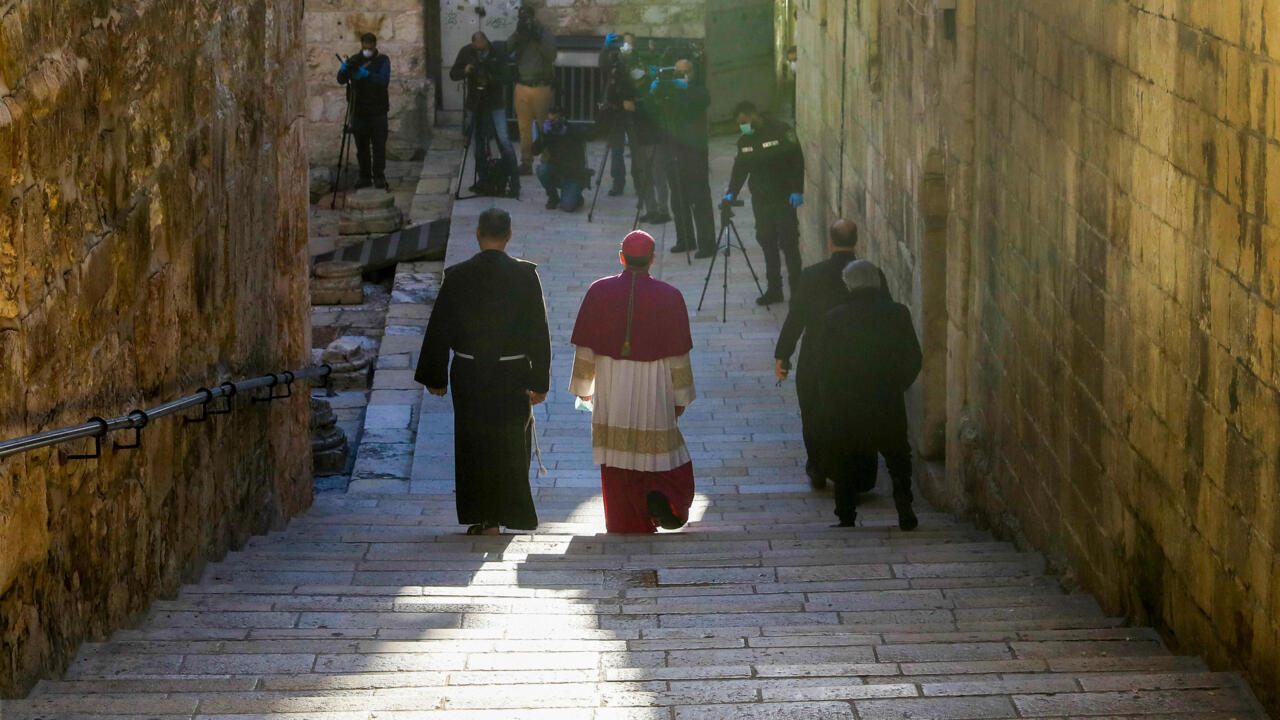
In a historic and unprecedented step, Israeli police on Sunday prevented Cardinal Pierbattista Pizzaballa, the Latin Patriarch of Jerusalem, from entering the Church of the Holy Sepulchre to celebrate the Palm Sunday mass. This incident marks the first of its kind in centuries, provoking angry reactions from numerous international leaders.
The Latin Patriarchate of Jerusalem stated in a press release that Israeli police stopped Cardinal Pizzaballa and the Custodian of the Holy Land, Francesco Patton, from entering the church as they were heading to celebrate the mass. The Patriarchate emphasized that this prohibition is a serious precedent that disregards the feelings of billions of believers around the world who look to Jerusalem during this week.
Details of the Incident
The Patriarchate reported that the cardinal was stopped while traveling privately and without any signs of a procession or celebratory ceremony. Additionally, the traditional Palm Sunday procession, which usually takes place from the Mount of Olives to the Old City of Jerusalem, was canceled. This procession typically involves thousands of worshippers, clergy, and scout groups carrying palm fronds.
No immediate response was issued by Israeli police regarding this prohibition, which comes at a sensitive time following heightened tensions in the region. Israeli authorities have imposed restrictions on gatherings in religious sites since the joint attack with the United States on Iran on February 28, leading to a ban on large gatherings in synagogues, churches, and mosques.
Background & Context
The Church of the Holy Sepulchre is considered one of the most important religious sites in Christianity, believed to be the location where Christ was buried and resurrected. Throughout history, the church has witnessed numerous political and religious events that have impacted its status. As tensions in Jerusalem escalate, the situation has become more complicated, raising concerns about religious freedom in the holy city.
It is noteworthy that the Latin Patriarchate in Jerusalem has shown significant commitment to responsibility during previous crises, adhering to the restrictions imposed by authorities. However, the prevention of the cardinal from celebrating the mass represents a violation of religious freedom and reflects the increasing pressures on religious institutions.
Impact & Consequences
The repercussions of this incident extend beyond Jerusalem, as Italian Prime Minister Giorgia Meloni condemned the act, describing it as an affront to believers. Furthermore, the Italian Foreign Minister summoned the Israeli ambassador in Rome to protest this prohibition. On the other hand, French President Emmanuel Macron condemned the decision, noting that it adds to the repeated violations of the status of holy sites in Jerusalem.
This incident could lead to escalating tensions between Israeli authorities and Christian communities, potentially negatively impacting relations between Israel and European countries that are closely monitoring the situation. Continued violations may weaken Israel's position on the international stage, especially amid the political challenges it faces.
Regional Significance
This event represents part of the broader picture of tensions in the region, as concerns grow regarding the impact of Israeli policies on regional stability. The prevention of the cardinal from entering the Church of the Holy Sepulchre reflects the challenges faced by religious communities in Jerusalem and may provoke strong reactions from Arab and Islamic countries that support the rights of Palestinians and Christians in the city.
In conclusion, this prohibition marks a significant milestone in the history of interfaith relations in Jerusalem, reflecting the increasing tensions that could lead to greater repercussions in the future. Ensuring religious freedom and respecting holy sites is vital for guaranteeing peace and stability in the region.